 | ||
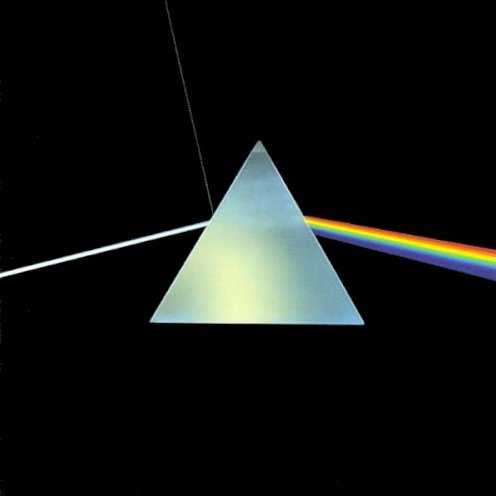 | Album: 1 of 50 Artist: Pink Floyd Title: The Dark Side of the Moon Released: 1973-03-24 Tracks: 10 Duration: 42:57 Scroll: Up Down Top Bottom 25% 50% 75% Spotify Wikipedia Allmusic AlbumCover | 1 Speak to Me (01:08) 2 Breathe (02:48) 3 On the Run (03:46) 4 Time (06:53) 5 The Great Gig in the Sky (04:44) 6 Money (06:22) 7 Us and Them (07:49) 8 Any Colour You Like (03:26) 9 Brain Damage (03:47) 10 Eclipse (02:11) |
| The Dark Side of the Moon : Allmusic album Review : By condensing the sonic explorations of Meddle to actual songs and adding a lush, immaculate production to their trippiest instrumental sections, Pink Floyd inadvertently designed their commercial breakthrough with Dark Side of the Moon. The primary revelation of Dark Side of the Moon is what a little focus does for the band. Roger Waters wrote a series of songs about mundane, everyday details which arent that impressive by themselves, but when given the sonic backdrop of Floyds slow, atmospheric soundscapes and carefully placed sound effects, they achieve an emotional resonance. But what gives the album true power is the subtly textured music, which evolves from ponderous, neo-psychedelic art rock to jazz fusion and blues-rock before turning back to psychedelia. Its dense with detail, but leisurely paced, creating its own dark, haunting world. Pink Floyd may have better albums than Dark Side of the Moon, but no other record defines them quite as well as this one. | ||
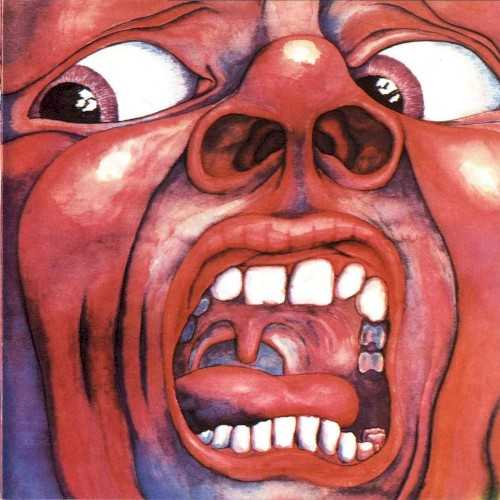 | Album: 2 of 50 Artist: King Crimson Title: In the Court of the Crimson King Released: 1969-10-10 Tracks: 5 Duration: 43:52 Scroll: Up Down Top Bottom 25% 50% 75% Spotify TrackSamples Wikipedia Allmusic AlbumCover | 1 21st Century Schizoid Man (including Mirrors) (07:24) 2 I Talk to the Wind (06:05) 3 Epitaph (including March for No Reason and Tomorrow and Tomorrow) (08:47) 4 Moonchild (Including the Dream and the Illusion) (12:12) 5 The Court of the Crimson King (including The Return of the Fire Witch and The Dance of the Puppets) (09:22) |
| In the Court of the Crimson King : Allmusic album Review : The groups definitive album, and one of the most daring debut albums ever recorded by anybody. At the time, it blew all of the progressive/psychedelic competition (the Moody Blues, the Nice, etc.) out of the running, although it was almost too good for the bands own good -- it took King Crimson nearly four years to come up with a record as strong or concise. Ian McDonalds Mellotron is the dominant instrument, along with his saxes and Fripps guitar, making this a somewhat different-sounding record from everything else they ever did. And even though that Mellotron sound is muted and toned down compared to their concert work of the era (e.g., Epitaph), it is still fierce and overpowering, on an album highlighted by strong songwriting (most of it filled with dark and doom-laden visions), the strongest singing of Greg Lakes entire career, and Fripps guitar playing that strangely mixed elegant classical, Hendrix-like rock explosions, and jazz noodling. Lineup changes commenced immediately upon the albums release, and Fripp would ultimately be the only survivor on later King Crimson records. | ||
 | Album: 3 of 50 Artist: Rush Title: Moving Pictures Released: 1981-01 Tracks: 7 Duration: 40:02 Scroll: Up Down Top Bottom 25% 50% 75% Spotify TrackSamples Wikipedia Allmusic AlbumCover | 1 Tom Sawyer (04:34) 2 Red Barchetta (06:10) 3 YYZ (04:26) 4 Limelight (04:20) 5 The Camera Eye (11:00) 6 Witch Hunt (04:45) 7 Vital Signs (04:46) |
| Moving Pictures : Allmusic album Review : Not only is 1981s Moving Pictures Rushs best album, it is undeniably one of the greatest hard rock albums of all time. The new wave meets hard rock approach of Permanent Waves is honed to perfection -- all seven of the tracks are classics (four are still featured regularly in concert and on classic rock radio). While other hard rock bands at the time experimented unsuccessfully with other musical styles, Rush were one of the few to successfully cross over. The whole entire first side is perfect -- their most renowned song, "Tom Sawyer," kicks things off, and is soon followed by the racing "Red Barchetta," the instrumental "YYZ," and a song that examines the pros and cons of stardom, "Limelight." And while the second side isnt as instantly striking as the first, it is ultimately rewarding. The long and winding "The Camera Eye" begins with a synth-driven piece before transforming into one of the bands more straight-ahead epics, while "Witch Hunt" and "Vital Signs" remain two of the trios more underrated rock compositions. Rush proved with Moving Pictures that there was still uncharted territory to explore within the hard rock format, and were rewarded with their most enduring and popular album. | ||
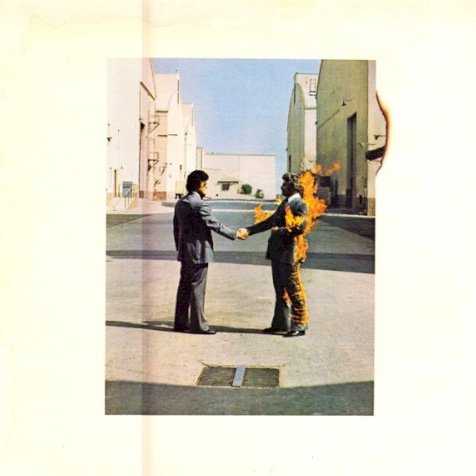 | Album: 4 of 50 Artist: Pink Floyd Title: Wish You Were Here Released: 1975-09-12 Tracks: 2 Duration: 44:13 Scroll: Up Down Top Bottom 25% 50% 75% Spotify TrackSamples Allmusic AlbumCover | 1 Shine On You Crazy Diamond (Part 1) / Shine On You Crazy Diamond (Part 2) / Shine On You Crazy Diamond (Part 3) / Shine On You Crazy Diamond (Part 4) / Shine On You Crazy Diamond (Part 5) / Welcome to the Machine (21:02) 2 Have a Cigar / Wish You Were Here / Shine On You Crazy Diamond (Part 6) / Shine On You Crazy Diamond (Part 7) / Shine On You Crazy Diamond (Part 8) / Shine On You Crazy Diamond (Part 9) (23:10) |
| Wish You Were Here : Allmusic album Review : Pink Floyd followed the commercial breakthrough of Dark Side of the Moon with Wish You Were Here, a loose concept album about and dedicated to their founding member Syd Barrett. The record unfolds gradually, as the jazzy textures of "Shine on You Crazy Diamond" reveal its melodic motif, and in its leisurely pace, the album shows itself to be a warmer record than its predecessor. Musically, its arguably even more impressive, showcasing the groups interplay and David Gilmours solos in particular. And while its short on actual songs, the long, winding soundscapes are constantly enthralling. | ||
 | Album: 5 of 50 Artist: Yes Title: Close to the Edge Released: 1972-09-13 Tracks: 7 Duration: 1:05:05 Scroll: Up Down Top Bottom 25% 50% 75% Spotify TrackSamples Wikipedia Allmusic AlbumCover | 1 Close to the Edge: I. The Solid Time of Change / II. Total Mass Retain / III. I Get Up I Get Down / IV. Seasons of Man (18:45) 2 And You and I: I. Cord of Life / II. Eclipse / III. The Preacher the Teacher / IV. Apocalypse (10:11) 3 Siberian Khatru (08:56) 4 America (single version) (04:12) 5 Total Mass Retain (single edit) (03:21) 6 And You and I: I. Cord of Life / II. Eclipse / III. The Preacher The Teacher / IV. Apocalypse (alternate version) (10:17) 7 Siberia (studio run-through of “Siberian Khatru”) (09:19) |
| Close to the Edge : Allmusic album Review : With 1971s Fragile having left Yes poised quivering on the brink of what friend and foe acknowledged was the peak of the bands achievement, Close to the Edge was never going to be an easy album to make. Drummer Bill Bruford was already shifting restlessly against Jon Andersons increasingly mystic/mystifying lyricism, while contemporary reports of the recording sessions depicted bandmate Rick Wakeman, too, as little more than an observer to the vast tapestry that Anderson, Steve Howe, and Chris Squire were creating. For it was vast. Close to the Edge comprised just three tracks, the epic "And You and I" and "Siberian Khatru," plus a side-long title track that represented the musical, lyrical, and sonic culmination of all that Yes had worked toward over the past five years. Close to the Edge would make the Top Five on both sides of the Atlantic, dispatch Yes on the longest tour of their career so far and, if hindsight be the guide, launch the band on a downward swing that only disintegration, rebuilding, and a savage change of direction would cure. The latter, however, was still to come. In 1972, Close to the Edge was a flawless masterpiece. | ||
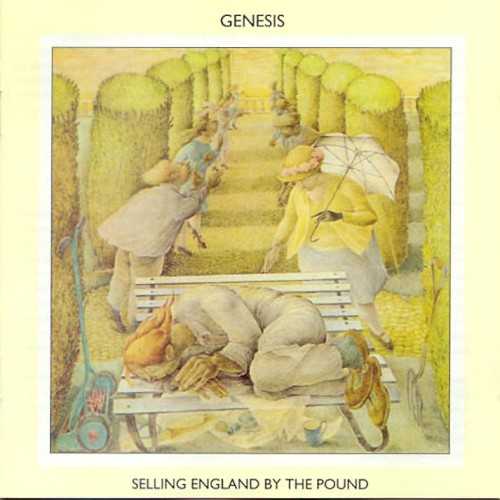 | Album: 6 of 50 Artist: Genesis Title: Selling England by the Pound Released: 1973-09 Tracks: 8 Duration: 53:34 Scroll: Up Down Top Bottom 25% 50% 75% Spotify TrackSamples Allmusic AlbumCover | 1 Dancing with the Moonlit Knight (08:03) 2 I Know What I Like (In your Wardrobe) (04:10) 3 Firth of Fifth (09:34) 4 More Fool Me (03:10) 5 The Battle of Epping Forest (11:43) 6 After the Ordeal (04:15) 7 The Cinema Show (10:41) 8 Aisle of Plenty (01:58) |
| Selling England by the Pound : Allmusic album Review : Genesis proved that they could rock on Foxtrot but on its follow-up Selling England by the Pound they didnt follow this route, they returned to the English eccentricity of their first records, which wasnt so much a retreat as a consolidation of powers. For even if this eight-track album has no one song that hits as hard as "Watcher of the Skies," Genesis hasnt sacrificed the newfound immediacy of Foxtrot: theyve married it to their eccentricity, finding ways to infuse it into the delicate whimsy thats been their calling card since the beginning. This, combined with many overt literary allusions -- the Tolkeinisms of the title of "The Battle of Epping Forest" only being the most apparent -- gives this album a storybook quality. It plays as a collection of short stories, fables, and fairy tales, and it is also a rock record, which naturally makes it quite extraordinary as a collection, but also as a set of individual songs. Genesis has never been as direct as theyve been on the fanciful yet hook-driven "I Know What I Like (In Your Wardrobe)" -- apart from the fluttering flutes in the fade-out, it could easily be mistaken for a glam single -- or as achingly fragile as on "More Fool Me," sung by Phil Collins. Its this delicate balance and how the album showcases the bands narrative force on a small scale as well as large that makes this their arguable high-water mark. | ||
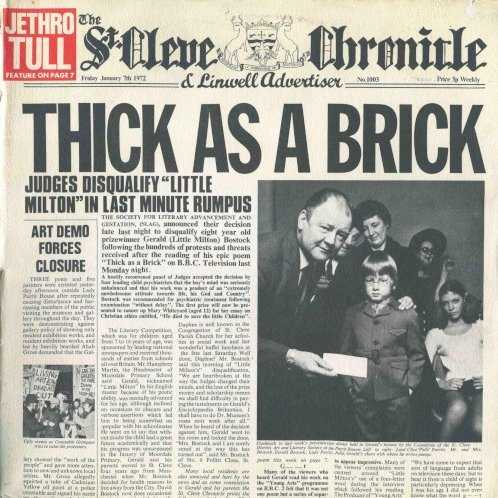 | Album: 7 of 50 Artist: Jethro Tull Title: Thick as a Brick Released: 1972-02-18 Tracks: 2 Duration: 43:40 Scroll: Up Down Top Bottom 25% 50% 75% Spotify TrackSamples Allmusic AlbumCover | 1 Thick as a Brick, Part 1 (22:36) 2 Thick as a Brick, Part 2 (21:03) |
| Thick as a Brick : Allmusic album Review : Jethro Tulls first LP-length epic is a masterpiece in the annals of progressive rock, and one of the few works of its kind that still holds up decades later. Mixing hard rock and English folk music with classical influences, set to stream-of-consciousness lyrics so dense with imagery that one might spend weeks pondering their meaning -- assuming one feels the need to do so -- the group created a dazzling tour de force, at once playful, profound, and challenging, without overwhelming the listener. The original LP was the best-sounding, best-engineered record Tull had ever released, easily capturing the shifting dynamics between the soft all-acoustic passages and the electric rock crescendos surrounding them. | ||
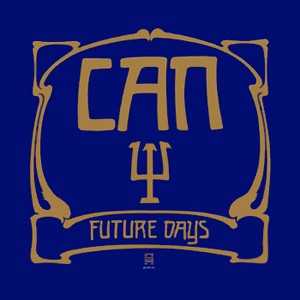 | Album: 8 of 50 Artist: CAN Title: Future Days Released: 1973 Tracks: 4 Duration: 40:55 Scroll: Up Down Top Bottom 25% 50% 75% Spotify Wikipedia AlbumCover | 1 Future Days (09:30) 2 Spray (08:28) 3 Moonshake (03:03) 4 Bel Air (19:52) |
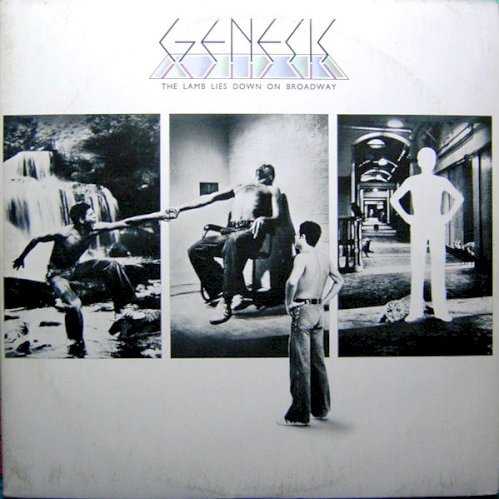 | Album: 9 of 50 Artist: Genesis Title: The Lamb Lies Down on Broadway Released: 1974-11-18 Tracks: 23 Duration: 1:34:13 Scroll: Up Down Top Bottom 25% 50% 75% Spotify TrackSamples Allmusic AlbumCover | 1 The Lamb Lies Down on Broadway (04:47) 2 Fly on a Windshield (02:46) 3 Broadway Melody of 1974 (02:11) 4 Cuckoo Cocoon (02:12) 5 In the Cage (08:14) 6 The Grand Parade of Lifeless Packaging (02:46) 7 Back in N.Y.C. (05:43) 8 Hairless Heart (02:10) 9 Counting Out Time (03:41) 10 The Carpet Crawlers (05:14) 11 The Chamber of 32 Doors (05:41) 1 Lilywhite Lilith (02:42) 2 The Waiting Room (05:25) 3 Anyway (03:08) 4 Here Comes the Supernatural Anaesthetist (03:00) 5 The Lamia (06:56) 6 Silent Sorrow in Empty Boats (03:07) 7 The Colony of Slippermen: Arrival / A Visit to the Doktor / Raven (08:14) 8 Ravine (02:04) 9 The Light Dies Down on Broadway (03:33) 10 Riding the Scree (03:56) 11 In the Rapids (02:24) 12 It (04:17) |
| The Lamb Lies Down on Broadway : Allmusic album Review : Given all the overt literary references of Selling England by the Pound, along with their taste for epic suites such as "Suppers Ready," it was only a matter of time before Genesis attempted a full-fledged concept album, and 1974s The Lamb Lies Down on Broadway was a massive rock opera: the winding, wielding story of a Puerto Rican hustler name Rael making his way in New York City. Peter Gabriel made some tentative moves toward developing this story into a movie with William Friedkin but it never took off, perhaps its just as well; even with the lengthy libretto included with the album, the story never makes sense. But just because the story is rather impenetrable doesnt mean that the album is as well, because it is a forceful, imaginative piece of work that showcases the original Genesis lineup at a peak. Even if the story is rather hard to piece together, the album is set up in a remarkable fashion, with the first LP being devoted to pop-oriented rock songs and the second being largely devoted to instrumentals. This means that The Lamb Lies Down on Broadway contains both Genesis most immediate music to date and its most elliptical. Depending on a listeners taste, they may gravitate toward the first LP with its tight collection of ten rock songs, or the nightmarish landscapes of the second, where Rael descends into darkness and ultimately redemption (or so it would seem), but theres little question that the first album is far more direct than the second and it contains a number of masterpieces, from the opening fanfare of the title song to the surging "In the Cage," from the frightening "Back in NYC" to the soothing conclusion "The Carpet Crawlers." In retrospect, this first LP plays a bit more like the first Gabriel solo album than the final Genesis album, but theres also little question that the band helps form and shape this music (with Brian Eno adding extra coloring on occasion), while Genesis shines as a group shines on the impressionistic second half. In every way, its a considerable, lasting achievement and its little wonder that Peter Gabriel had to leave the band after this record: they had gone as far as they could go together, and could never top this extraordinary album. | ||
 | Album: 10 of 50 Artist: Yes Title: Fragile Released: 1971-11-12 Tracks: 9 Duration: 41:10 Scroll: Up Down Top Bottom 25% 50% 75% Spotify TrackSamples Wikipedia Allmusic AlbumCover | 1 Roundabout (08:34) 2 Cans and Brahms (extracts from Brahms’ 4th Symphony in E Minor, Third Movement) (01:42) 3 We Have Heaven (01:39) 4 South Side of the Sky (07:56) 5 Five Per Cent for Nothing (00:37) 6 Long Distance Runaround (03:30) 7 The Fish (Schindleria Praematurus) (02:42) 8 Mood for a Day (03:02) 9 Heart of the Sunrise / We Have Heaven (reprise) (11:24) |
| Fragile : Allmusic album Review : Fragile was Yes breakthrough album, propelling them in a matter of weeks from a cult act to an international phenomenon; not coincidentally, it also marked the point where all of the elements of the music (and more) that would define their success for more than a decade fell into place fully formed. The science-fiction and fantasy elements that had driven the more successful songs on their preceding record, The Yes Album, were pushed much harder here, and not just in the music but in the packaging of the album: the Roger Dean-designed cover was itself a fascinating creation that seemed to relate to the music and drew the purchasers attention in a manner that few records since the heyday of the psychedelic era could match. Having thrown original keyboard player Tony Kaye overboard early in the sessions -- principally over his refusal to accept the need for the Moog synthesizer in lieu of his preferred Hammond organ -- the band welcomed Rick Wakeman into its ranks. His use of the Moog, among other instruments, coupled with an overall bolder and more aggressive style of playing, opened the way for a harder, hotter sound by the group as a whole; bassist Chris Squire sounds like hes got his amp turned up to "12," and Steve Howes electric guitars are not far behind, although the group also displayed subtlety where it was needed. The opening minute of "Roundabout," the album opener -- and the basis for the edited single that would reach number 13 on the Billboard charts and get the group onto AM radio in a way that most other prog rock outfits could only look upon with envy -- was dominated by Howes acoustic guitar and Bill Brufords drums, and only in the middle section did the band show some of what they could do with serious amperage. Elsewhere on the record, as on "South Side of the Sky," they would sound as though they were ready to leave the ground (and the planet), between the volume and intensity of their playing. "Long Distance Runaround," which also served as the B-side of the single, was probably the most accessible track here apart from "Roundabout," but they were both ambitious enough to carry most listeners on to the heavier sides at the core of this long-player. The solo tracks by the members were actually a necessity: they needed to get Fragile out in a hurry to cover the cost of the keyboards that Wakeman had added to the groups sonic arsenal. But they ended up being more than filler. Each member, in effect, took a "bow" in mostly fairly serious settings, and Squires "The Fish" and Howes "Mood for a Day" pointed directly to future, more substantial projects as well as taking on a life of their own on-stage. If not exactly their peak, Fragile was as perfect a record as the group would ever make, and just as flawless in its timing as its content. | ||
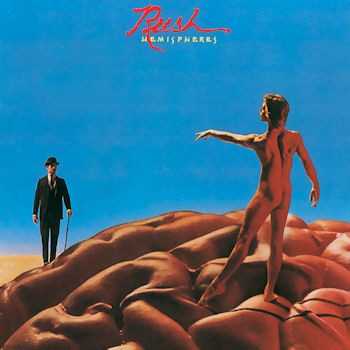 | Album: 11 of 50 Artist: Rush Title: Hemispheres Released: 1978-11 Tracks: 4 Duration: 36:12 Scroll: Up Down Top Bottom 25% 50% 75% Spotify TrackSamples Wikipedia Allmusic AlbumCover | 1 Cygnus X‒1, Book II: Hemispheres: I. Prelude / II. Apollo: Bringer of Wisdom / III. Dionysus: Bringer of Love / IV. Armageddon: The Battle of Heart and Mind / V. Cygnus: Bringer of Balance / VI. The Sphere: A Kind of Dream (18:08) 2 Circumstances (03:44) 3 The Trees (04:45) 4 La Villa Strangiato (09:35) |
| Hemispheres : Allmusic album Review : Rush began life as a power trio in the Led Zeppelin/heavy rock mode. Over the years the band refined their musical vision as they gained both instrumental and conceptual facility. 1978s HEMISPHERES marks their transition from heavy riff-mongers to full blown art-rockers. Lee, Lifeson and Peart employ a number of tricks from the prog-rock bag here; (very) extended songs, multi-part suites, long instrumental passages, rapidly shifting tempos and time signatures, complicated unison riffs and synthesizer orchestrations. Its to Rushs credit that these elements enhance their sound instead of obscuring it. In fact, "La Villa Strangiato" would become one of the bands best-loved 70s efforts and a long-standing concert favorite. | ||
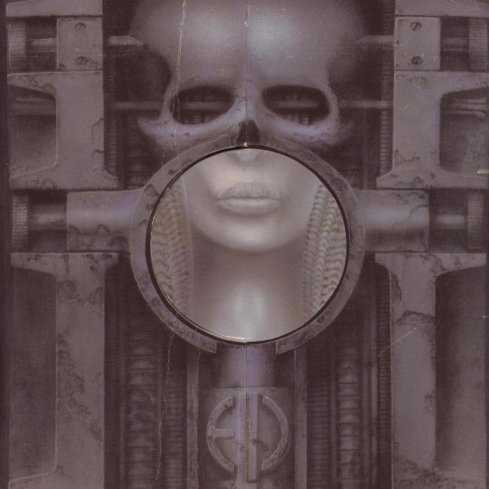 | Album: 12 of 50 Artist: Emerson, Lake & Palmer Title: Brain Salad Surgery Released: 1973-12 Tracks: 8 Duration: 45:05 Scroll: Up Down Top Bottom 25% 50% 75% Spotify Wikipedia Allmusic AlbumCover | 1 Jerusalem (02:45) 2 Toccata (07:22) 3 Still… You Turn Me On (02:53) 4 Benny the Bouncer (02:21) 5 Karn Evil 9: 1st Impression, Part 1 (08:43) 6 Karn Evil 9: 1st Impression, Part 2 (04:47) 7 Karn Evil 9: 2nd Impression (07:07) 8 Karn Evil 9: 3rd Impression (09:05) |
| Brain Salad Surgery : Allmusic album Review : Emerson, Lake & Palmers most successful and well-realized album (after their first), and their most ambitious as a group, as well as their loudest, Brain Salad Surgery was also the most steeped in electronic sounds of any of their records. The main focus, thanks to the three-part "Karn Evil 9," is sci-fi rock, approached with a volume and vengeance that stretched the art rock audiences tolerance to its outer limit, but also managed to appeal to the metal audience in ways that little of Trilogy did. Indeed, "Karn Evil 9" is the piece and the place where Keith Emerson and his keyboards finally matched in both music and flamboyance the larger-than-life guitar sound of Jimi Hendrix. This also marked the point in the groups history in which they brought in their first outside creative hand, in the guise of ex-King Crimson lyricist Pete Sinfield. Hed been shopping around his first solo album and was invited onto the trios new Manticore label, and also asked in to this project as Lakes abilities as a lyricist didnt seem quite up to the 20-minute "Karn Evil 9" epic that Emerson had created as an instrumental. Sinfields resulting lyrics for "Karn Evil 9: First Impression" and "Karn Evil 9: Third Impression," while not up to the standard of his best Crimson work, were better than anything the group had to work with previously -- he was also responsible for Emersons choice of title, persuading the keyboardist that the music hed come up with was more evocative of a carnival and fantasy than the pure science fiction concept that Emerson had started with. And Greg Lake pulled out all the stops with his heaviest singing voice in handling them, coming off a bit like Peter Gabriel in the process. And amid Carl Palmers prodigious drumming, it was all a showcase for Emerson, who employed more keyboards and more sounds here -- including electronic voices -- than had previously been heard on one of their records. The songs (except for the light-hearted throwaway "Benny the Bouncer") are also among their best work -- the groups arrangement of Sir Charles Hubert Parrys setting of William Blakes "Jerusalem" manages to be reverent yet rocking (a combination that got it banned by the BBC for potential "blasphemy"), while Emersons adaptation of Alberto Ginasteras music in "Tocatta" outstrips even "The Barbarian" and "Knife Edge" from the first album as a distinctive and rewarding reinterpretation of a piece of serious music. Lakes "Still...You Turn Me On," the albums obligatory acoustic number, was his last great ballad with the group, possessing a melody and arrangement sufficiently pretty to forgive the presence of the rhyming triplet "everyday a little sadder/a little madder/someone get me a ladder." And the sound quality was stunning, and the whole album represented a high point that the trio would never again achieve, or even aspire to -- after this, each member started to go his own way in terms of creativity and music. | ||
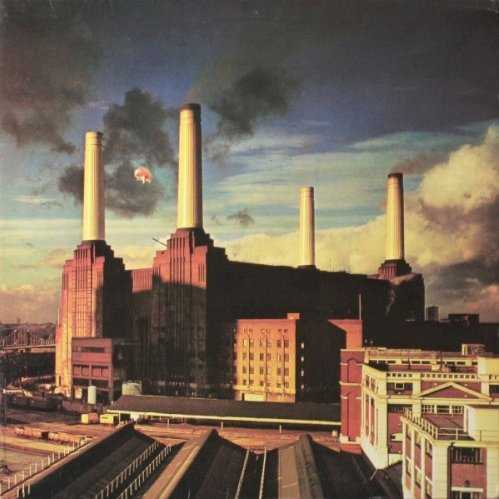 | Album: 13 of 50 Artist: Pink Floyd Title: Animals Released: 1977-01-23 Tracks: 5 Duration: 41:30 Scroll: Up Down Top Bottom 25% 50% 75% Spotify TrackSamples Allmusic AlbumCover | 1 Pigs on the Wing, Part One (01:23) 2 Dogs (16:59) 3 Pigs (Three Different Ones) (11:25) 4 Sheep (10:15) 5 Pigs on the Wing, Part Two (01:26) |
| Animals : Allmusic album Review : Of all of the classic-era Pink Floyd albums, Animals is the strangest and darkest, a record thats hard to initially embrace yet winds up yielding as many rewards as its equally nihilistic successor, The Wall. It isnt that Roger Waters dismisses the human race as either pigs, dogs, or sheep, its that hes constructed an album whose music is as bleak and bitter as that world view. Arriving after the warm-spirited (albeit melancholy) Wish You Were Here, the shift in tone comes as a bit of a surprise, and there are even less proper songs here than on either Wish or Dark Side. Animals is all extended pieces, yet it never drifts -- it slowly, ominously works its way toward its destination. For an album that so clearly is Waters, David Gilmours guitar dominates thoroughly, with Richard Wrights keyboards rarely rising above a mood-setting background (such as on the intro to "Sheep"). This gives the music, on occasion, immediacy and actually heightens the dark mood by giving it muscle. It also makes Animals as accessible as it possibly could be, since it surges with bold blues-rock guitar lines and hypnotic space rock textures. Through it all, though, the utter blackness of Waters spirit holds true, and since there are no vocal hooks or melodies, everything rests on the mood, the near-nihilistic lyrics, and Gilmours guitar. These are the kinds of things that satisfy cultists, and it will reward their attention -- theres just no way in for casual listeners. | ||
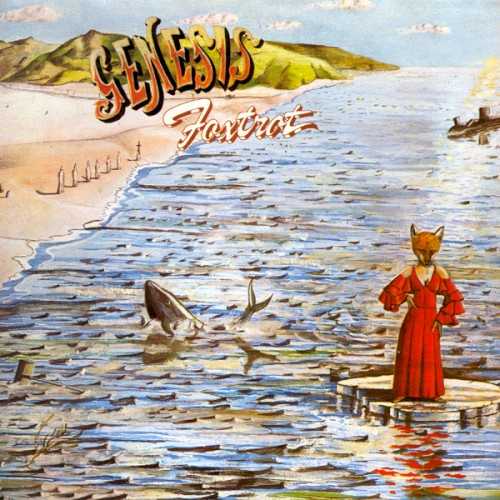 | Album: 14 of 50 Artist: Genesis Title: Foxtrot Released: 1972-10 Tracks: 6 Duration: 51:05 Scroll: Up Down Top Bottom 25% 50% 75% Spotify TrackSamples Allmusic AlbumCover | 1 Watcher of the Skies (07:22) 2 Time Table (04:47) 3 Get ’em Out by Friday (08:36) 4 Can‐Utility and the Coastliners (05:45) 5 Horizons (01:43) 6 Supper’s Ready (22:50) |
| Foxtrot : Allmusic album Review : Foxtrot is where Genesis began to pull all of its varied inspirations into a cohesive sound -- which doesnt necessarily mean that the album is streamlined, for this is a group that always was grandiose even when they were cohesive, or even when they rocked, which they truly do for the first time here. Indeed, the startling thing about the opening "Watcher of the Skies" is that its the first time that Genesis attacked like a rock band, playing with a visceral power. Theres might and majesty here, and it, along with "Get Em Out by Friday," is the truest sign that Genesis has grown muscle without abandoning the whimsy. Certainly, theyve rarely sounded as fantastical or odd as they do on the epic 22-minute closer "Suppers Ready," a nearly side-long suite that remains one of the groups signature moments. It ebbs, flows, teases, and taunts, see-sawing between coiled instrumental attacks and delicate pastoral fairy tales. If Peter Gabriel remained a rather inscrutable lyricist, his gift for imagery is abundant, as there are passages throughout the album that are hauntingly evocative in their precious prose. But what impresses most about Foxtrot is how that precociousness is delivered with pure musical force. This is the rare art-rock album that excels at both the art and the rock, and its a pinnacle of the genre (and decade) because of it. | ||
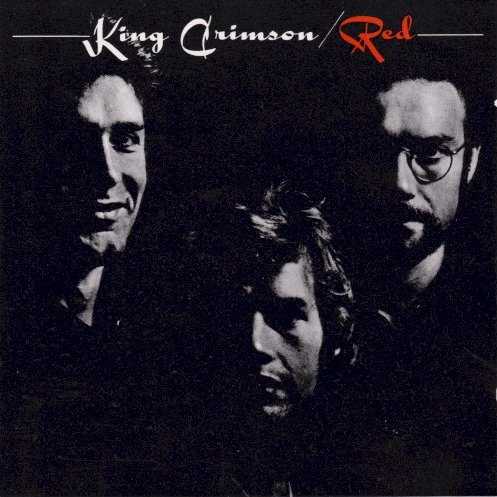 | Album: 15 of 50 Artist: King Crimson Title: Red Released: 1974-09-27 Tracks: 32 Duration: 3:07:41 Scroll: Up Down Top Bottom 25% 50% 75% Spotify Wikipedia Allmusic Allmusic AlbumCover | 1 The Great Deceiver (incomplete) (03:24) 2 Lament (04:18) 3 Improv I (02:26) 4 Exiles (06:48) 5 Fracture (11:07) 6 Easy Money (06:46) 7 Improv II (02:41) 8 The Night Watch (04:52) 9 RF Announcement (02:05) 1 Walk On: No Pussyfooting (00:57) 2 The Great Deceiver (03:42) 3 Lament (04:59) 4 Improv: Bartley Butsford (03:12) 5 Exiles (06:41) 6 Fracture (11:12) 7 Easy Money (06:36) 8 Improv: Daniel Dust (04:09) 9 The Night Watch (04:35) 1 Doctor Diamond (05:13) 2 Starless (12:21) 3 Improv: Wilton Carpet (05:53) 4 The Talking Drum (05:29) 5 Larks’ Tongues in Aspic, Part II (10:24) 6 21st Century Schizoid Man (09:48) 1 The Great Deceiver (incomplete) (02:32) 2 Lament (04:12) 3 Improv (02:03) 4 Exiles (06:29) 5 Fracture (10:56) 6 Starless (11:40) 7 The Talking Drum (05:49) 8 Larks’ Tongues in Aspic, Part II (incomplete) (04:22) |
| Red : Allmusic album Review : King Crimson fell apart once more, seemingly for the last time, as David Cross walked away during the making of this album. It became Robert Fripps last thoughts on this version of the band, a bit noiser overall but with some surprising sounds featured, mostly out of the groups past -- Mel Collins and Ian McDonalds saxes, Marc Charigs cornet, and Robin Millers oboe, thus providing a glimpse of what the 1972-era King Crimson mightve sounded like handling the later groups repertory (which nearly happened). Indeed, Charigs cornet gets just about the best showcase it ever had on a King Crimson album, and the truth is that few intact groups could have gotten an album as good as Red together. The fact that it was put together by a band in its death throes makes it all the more impressive an achievement. Indeed, Red does improve in some respects on certain aspects of the previous album -- including "Starless," a cousin to the prior albums title track -- and only the lower quality of the vocal compositions keeps this from being as strongly recommended as its two predecessors. | ||
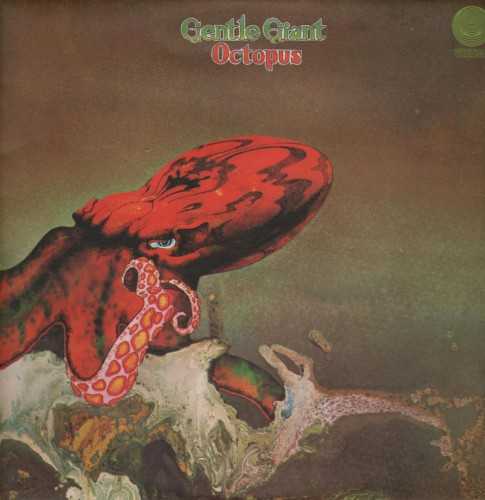 | Album: 16 of 50 Artist: Gentle Giant Title: Octopus Released: 1972-10-08 Tracks: 8 Duration: 34:06 Scroll: Up Down Top Bottom 25% 50% 75% Spotify Allmusic AlbumCover | 1 The Advent of Panurge (04:41) 2 Raconteur Troubadour (04:01) 3 A Cry for Everyone (04:03) 4 Knots (04:10) 5 The Boys in the Band (04:32) 6 Dog’s Life (03:11) 7 Think of Me With Kindness (03:33) 8 River (05:52) |
| Octopus : Allmusic album Review : Returning to Gentle Giants fourth album after any kind of lengthy absence, its astonishing just how little Octopus has dated. Often written off at the time as a pale reflection of the truly gargantuan steps being taken by the likes of Jethro Tull and Barclay James Harvest, the bands closest relatives in the tangled skein of period prog, Gentle Giant often seemed more notable for its album art than its music. Octopus, however, marries the two seamlessly, with the cover speaking for itself, of course. And the mood continues within, the deliciously convoluted opening "The Advent of Panurge" itself riding waves of sonic tentacles as Gary Greens guitar shrieks short but so effective bursts around the thundering bass and, occasionally, churchy organ. Against the pulsating volume of the albums heavier tracks -- "Panurge" is joined by "A Cry for Everyone" -- the bands excursions into less excitable territory are never less than captivating. Twiddly though they are, the sometimes a cappella "Knots," the lilting "Dogs Life," and the Yes-with-fiddles-ish "Raconteur Troubadour" all have moments of sublime sweetness, while the instrumental "The Boys in the Band" is a succession of quirky showcases for, indeed, all the boys. Occasionally arrangements do get overly cluttered -- with each of the six bandmembers doubling up on at least three different instruments, theres a distinct sense of overdubs for overdubbings sake. Follow the key instruments alone, however, and the soundscapes not only make perfect sense, but so do the flourishes and intrusions that rattle around. And the end result is an album that has withstood the test of time a lot better than anyone might have expected. | ||
 | Album: 17 of 50 Artist: Mike Oldfield Title: Tubular Bells Released: 1973-05-25 Tracks: 2 Duration: 48:49 Scroll: Up Down Top Bottom 25% 50% 75% Spotify TrackSamples Wikipedia Allmusic AlbumCover | 1 Tubular Bells, Part One (25:29) 2 Tubular Bells, Part Two (23:20) |
| Tubular Bells : Allmusic album Review : Mike Oldfields groundbreaking album Tubular Bells is arguably the finest conglomeration of off-centered instruments concerted together to form a single unique piece. A variety of instruments are combined to create an excitable multitude of rhythms, tones, pitches, and harmonies that all fuse neatly into each other, resulting in an astounding plethora of music. Oldfield plays all the instruments himself, including such oddities as the Farfisa organ, the Lowrey organ, and the flageolet. The familiar eerie opening, made famous by its use in The Exorcist, starts the album off slowly, as each instrument acoustically wriggles its way into the current noise that is heard, until there is a grand unison of eccentric sounds that wildly excites the ears. Throughout the album, the tempos range from soft to intense to utterly surprising, making for some excellent musical culminations. Mandolins and Spanish guitars are joined by grinding organs and keyboards, while oddball bells and cranking noises resound in the distance. In the middle of the album, guest Vivian Stanshall announces each instrument seconds before it is heard, ending with the ominous sounding tubular bells, a truly powerful and dominating instrument. The most interesting and overwhelming aspect of this album is the fact that so many sounds are conjured up yet none go unnoticed, allowing the listener a gradual submergence into each unique portion of the music. Tubular Bells is a divine excursion into the realm of new age music. | ||
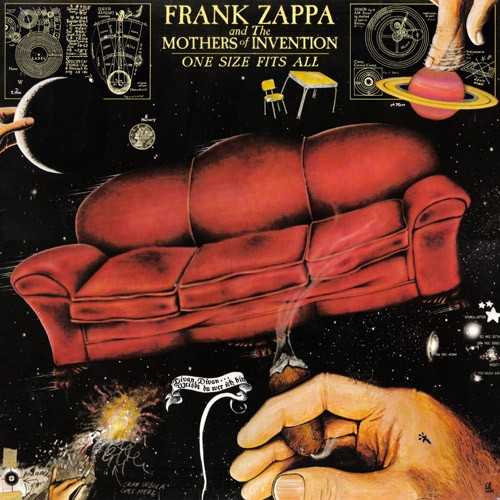 | Album: 18 of 50 Artist: Frank Zappa and The Mothers of Invention Title: One Size Fits All Released: 1975-06-25 Tracks: 9 Duration: 43:22 Scroll: Up Down Top Bottom 25% 50% 75% Spotify Wikipedia Allmusic AlbumCover | 1 Inca Roads (08:47) 2 Can’t Afford No Shoes (02:41) 3 Sofa No. 1 (02:41) 4 Po‐Jama People (07:45) 5 Florentine Pogen (05:29) 6 Evelyn, a Modified Dog (01:07) 7 San Ber’dino (05:59) 8 Andy (06:06) 9 Sofa No. 2 (02:47) |
| One Size Fits All : Allmusic album Review : Released soon after the live Roxy & Elsewhere, One Size Fits All contained more of the material premiered during the 1973-1974 tour, but this time largely re-recorded in the studio. The band remains the same: George Duke, Napoleon Murphy Brock, Chester Thompson, Tom Fowler, and Ruth Underwood. Johnny "Guitar" Watson overdubbed some vocals and Captain Beefheart (credited as Bloodshot Rollin Red) played some harmonica ("when present," state the liner notes). The previous album focused on complex music suites. This one is more song-oriented, alternating goofy rock songs with more challenging numbers in an attempt to find a juste milieu between Over-Nite Sensation and Roxy & Elsewhere. "Inca Roads," "Florentine Pogen," "Andy," and "Sofa" all became classic tracks and live favorites. These are as close to progressive rock (a demented, clownish kind) Zappa ever got. The obscurity of their subjects, especially the flying saucer topic of "Inca Roads," seem to spoof prog rock clichés. The high-flying compositions are offset by "Cant Afford No Shoes," "Po-Jama People," and "San Berdino," more down-to-earth songs. Together with Zoot Allures, One Size Fits All can be considered as one of the easiest points of entry into Zappas discography. The album artwork features a big maroon sofa, a conceptual continuity clue arching back to a then-undocumented live suite (from which "Sofa" was salvaged) and a sky map with dozens of bogus stars and constellations labeled with inside jokes in place of names. An essential third-period Zappa album. | ||
 | Album: 19 of 50 Artist: Premiata Forneria Marconi Title: Per un amico Released: 1972-11 Tracks: 5 Duration: 34:08 Scroll: Up Down Top Bottom 25% 50% 75% Spotify TrackSamples AlbumCover | 1 Appena un po (07:46) 2 Generale (04:18) 3 Per un amico (05:23) 4 Il banchetto (08:36) 5 Geranio (08:04) |
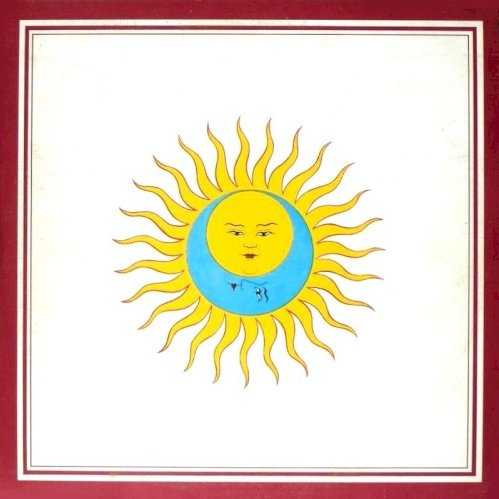 | Album: 20 of 50 Artist: King Crimson Title: Larks’ Tongues in Aspic Released: 1973-03-23 Tracks: 6 Duration: 46:43 Scroll: Up Down Top Bottom 25% 50% 75% Spotify Wikipedia Allmusic AlbumCover | 1 Larks’ Tongues in Aspic, Part One (13:36) 2 Book of Saturday (02:56) 3 Exiles (07:42) 4 Easy Money (07:54) 5 The Talking Drum (07:26) 6 Larks’ Tongues in Aspic, Part Two (07:08) |
| Larks’ Tongues in Aspic : Allmusic album Review : King Crimson reborn yet again -- the then-newly configured band makes its debut with a violin (courtesy of David Cross) sharing center stage with Robert Fripps guitars and his Mellotron, which is pushed into the background. The music is the most experimental of Fripps career up to this time -- though some of it actually dated (in embryonic form) back to the tail-end of the Boz Burrell-Ian Wallace-Mel Collins lineup. And John Wetton was the groups strongest singer/bassist since Greg Lakes departure three years earlier. Whats more, this lineup quickly established itself as a powerful performing unit, working in a more purely experimental, less jazz-oriented vein than its immediate predecessor. "Outer Limits music" was how one reviewer referred to it, mixing Cross demonic fiddling with shrieking electronics, Bill Brufords astounding dexterity at the drum kit, Jamie Muirs melodic and usually understated percussion, Wettons thundering yet melodic bass, and Fripps guitar, which generated sounds ranging from traditional classical and soft pop-jazz licks to hair-curling electric flourishes. | ||
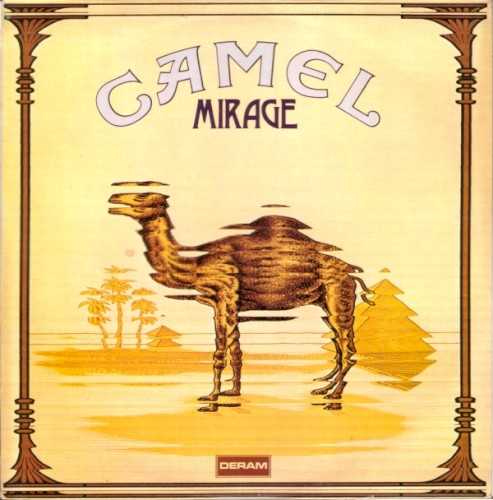 | Album: 21 of 50 Artist: Camel Title: Mirage Released: 1974-03-01 Tracks: 5 Duration: 37:58 Scroll: Up Down Top Bottom 25% 50% 75% Spotify Wikipedia Allmusic AlbumCover | 1 Freefall (05:53) 2 Supertwister (03:20) 3 Nimrodel / The Procession / The White Rider (09:17) 4 Earthrise (06:42) 5 Lady Fantasy: Encounter / Smiles for You / Lady Fantasy (12:45) |
| Mirage : Allmusic album Review : With their second album, Mirage, Camel begin to develop their own distinctive sound, highlighted by the groups liquid, intricate rhythms and the wonderful, unpredictable instrumental exchanges by keyboardist Pete Bardens and guitarist Andy Latimer. Camel also distinguish themselves from their prog rock peers with the multi-part suite "Lady Fantasy," which suggests the more complex directions they would take a few albums down the line. Also, Latimers graceful flute playing distinguishes several songs on the record, including "Supertwister," and its clear that he has a more supple technique than such contemporaries as Ian Anderson. Camel are still ironing out some quirks in their sound on Mirage, but its evident that they are coming into their own. | ||
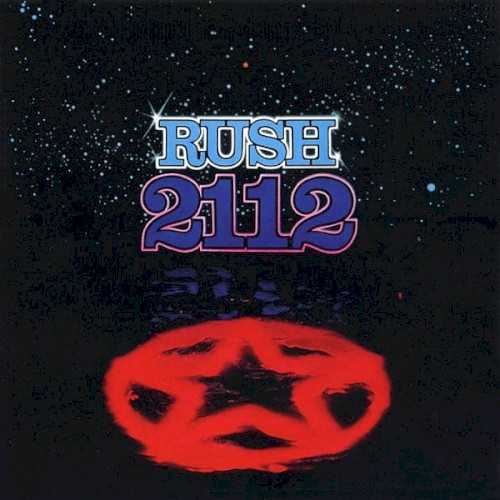 | Album: 22 of 50 Artist: Rush Title: 2112 Released: 1976-04-01 Tracks: 6 Duration: 38:51 Scroll: Up Down Top Bottom 25% 50% 75% Spotify Wikipedia Allmusic AlbumCover | 1 2112: I. Overture / II. The Temples of Syrinx / III. Discovery / IV. Presentation / V. Oracle: The Dream / VI. Soliloquy / VII. Grand Finale (20:33) 2 A Passage to Bangkok (03:34) 3 The Twilight Zone (03:19) 4 Lessons (03:52) 5 Tears (03:34) 6 Something for Nothing (03:57) |
| 2112 : Allmusic album Review : Whereas Rushs first two releases, their self-titled debut and Fly by Night, helped create a buzz among hard rock fans worldwide, the more progressive third release, Caress of Steel, confused many of their supporters. Rush knew it was now or never with their fourth release, and they delivered just in time -- 1976s 2112 proved to be their much sought-after commercial breakthrough and remains one of their most popular albums. Instead of choosing between prog rock and heavy rock, both styles are merged together to create an interesting and original approach. The entire first side is comprised of the classic title track, which paints a chilling picture of a future world where technology is in control (Pearts lyrics for the piece being influenced by Ayn Rand). Comprised of seven "sections," the track proved that the trio members were fast becoming rocks most accomplished instrumentalists. The second side contains shorter selections, such as the Middle Eastern-flavored "A Passage to Bangkok" and the album-closing rocker "Something for Nothing." 2112 is widely considered by Rush fans as their first true "classic" album, the first in a string of similarly high-quality albums. | ||
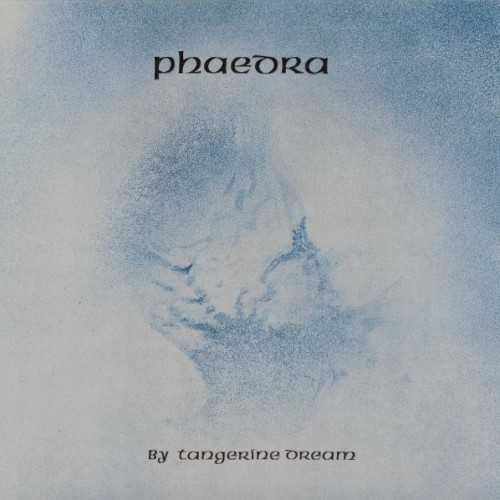 | Album: 23 of 50 Artist: Tangerine Dream Title: Phaedra Released: 1974 Tracks: 4 Duration: 37:47 Scroll: Up Down Top Bottom 25% 50% 75% Spotify Wikipedia Allmusic AlbumCover | 1 Phaedra (16:47) 2 Mysterious Semblance at the Strand of Nightmares (10:45) 3 Movements of a Visionary (07:58) 4 Sequent C’ (02:17) |
| Phaedra : Allmusic album Review : Phaedra is one of the most important, artistic, and exciting works in the history of electronic music, a brilliant and compelling summation of Tangerine Dreams early avant-space direction balanced with the synthesizer/sequencer technology just beginning to gain a foothold in nonacademic circles. The result is best heard on the 15-minute title track, unparalleled before or since for its depth of sound and vision. Given focus by the arpeggiated trance that drifts in and out of the mix, the track progresses through several passages including a few surprisingly melodic keyboard lines and an assortment of eerie Moog and Mellotron effects, gaseous explosions, and windy sirens. Despite the impending chaos, the track sounds more like a carefully composed classical work than an unrestrained piece of noise. While the title track takes the cake, there are three other excellent tracks on Phaedra. "Mysterious Semblance at the Strand of Nightmares" is a solo Edgar Froese song that uses some surprisingly emotive and affecting synthesizer washes, and "Movements of a Visionary" is a more experimental piece, using treated voices and whispers to drive its hypnotic arpeggios. Perhaps even more powerful as a musical landmark now than when it was first recorded, Phaedra has proven the test of time. | ||
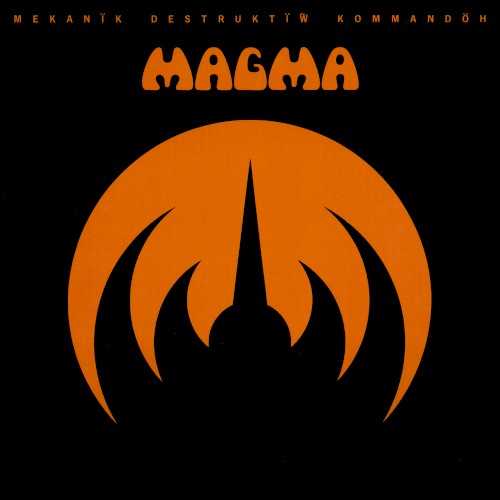 | Album: 24 of 50 Artist: Magma Title: Mëkanïk Dëstruktïẁ Kömmandöh Released: 1973 Tracks: 7 Duration: 38:50 Scroll: Up Down Top Bottom 25% 50% 75% Spotify Wikipedia Allmusic AlbumCover | 1 Hortz Fur Dëhn Stekëhn Ẁest (09:34) 2 Ïma sürï Dondaï (04:28) 3 Kobaïa Iss Dëh Hündïn (03:35) 4 Da Zeuhl Ẁortz Mëkanïk (07:48) 5 Nebëhr Gudahtt (06:00) 6 Mëkanïk Kömmandöh (04:08) 7 Kreühn Köhrmahn Iss Dëh Hündïn (03:14) |
| Mëkanïk Dëstruktïẁ Kömmandöh : Allmusic album Review : There is definitely quite a large step from Magmas second LP, 1,001 Degrees Centigrade, to this one, their third. At the same time, MDK represents a transitional period: drummer/composer Christian Vander has definitely abandoned the jazzier leanings of the previous opuses and has now dived head first into martial hymns and a new form of progressive devotional music -- extraterrestrial gospel. But he has also chosen to retain the brass section that gave Kobaïa and 1,001 Degrees Centigrade their signature sound. Therefore, the music has yet to become the relentless rhythmic kaleidoscope that the future would promise. MDK was introduced in the LPs original liner notes (an illuminated delirium by Vander, who rechristens himself Zebëhn Straïn dë Geustaah -- his text, the essence of which is a revelation transmitted to him by the Prophet Nebëhr Gudahtt, is the key text in Magmas mythology) as the third movement of Theusz Hamttaahk, but it was the first one recorded. The previous two movements are "Theusz Hamttaahk" itself, often performed live but not recorded at the time, and Würdah Ïtah, which would become the groups next album. All three album-length pieces share elements (some lyrics, rhythmic cells, and chord sequences), but they are individual stand-alone pieces. MDK showcased for the first time the incredible range of singer Klaus Blasquiz and introduced the ground-moving work of bassist Jannick Top, with and for whom Vander will develop an increasingly rhythm-heavy style, already present here. Between the meticulous developments of "Hortz Fur Dëhn Stekëhn West," the possessed free-form screams in "Nebëhr Gudahtt," and the hymnal chorus of "Mekanïk Kommandöh," MDK is one giant creative blow to the guts, and unsuspecting listeners will be left powerless at the end of its onslaught of mutated funk, pummeling gospel rock, and incantatory vocals in a barbaric invented language. It remains one of Magmas crowning achievements (together with Kohntarkosz) and the best point of entry into Christian Vanders unparalleled musical vision. And if the literary concept bothers you, just ignore it: the music has more than enough power to do without it. | ||
 | Album: 25 of 50 Artist: The Mars Volta Title: De‐Loused in the Comatorium Released: 2003-06-23 Tracks: 10 Duration: 1:00:51 Scroll: Up Down Top Bottom 25% 50% 75% Spotify Wikipedia Allmusic AlbumCover | 1 Son et lumière (01:35) 2 Inertiatic ESP (04:23) 3 Roulette Dares (The Haunt of) (07:30) 4 Tira me a las arañas (01:28) 5 Drunkship of Lanterns (07:05) 6 Eriatarka (06:20) 1 Cicatriz ESP (12:28) 2 This Apparatus Must Be Unearthed (04:57) 3 Televators (06:18) 4 Take the Veil Cerpin Taxt (08:41) |
| De‐Loused in the Comatorium : Allmusic album Review : When Omar Rodriguez-Lopez and Cedric Bixler-Zavala silenced At the Drive-In in the midst of its popular emergence, there was no question that the two artists would return with new music as exciting as their previous band. However, there was plenty of discussion in corners and over drinks about what, exactly, that music would sound like. It was clear that much more was happening under those Afros than biting, post-hardcore anthemics laced with psychedelia. In 2002, Rodriguez-Lopez and Bixler-Zavala returned with the single "Tremulant," attributed to their new project, the Mars Volta. Its shifting soundscapes were certainly a hint, but with the Mars Voltas ambitious De-Loused in the Comatorium, its clear the ATDI expats mushroom-headed hairstyles hide bulging brains that pulsate with ideas, influences, and a fever-pitch desire to take music forward, even if theyre occasionally led too far afield for the audience to follow. A concept album of sorts, Comatorium is a swirling ten-song cycle inspired by Julio Venegas, a childhood friend of the band who followed his fearlessness to a self-inflicted end. While the storyline is bewilderingly obtuse, it nevertheless unifies the albums wildly shifting sounds. Thrumming, Led Zeppelin-inspired pounding gives way to the thump of a free jazz bass punctuated with blasts of guitar squelch in "Drunkship of Lanterns." Meanwhile, the windswept landscape of "Roulette Dares (The Haunt Of)" unfolds over seven minutes, revealing remnants of ATDI, fissures of glittering, confessional pop, and layer upon sedimentary layer of a shrieking Bixler-Zavala, harmonizing with himself over vintage 1970s organ. All of this gives way to a gentle landslide of an outro, where an expressive guitar solo that would make Carlos Santana scratch his head threads its way between brooding bass. Later, Red Hot Chili Peppers secret weapon John Frusciante stops by for "Cicatriz ESP," which undergoes a full stop after its relatively straightforward (for these guys, anyway) beginning, reentering the atmosphere to the fiery strains of at least three concurrently soloing guitarists. Though the brief-by-comparison ATDI-ish "Inertiatic ESP" acts as an opposite to the epic "Cicatriz ESP," the bands ardent desire for re-creation is defined in the latter songs shifting folds and faults. But while De-Loused in the Comatorium may well remove the stigma from the prog and art rock forms it suggests, and is certainly a monument to unbridled creativity, it can also be seen as bombastic and indulgent -- much like prog has been in the past. Comatorium is exciting, to be sure. But in a way, it avoids answering that old question about the Mars Volta: What will the music sound like? | ||
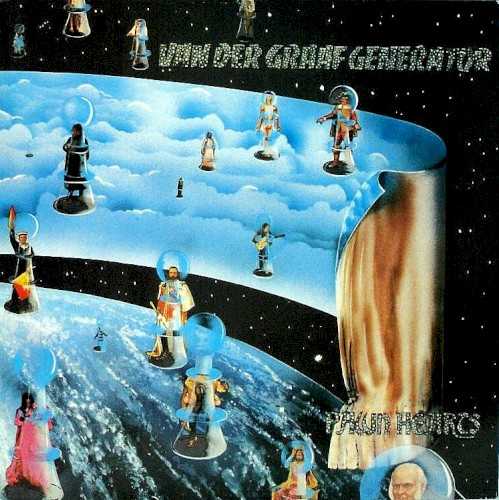 | Album: 26 of 50 Artist: Van der Graaf Generator Title: Pawn Hearts Released: 1971-10 Tracks: 3 Duration: 45:06 Scroll: Up Down Top Bottom 25% 50% 75% Spotify TrackSamples Wikipedia Allmusic AlbumCover | 1 Lemmings (Including Cog) (11:39) 2 Man-Erg (10:21) 3 A Plague of Lighthouse Keepers: A) Eyewitness - B) Pictures/Lighthouse - C) Eyewitness - D) S.H.M. - E) Presence of the Light - F) Kosmos Tours - G) (Custards) Last Stand - H) The Clot Thickens - I) Lands End (Sineline) - J) We Go Now (23:05) |
| Pawn Hearts : Allmusic album Review : Van Der Graaf Generators third album, Pawn Hearts was also its second most popular; at one time this record was a major King Crimson cult item due to the presence of Robert Fripp on guitar, but Pawn Hearts has more to offer than that. The opening track, "Lemmings," calls to mind early Gentle Giant, with its eerie vocal passages (including harmonies) set up against extended sax, keyboard, and guitar-driven instrumental passages, and also with its weird keyboard and percussion interlude, though this band is also much more contemporary in its focus than Gentle Giant. Peter Hammill vocalizes in a more traditional way on "Man-Erg," against shimmering organ swells and Guy Evans very expressive drumming, before the song goes off on a tangent by way of David Jacksons saxes and some really weird time signatures -- plus some very pretty acoustic and electric guitar work by Hammill himself and Fripp. The monumental "Plague of Lighthouse Keepers," taking up an entire side of the LP, shows the same kind of innovation that characterized Crimsons first two albums, but without the discipline and restraint needed to make the music manageable. The punning titles of the individual sections of this piece (which may have been done for the same reason that Crimson gave those little subtitles to its early extended tracks, to protect the full royalties for the composer) only add to the confusion. As for the piece itself, it features enough virtuoso posturing by everyone (especially drummer Guy Evans) to fill an Emerson, Lake & Palmer album of the same era, with a little more subtlety and some time wasted between the interludes. The 23-minute conceptual work could easily have been trimmed to, say, 18 or 19 minutes without any major sacrifices, which doesnt mean that whats here is bad, just not as concise as it mightve been. But the almost operatic intensity of the singing and the overall performance also carries you past the stretches that dont absolutely need to be here. The band was trying for something midway between King Crimson and Genesis, and came out closer to the former, at least instrumentally. Hammills vocals are impassioned and involving, almost like an acting performance, similar to Peter Gabriels singing with Genesis, but the lack of any obviously cohesive ideas in the lyrics makes this more obscure and obtuse than any Genesis release. | ||
 | Album: 27 of 50 Artist: Supertramp Title: Crime of the Century Released: 1974-09 Tracks: 8 Duration: 44:12 Scroll: Up Down Top Bottom 25% 50% 75% Spotify Wikipedia Allmusic AlbumCover | 1 School (05:35) 2 Bloody Well Right (04:33) 3 Hide in Your Shell (06:48) 4 Asylum (06:43) 5 Dreamer (03:33) 6 Rudy (07:19) 7 If Everyone Was Listening (04:05) 8 Crime of the Century (05:33) |
| Crime of the Century : Allmusic album Review : Supertramp came into their own on their third album, 1974s Crime of the Century, as their lineup gelled but, more importantly, so did their sound. The group still betrayed a heavy Pink Floyd influence, particularly in its expansive art rock arrangements graced by saxophones, but Supertramp isnt nearly as spooky as Floyd -- theyre snarky collegiate elitists, an art rock variation on Steely Dan or perhaps a less difficult 10cc, filled with cutting jokes and allusions, best heard on "Bloody Well Right." This streak would later flourish on Breakfast in America, but its present enough to give them their own character. Also present is a slight sentimental streak and a heavy fondness for pop, heard on "Dreamer," a soaring piece of art pop that became their first big hit. That and "Bloody Well Right" are the concise pop moments on the record; the rest of Crime of the Century is atmospheric like Dark Side of the Moon, but with a lighter feel and a Beatles bent. At times the album floats off into its own world, with an effect more tedious than hypnotic, but its still a huge leap forward for the group and their most consistent album outside of that 1979 masterwork, Breakfast in America. | ||
 | Album: 28 of 50 Artist: Opeth Title: Blackwater Park Released: 2001-03-12 Tracks: 8 Duration: 1:07:13 Scroll: Up Down Top Bottom 25% 50% 75% Spotify TrackSamples Wikipedia Allmusic AlbumCover | 1 The Leper Affinity (10:23) 2 Bleak (09:15) 3 Harvest (06:01) 4 The Drapery Falls (10:53) 5 Dirge for November (07:53) 6 The Funeral Portrait (08:44) 7 Patterns in the Ivy (01:52) 8 Blackwater Park (12:08) |
| Blackwater Park : Allmusic album Review : Not since the release of Tiamats groundbreaking masterpiece Wildhoney in 1994 had the extreme metal scene witnessed such an overwhelming show of fan enthusiasm and uniform critical praise as that bestowed upon Blackwater Park, the astounding fifth effort from Swedish metal titans Opeth. A work of breathtaking creative breadth, Blackwater Park (named after an obscure German progressive rock outfit from the 1970s) keeps with Opeths tradition by transcending the limits of death/black metal and repeatedly shattering the foundations of conventional songwriting, to boot. Rarely does a band manage to break new ground without losing touch with its roots, but Opeth has made a career of it -- perhaps never as effortlessly as on this occasion. But the biggest difference between Blackwater Park and previous offerings lies not in the remarkably high songwriting standards achieved by main man Mikael Åkerfeldt (thats a given with him), but in the first-time involvement of Porcupine Tree leader Steve Wilson, whose contributions as producer lend an unprecedented fluidity to Opeths restlessly inventive arrangements. Like all Opeth LPs, Blackwater Park is divided not so much into songs as "movements," as the band likes to call them. Tracks start and finish in seemingly arbitrary fashion, usually traversing ample musical terrain, including acoustic guitar and solo piano passages, ambient soundscapes, stoner rock grooves, and Eastern-tinged melodies -- any of which are subject to savage punctuations of death metal fury at any given moment. Likewise, Åkerfeldts vocals run the gamut from bowel-churning grunts to melodies of chilling beauty -- depending on each movement sections mood. With all this in mind, singling out specific highlights is pretty much a futile exercise; but for the benefit of first-time listeners, why not start out with the colossal, Arabian-flavored riffs of "Bleak," the memorable chorus of "The Drapery Falls," the surprisingly gentle intro of "Dirge for November," and, finally, the all-encompassing title track. Then, with patience (Opeths music is everything but immediate), the rest of Blackwater Parks grand scheme will be revealed. As for more experienced Opeth disciples, few will disagree with the fact that, even compared to lofty prior achievements, Blackwater Park is surely the bands coming-of-age album, and therefore, an ideal introduction to its remarkable body of work. | ||
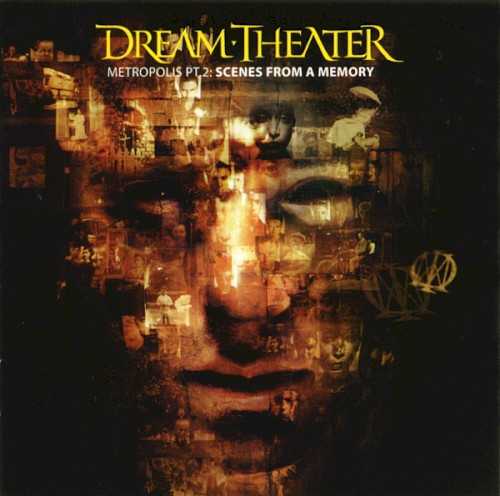 | Album: 29 of 50 Artist: Dream Theater Title: Metropolis, Pt. 2: Scenes From a Memory Released: 1999-10-25 Tracks: 12 Duration: 1:17:11 Scroll: Up Down Top Bottom 25% 50% 75% Spotify Allmusic AlbumCover | 1 Act I: Scene One: Regression (02:06) 2 Act I: Scene Two: I. Overture 1928 (03:37) 3 Act I: Scene Two: II. Strange Déjà Vu (05:12) 4 Act I: Scene Three: I. Through My Words (01:02) 5 Act I: Scene Three: II. Fatal Tragedy (06:49) 6 Act I: Scene Four: Beyond This Life (11:22) 7 Act I: Scene Five: Through Her Eyes (05:29) 1 Act II: Scene Six: Home (12:53) 2 Act II: Scene Seven: I. The Dance of Eternity (06:13) 3 Act II: Scene Seven: II. One Last Time (03:46) 4 Act II: Scene Eight: The Spirit Carries On (06:38) 5 Act II: Scene Nine: Finally Free (11:59) |
| Metropolis, Pt. 2: Scenes From a Memory : Allmusic album Review : Dream Theater is almost aggressively out of fashion in 1999. Few bands subscribe to their dense blend of progressive rock and post-Halen metal, and those that do usually dont have major-label contracts, the way Dream Theater does. There was a point where they tried to straighten out their sound somewhat, as they flirted with straight-ahead, laid-back metal on 1997s Falling into Infinity, but with its 1999 studio sequel, Scenes from a Memory, Dream Theater delves straight into old-fashioned prog rock. Scenes from a Memory is an unabashed concept album, told in two acts, about the 1928 murder of a young woman and how a modern man is haunted by the crime. A convoluted, difficult tale is told in a convoluted, difficult fashion, with no less than four tracks clocking in at well over ten minutes and three others ranging from 6:30 to 8:50. Clearly, this is intended as some sort of masterwork, and whats remarkable is that Dream Theater comes close to creating a masterwork with Scenes from a Memory. The album plays more like a suite than a collection of individual songs. At times, that means the album can bog down slightly in its own flights of fancy and long instrumental sections, but concentrated listens reveal the intricacies of the song structures and the musicianship. Occasionally, it can seem as if James Labrie oversings, but thats a minor point -- the overall end result of the album is quite impressive indeed. | ||
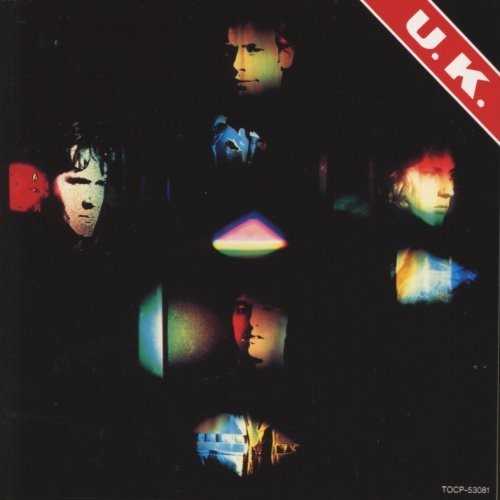 | Album: 30 of 50 Artist: U.K. Title: U.K. Released: 1978 Tracks: 8 Duration: 46:32 Scroll: Up Down Top Bottom 25% 50% 75% Spotify Wikipedia Allmusic AlbumCover | 1 In the Dead of Night (05:34) 2 By the Light of Day (04:29) 3 Presto Vivace and Reprise (03:05) 4 Thirty Years (08:08) 5 Alaska (04:39) 6 Time to Kill (04:57) 7 Nevermore (08:12) 8 Mental Medication (07:26) |
| U.K. : Allmusic album Review : The debut album from amalgamated progsters John Wetton, Bill Bruford, Eddie Jobson, and Allan Holdsworth has the edge over both Danger Money and Night After Night because of the synthesis of melody and rhythm that is inflicted through nearly every one of the eight tracks. While not as commercial sounding as Wettons 1980s supergroup Asia, U.K. mustered up a progressive air by the use of intelligent keyboard and percussion interplay without sounding mainstream. Jobsons work with the electric violin and assorted synthesizers adds to an already profound astuteness carried by Wetton. Former Yes and Genesis drummer Bill Bruford is just as important behind the kit, making his presence felt on numbers like "Thirty Years" and "Nevermore." Without carrying the same rhythms or cadences through each song, U.K. implements some differentiation into their music, straying from the sometimes over-the-top musicianship that occurs with the gathering of such an elite bunch. The melodious finish of such tracks as "By the Light of Day" and "Alaska" showcases the overall fluency of each member, and shows no signs of any progressive tediousness that could have easily evolved. All three of U.K.s albums are enjoyable, but the debut sports the most interest, since it spotlights their remarkable fit as a band for the first time. | ||
 | Album: 31 of 50 Artist: Renaissance Title: Ashes Are Burning Released: 1973-10 Tracks: 6 Duration: 40:49 Scroll: Up Down Top Bottom 25% 50% 75% Spotify TrackSamples Allmusic AlbumCover | 1 Can You Understand? (09:52) 2 Let It Grow (04:17) 3 On the Frontier (04:57) 4 Carpet of the Sun (03:32) 5 At the Harbour (06:48) 6 Ashes Are Burning (11:21) |
| Ashes Are Burning : Allmusic album Review : With electric guitarist Andy Powell sitting in on the title track, Renaissance delivered its best, and first fully formed album, mixing Russian, French, and Indian influences in musical settings that are both lively and elegant. The title track is one of the few lengthy progressive-rock pieces of the era that holds up, and the rest of the material runs the gamut from folk ("Carpet of the Sun") to Impressionist ("At the Harbor"), all of it hauntingly beautiful and enlivening. Reissued in 1993 by One Way Records, with excellent sound. | ||
 | Album: 32 of 50 Artist: Kansas Title: Leftoverture Released: 1976-10 Tracks: 8 Duration: 43:31 Scroll: Up Down Top Bottom 25% 50% 75% Spotify TrackSamples Allmusic AlbumCover | 1 Carry On Wayward Son (05:23) 2 The Wall (04:48) 3 What’s on My Mind (03:28) 4 Miracles out of Nowhere (06:28) 5 Opus Insert (04:27) 6 Questions of My Childhood (03:38) 7 Cheyenne Anthem (06:53) 8 Magnum Opus (08:24) |
| Leftoverture : Allmusic album Review : For any art rock band, the fourth album means its time for a self-styled masterpiece -- if you need proof, look at Selling England by the Pound or Fragile. So, with Kansas, the most determinedly arty of all American art rock bands, they composed and recorded Leftoverture, an impenetrable conundrum of significance thats capped off by nothing less than a five-part suite, appropriately titled "Magnum Opus," and featuring such promising movement titles as "Father Padilla Meets the Perfect Gnat" and "Release the Beavers." Of course, theres no telling whether this closing opus relates to the opener, "Carry On Wayward Son," the greatest single Kansas ever cut -- a song that manages to be pompous, powerful, ridiculous, and catchy all at once. That they never manage to rival it anywhere on this record is as much a testament to their crippling ambition as their lack of skills. And its unfair to say Kansas are unskilled, since they are certainly instrumentally proficient and they can craft songs or, rather, compositions that appear rather ambitious. Except these compositions arent particularly complex, rhythmically or harmonically, and are in their own way as ambling as boogie rock, which still feels to be their foundation. Its not really fair to attack Kansas for a concept album with an impenetrable concept -- its possible to listen to Lamb Lies Down on Broadway hundreds of times and not know what the hell Rael is up to -- but theres neither hooks nor true grandiosity here to make it interesting. That said, this still may be Kansas most consistent set, outside of Point of Know Return. Take that for what you will. | ||
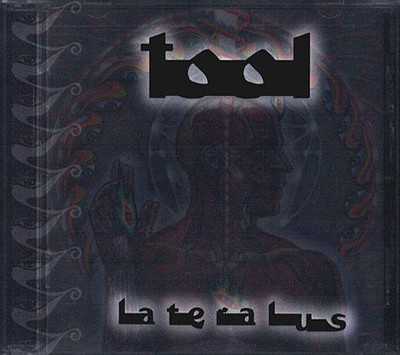 | Album: 33 of 50 Artist: Tool Title: Lateralus Released: 2001-05-14 Tracks: 13 Duration: 1:19:02 Scroll: Up Down Top Bottom 25% 50% 75% Spotify TrackSamples Wikipedia Allmusic AlbumCover | 1 The Grudge (08:36) 2 Eon Blue Apocalypse (01:06) 3 The Patient (07:12) 4 Mantra (01:13) 5 Schism (06:45) 6 Parabol (03:06) 7 Parabola (06:04) 8 Disposition (04:48) 1 Ticks & Leeches (08:08) 2 Lateralus (09:24) 3 Reflection (11:09) 4 Triad (08:46) 5 Faaip de Oiad (02:40) |
| Lateralus : Allmusic album Review : After an exhaustive five-year litigation battle between the band and their label management, Tool offer up the latest chapter in their musical self-discovery in Lateralus. Make no mistake, this is a prog rock record, reminiscent of King Crimson and Meddle-era Pink Floyd, with a hint of Rush mutated with Tools signature sonic assault on the ears. Lateralus demands close listening from the first piece onward, as it becomes quickly apparent that this is not going to be an album one can listen to and accept at face value. Complex rhythm changes, haunting vocals, and an onslaught of changes in dynamics make this an album other so-called metal groups could learn from. While some compositions seem out of place, others fit together seamlessly, such as the 23-minute song cycle serving as the climax and resolution of the album. However, the albums most disturbing moment arrives at the end, with dissonant electronic noises placed randomly with a drum solo over a phone call to a talk show discussing the secrets behind Area 51, once again serving as a symbolic gesture from the band encouraging people not to take things at face value and to think for themselves. Overall, a solid, well-produced album from a band that never fails to deliver with each release. | ||
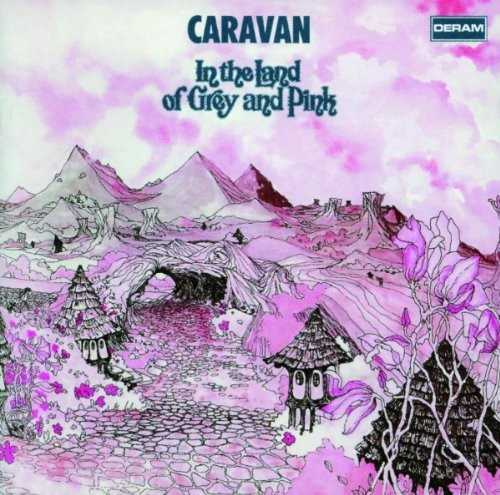 | Album: 34 of 50 Artist: Caravan Title: In the Land of Grey and Pink Released: 1971-04-08 Tracks: 5 Duration: 43:19 Scroll: Up Down Top Bottom 25% 50% 75% Spotify Wikipedia AlbumCover | 1 Golf Girl (05:00) 2 Winter Wine (07:35) 3 Love to Love You (And Tonight Pigs Will Fly) (03:03) 4 In the Land of Grey and Pink (04:59) 5 Nine Feet Underground: Nigel Blows a Tune / Love’s a Friend / Make It 76 / Dance of the Seven Paper Hankies / Hold Grandad by the Nose / Honest I Did! / Disassociation / 100% Proof (22:39) |
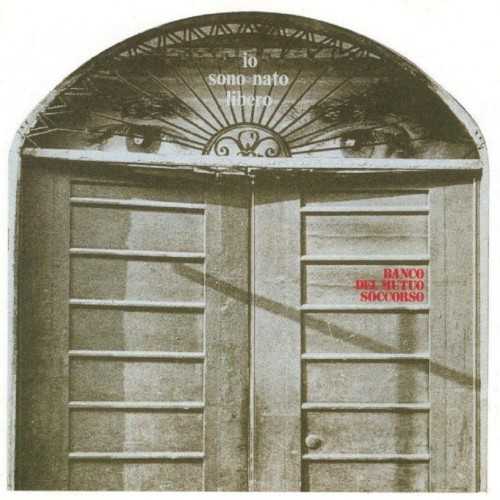 | Album: 35 of 50 Artist: Banco del Mutuo Soccorso Title: Io sono nato libero Released: 1973 Tracks: 5 Duration: 40:38 Scroll: Up Down Top Bottom 25% 50% 75% Spotify Wikipedia AlbumCover | 1 Canto nomade per un prigioniero politico (15:46) 2 Non mi rompete (05:05) 3 La città sottile (07:13) 4 Dopo... niente è più lo stesso (09:54) 5 Traccia II (02:39) |
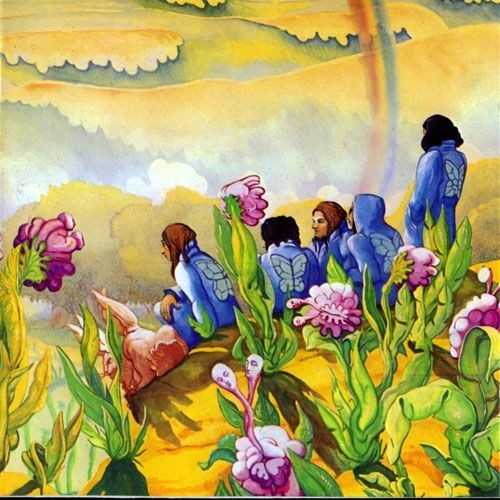 | Album: 36 of 50 Artist: Harmonium Title: Si on avait besoin dune cinquième saison Released: 1975-05 Tracks: 5 Duration: 41:32 Scroll: Up Down Top Bottom 25% 50% 75% Spotify Allmusic AlbumCover | 1 Vert (05:34) 2 Dixie (03:26) 3 Depuis l’automne (10:28) 4 En pleine face (04:50) 5 Histoires sans paroles (17:12) |
| Si on avait besoin d'une cinquième saison : Allmusic album Review : Released a year after Harmoniums debut album, Si On Avait Besoin dune Cinquième Saison (If We Needed a Fifth Season) marked an impressive departure from the guitar trio folk-pop the band first played in cabarets. The first difference is the addition of two new members, reedist/flutist Pierre Daigneault and keyboardist Serge Locat (still no drummer). Second, the album is structured on a concept revolving around seasons, the first four pieces representing each one of them. Third, the fifth piece (or season) is a 17-minute epic suite. This is not folk-rock anymore, but a very personal form of progressive rock rooted in folk (the closest comparison would be early Strawbs). Special care has been put into the arrangements; the song "Dixie," a spirited summer tune, features dozens of instruments coming in and out, topped by Locats grand piano solo (and the only apparition of percussion on the whole album, a hi-hat hit and a bass drum kick). Songs have gained in length and complexity, the use of Ondes-Martenot waves (courtesy of prog rock band Etceteras Marie Bernard), mellotron, piano, and flute add another dimension to bands sound and point toward what LHeptade would be. At the same time, acoustic guitars still provide the backbone of the songs -- but they are not easy-to-learn campfire tunes anymore. Vocalist Judy Richard guests on the beautiful "Histoires Sans Paroles" ("Stories Without Words"), one of Québecs finest progressive rock moments, once again without a single percussion sound. Between the folk simplicity of Harmonium and the symphonic grandeur of LHeptade, Si On Avait Besoin dune Cinquième Saison gave the band its unique voice. This remains one of the best transitional albums ever recorded and an essential item in Québecs music history. | ||
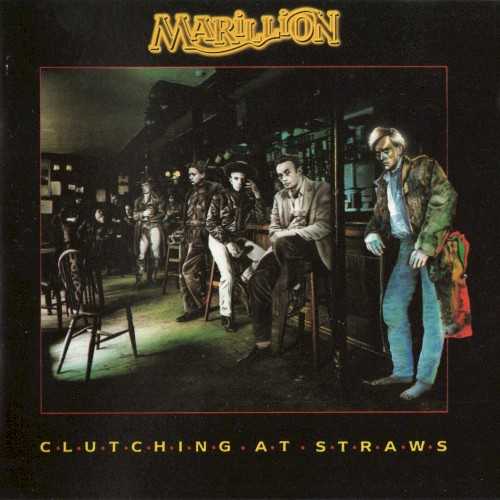 | Album: 37 of 50 Artist: Marillion Title: Clutching at Straws Released: 1987-06-12 Tracks: 11 Duration: 52:16 Scroll: Up Down Top Bottom 25% 50% 75% Spotify TrackSamples Wikipedia Allmusic AlbumCover | 1 Hotel Hobbies (03:35) 2 Warm Wet Circles (single version) (04:25) 3 That Time of the Night (The Short Straw) (06:00) 4 Going Under (02:47) 5 Just for the Record (03:09) 6 White Russian (06:27) 7 Incommunicado (05:15) 8 Torch Song (04:05) 9 Slàinte Mhath (04:44) 10 Sugar Mice (05:45) 11 The Last Straw (05:58) |
| Clutching at Straws : Allmusic album Review : Written and conceived during a period of inner-band turmoil, Clutching at Straws would prove to be Fishs swan song, and perhaps Marillions most unheralded masterpiece. Teaming up once again with producer Chris Kimsey, Clutching at Straws showcases some of the bands most satisfying compositions, including the magnificent "Warm Wet Circles" and "That Time of the Night (The Short Straw)." Bookended by Fishs disgust with not only himself, "Torch Song," but also with the burgeoning neo-Nazi uprising in Europe, "White Russian," the great Scot delivers an inspired condemnation. The commercial pomp and circumstance of "Incommunicado" also gives way to a self-parodying confessional inspired by Fishs inability to see himself as a bona fide rock star and celebrity ("I want to do adverts for American Express cards, talk shows on prime time T.V."). Tour opener "Slainte Mhath" is simple and elegant, building to its dramatic crescendo only to be upstaged by "Sugar Mice" -- quite simply, one of Marillions best commercial singles ever. The albums stunning closer, "The Last Straw," is Fishs self-realization that yes, the band is not only over, but that in his mind, its null and void ("and if you ever come across us, dont give us your sympathy"). Steve Rotherys blinding guitar solo brings the whole thing down to a crashing finish (prophetically, announcing his arrival as the bands true musical instigator on subsequent Fish-less records). | ||
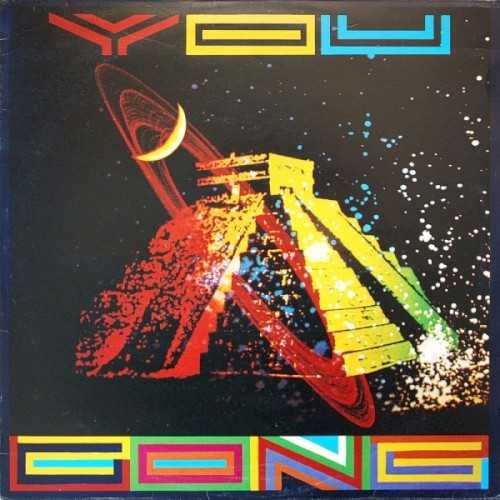 | Album: 38 of 50 Artist: Gong Title: You: Radio Gnome Invisible, Part 3 Released: 1974-10-04 Tracks: 8 Duration: 44:38 Scroll: Up Down Top Bottom 25% 50% 75% Spotify Allmusic AlbumCover | 1 Thoughts for Naught (01:32) 2 A P.H.P.s Advice (01:47) 3 Magick Mother Invocation (02:06) 4 Master Builder (06:07) 5 A Sprinkling of Clouds (08:55) 6 Perfect Mystery (02:26) 7 The Isle of Everywhere (10:20) 8 You Never Blow Yr Trip Forever (11:22) |
| You: Radio Gnome Invisible, Part 3 : Allmusic album Review : You is the final installment in Gongs legendary Radio Gnome Trilogy, and it marks an important turning point for the band. By 1974, the psychedelic hippie/folk-rock element of the sound that was leader Daevid Allens most important contribution was beginning to disappear. In its place was a more sophisticated musical vision that owed as much to jazz-rock fusion as to fellow space rockers like Pink Floyd and Hawkwind. Ironically, this is Gongs most "spacy" album, full of extended, ethereal passages that would inspire future generations of space rockers. The sound was equally defined however, by the jazzy flights of saxophonist Didier Malherbe and the sinuous rhythms of bassist Mike Howlett and drummer Pierre Moerlen (the band would eventually become the fusion-oriented Pierre Moerlens Gong). Allens songs still provide a crucial link to the rest of the trilogy, though the conceptual/mythological aspect is less crucial to You. | ||
 | Album: 39 of 50 Artist: Porcupine Tree Title: Fear of a Blank Planet Released: 2007-04-13 Tracks: 6 Duration: 50:51 Scroll: Up Down Top Bottom 25% 50% 75% Spotify Wikipedia Allmusic AlbumCover | 1 Fear of a Blank Planet (07:28) 2 My Ashes (05:07) 3 Anesthetize (17:42) 4 Sentimental (05:26) 5 Way Out of Here (07:37) 6 Sleep Together (07:28) |
| Fear of a Blank Planet : Allmusic album Review : Porcupine Tree makes a triumphant return to experimental, non-linear style with 2007s Fear of a Blank Planet. Maybe Steve Wilson was afraid that the comparatively poppy Deadwing and In Absentia were edging too close to the mainstream, because he seems far less concerned with overtly accessible songwriting on Blank Planet. Even still, the cerebral, atmospheric sound on this album remains enormously compelling from almost the first moment. While there is no "radio single" on the disc -- certainly nothing with a conventional pop arc like Lightbulb Sun or "Trains" -- most songs transcend their complex structure and feel as provocative as any traditional rock tune. The aptly named "Sentimental," in particular, features Wilsons trademark lush arrangement with layers of vocals, piano, ambient synths, electric guitar, acoustic guitar, live drums and sampled drums -- but cutting through its tightly contained mosaic is an expertly constructed chord progression that evokes a desperate sense of tension and longing, developing incredible emotional momentum as the track progresses. Blank Planet sounds like Wilson spent about half of his studio time on the guitar; its full of buzzy, meticulously distorted solos that you can easily picture him folding into the prototypical Porcupine Tree amalgamation of drum machine, organ, and synthesizers during many long hours in front of the sound board. The quiet, English restraint with which Wilson croons seems to have saved his voice from the decay that so many male singers experience over a twenty year career, and lucky for us (and for him), the style still works perfectly with Porcupine Trees sound. As a vocalist, he has an amazing capacity for juxtaposing cold, haunting moments against evisceratingly passionate ones, mostly thanks to the control he exerts over his instrument. Wilsons clear, boys choir timbre sounds like a torrent of frenzy and hunger when he breaks free of it and explores the limits of his vox on tracks like "Sleep Together." His sleepy, melodic approach also has the benefit of ensuring that his poetic lyrics, which run the gamut from acerbic social criticisms to wrenching personal narratives, are always perfectly discernible. Though its only six tracks long, each of the songs on Blank Planet is exquisitely crafted, even the 17-minute long "Anesthetize." Wilson has a great sense of flow, leading mournful, ambient ballads into graceful crescendos, and over long interludes that sway blissfully throughout rises and falls, only occasionally losing themselves to moments of plodding or meandering. At roughly 51 minutes, Fear of a Blank Planet is short by Porcupine Tree standards, but by measure of quality rather than quantity, its one of the most substantial prog albums to come out in years. | ||
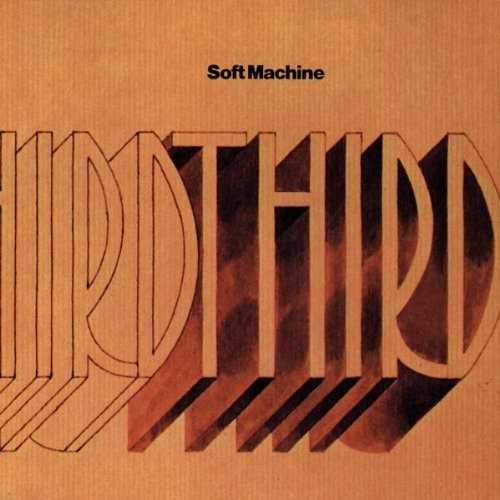 | Album: 40 of 50 Artist: Soft Machine Title: Third Released: 1970-06-06 Tracks: 4 Duration: 1:15:20 Scroll: Up Down Top Bottom 25% 50% 75% Spotify TrackSamples Wikipedia AlbumCover | 1 Facelift (18:45) 2 Slightly All the Time (18:12) 3 Moon in June (19:08) 4 Out-Bloody-Rageous (19:13) |
 | Album: 41 of 50 Artist: Amon Düül II Title: Yeti Released: 1970 Tracks: 10 Duration: 1:07:49 Scroll: Up Down Top Bottom 25% 50% 75% Spotify AlbumCover | 1 Soap Shop Rock, A. Burning Sister, B. Halluzination Guillotine, C. Gulp a Sonata, D. Flesh-Coloured Anti-Aircraft Alarm (13:46) 2 She Came Through the Chimney (03:00) 3 Archangels Thunderbird (03:33) 4 Cerberus (04:21) 5 The Return of Ruebezahl (01:39) 6 Eye-Shaking King (05:40) 7 Pale Gallery (02:16) 8 Yeti (improvisation) (18:13) 9 Yeti Talks to Yogi (improvisation) (06:18) 10 Sandoz in the Rain (improvisation) (08:59) |
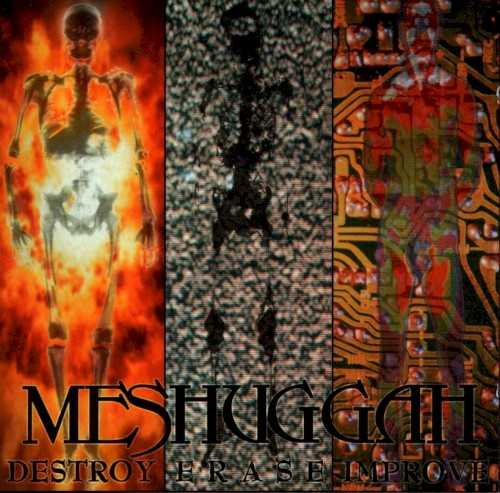 | Album: 42 of 50 Artist: Meshuggah Title: Destroy Erase Improve Released: 1995-05-05 Tracks: 15 Duration: 1:16:19 Scroll: Up Down Top Bottom 25% 50% 75% Spotify TrackSamples Wikipedia Allmusic AlbumCover | 1 Future Breed Machine (05:48) 2 Beneath (05:38) 3 Soul Burn (05:17) 4 Transfixion (03:33) 5 Vanished (05:04) 6 Acrid Placidity (03:16) 7 Inside What’s Within Behind (04:30) 8 Terminal Illusions (03:47) 9 Suffer in Truth (04:20) 10 Sublevels (05:14) 11 Vanished (05:34) 12 Suffer in Truth (04:26) 13 Inside What’s Within Behind (04:10) 14 Gods of Rapture (live) (04:53) 15 Aztec Two-Step (10:44) |
| Destroy Erase Improve : Allmusic album Review : With Destroy Erase Improve, Meshuggah shattered any preconceived notions about what death, thrash, and prog metal could be with one astoundingly accurate, calculated blow. The Swedish outfit managed to surpass their startlingly original, if relatively immature debut, Contradictions Collapse, with a record so pure in concept and execution, it borders on genius. Lyrical themes visualize the integration of machines with organisms as humanitys next logical evolutionary step, while the music backing it up is mind-bogglingly technical, polyrhythmic math metal -- the work of highly skilled men with powerful instruments. While the idea looks unwieldy on paper, Meshuggah handles it with a balance of raw guts and sheer brainpower, weaving hardcore-style shouts amongst deceptively (and deviously) simple staccato guitar riffs and insanely precise drumming -- often with all three components acting in different time signatures. Guitarist Fredrik Thordendal adds an element of weirdness with Allan Holdsworth-style neo-jazz fusion leads that serve as melodic oases amidst the jackhammer rhythms. While such bold, challenging arrangements could result in a wank-fest or, even worse, a chaotic mess, Meshuggah carefully synchronizes their bludgeoning instrumentation, embracing minimalism without excess and playing to the power of the song so the listener isnt neck-deep in over-composed indulgences. As a result, "Future Breed Machine," "Suffer in Truth," and "Soul Burn" are mind-bogglingly profound, integrating body, mind, and soul into a violently precise attack, the point being that change can be extraordinarily difficult -- if not maddening -- but the results are transcendent. While industrial metallers Fear Factory have attempted to tackle similar themes, Meshuggah outclasses them on all fronts, proved by the stunning brilliance of Destroy Erase Improve. The album is a bona fide 90s classic, a record boasting ideas so well-balanced -- natural yet clinical, guttural yet intelligent, twisted yet concise -- it muscled simplistic subgenres out of the way and confidently pointed toward the future of metal. | ||
 | Album: 43 of 50 Artist: Electric Light Orchestra Title: Eldorado: A Symphony by the Electric Light Orchestra Released: 1974-09 Tracks: 10 Duration: 39:09 Scroll: Up Down Top Bottom 25% 50% 75% Spotify Wikipedia AlbumCover | 1 Eldorado Overture (02:12) 2 Can’t Get It Out of My Head (04:22) 3 Boy Blue (05:19) 4 Laredo Tornado (05:29) 5 Poor Boy (The Greenwood) (02:56) 6 Mister Kingdom (05:30) 7 Nobody’s Child (03:56) 8 Illusions in G Major (02:37) 9 Eldorado (05:18) 10 Eldorado Finale (01:29) |
 | Album: 44 of 50 Artist: Strawbs Title: Hero and Heroine Released: 1974 Tracks: 10 Duration: 39:32 Scroll: Up Down Top Bottom 25% 50% 75% Spotify TrackSamples AlbumCover | 1 Autumn: (I) Heroines Theme - (II) Deep Summers Sleep - (III) The Winter Long (08:25) 2 Sad Young Man (04:07) 3 Just Love (03:40) 4 Shine on Silver Sun (02:48) 5 Hero and Heroine (03:20) 6 Midnight Sun (03:12) 7 Out in the Sun (03:18) 8 Round and Round (04:44) 9 Lay a Little Light on Me (03:27) 10 Heros Theme (02:27) |
 | Album: 45 of 50 Artist: Triumvirat Title: Illusions on a Double Dimple Released: 1973 Tracks: 12 Duration: 45:00 Scroll: Up Down Top Bottom 25% 50% 75% Spotify AlbumCover | 1 Illusions on a Double Dimple: I. Flashback (00:57) 2 Illusions on a Double Dimple: II. Schooldays (03:22) 3 Illusions on a Double Dimple: III. Triangle (06:53) 4 Illusions on a Double Dimple: IV. Illusions (01:42) 5 Illusions on a Double Dimple: V. Dimplicity (05:37) 6 Illusions on a Double Dimple: VI. Last Dance (04:53) 7 Mister Ten Percent: I. Maze (03:03) 8 Mister Ten Percent: II. Dawning (01:02) 9 Mister Ten Percent: III. Bad Deal (01:40) 10 Mister Ten Percent: IV. Roundabout (05:49) 11 Mister Ten Percent: V. Lucky Girl (05:14) 12 Mister Ten Percent: VI. Million Dollars (04:42) |
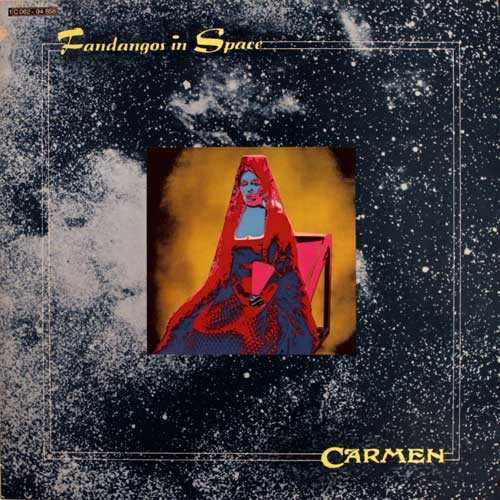 | Album: 46 of 50 Artist: Carmen Title: Fandangos in Space Released: 1973 Tracks: 11 Duration: 45:59 Scroll: Up Down Top Bottom 25% 50% 75% Spotify TrackSamples AlbumCover | 1 Bulerias (05:23) 2 Bullfight (04:18) 3 Stepping Stone (02:52) 4 Sailor Song (05:13) 5 Lonely House (04:07) 6 Por Tarantos (01:44) 7 Looking Outside (My Window) (05:08) 8 Tales of Spain (08:59) 9 Retirando (00:43) 10 Fandangos in Space (06:36) 11 Reprise - Finale (00:56) |
 | Album: 47 of 50 Artist: Crack the Sky Title: Crack the Sky Released: 1975 Tracks: 9 Duration: 42:00 Scroll: Up Down Top Bottom 25% 50% 75% Spotify TrackSamples Allmusic AlbumCover | 1 Hold On (03:00) 2 Surf City (03:54) 3 A Sea Epic (06:33) 4 She’s a Dancer (03:54) 5 Robots for Ronnie (04:39) 6 Ice (04:36) 7 Mind Baby (04:32) 8 I Don’t Have a Tie (03:04) 9 Sleep (07:48) |
| Crack the Sky : Allmusic album Review : The astonishing success of Crack the Skys eponymous first album raised expectations that the band was never able to fulfill for the rest of their career. Critics and audiences alike delighted in the wry, intelligent lyrics, complex and powerful progressive rock, and carefully crafted harmonies. Radio programmers were more ambivalent. Songs like "Ice," "Shes a Dancer," and "Surf City" all got nationwide airplay, though none actually became a real hit. All of them deserved more attention, but the label never focused their promotional efforts on any one of them, and as a result there was no hit single. (Shades of Moby Grapes first album.) Rolling Stones designation of Crack the Sky as "Album of the Year" for 1975 helped did as much as anything the record company did, and in retrospect their award was well-deserved. The album still holds up very well, especially the delirious "A Sea Epic," one of the rare examples of a driving and complex progressive rock song with a really good sense of humor. Three years and two albums later, when Crack the Sky did a live album, most of the songs were from this album. They obviously knew where their best material was and played to their strengths. Highly recommended. | ||
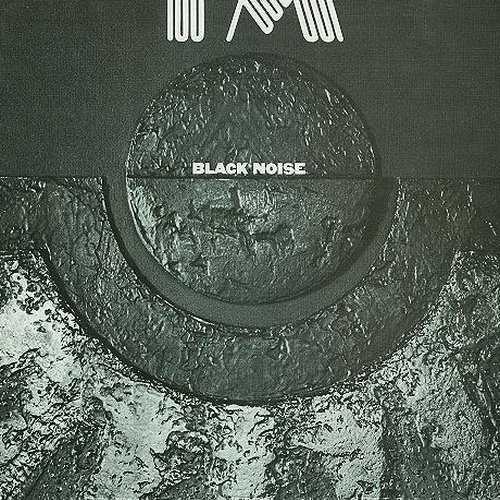 | Album: 48 of 50 Artist: FM Title: Black Noise Released: 1977 Tracks: 8 Duration: 40:29 Scroll: Up Down Top Bottom 25% 50% 75% Spotify TrackSamples Wikipedia AlbumCover | 1 Phasors on Stun (03:49) 2 One OClock Tomorrow (06:05) 3 Hours (02:36) 4 Journey (04:41) 5 Dialing for Dharma (03:15) 6 Slaughter in Robot Village (05:02) 7 Aldebaran (05:02) 8 Black Noise (09:56) |
 | Album: 49 of 50 Artist: Ruins Title: Hyderomastgroningem Released: 1995 Tracks: 20 Duration: 1:07:17 Scroll: Up Down Top Bottom 25% 50% 75% Spotify AlbumCover | 1 Hyderomastgroningem (01:27) 2 Bríxön Varrömiks (09:41) 3 033 (00:35) 4 Economic Mond Possa (02:01) 5 Pig Brag Crack (02:22) 6 Prrifth (05:19) 7 Pontemcorary Music #1 (02:40) 8 Zurna Taksïm (00:37) 9 Comme a la radio (00:39) 10 Gravestone (03:19) 11 Memories of Zwõrrisdéh (05:26) 12 Skyscraper (02:19) 13 Dölnnén Vlãst (02:47) 14 Stone Eater (04:21) 15 Pontemcorary Music #2 (01:44) 16 Dél Fãnci Känt (07:35) 17 Bonze From Hell (00:33) 18 Spèèd Bãll (02:50) 19 Ordinary People in Idaho (04:04) 20 Bliezzaning Möltz (06:49) |
 | Album: 50 of 50 Artist: Happy the Man Title: Happy the Man Released: 1977 Tracks: 9 Duration: 49:29 Scroll: Up Down Top Bottom 25% 50% 75% Spotify TrackSamples AlbumCover | 1 Starborne (04:32) 2 Stumpy Meets the Firecracker in Stencil Forest (04:21) 3 Upon the Rainbow (Befrost) (04:39) 4 Mr. Mirrors Reflection on Dreams (08:52) 5 Carousel (04:08) 6 Knee Bitten Nymphs in Limbo (05:22) 7 On Time as a Helix of Precious Laughs (05:21) 8 Hidden Moods (03:41) 9 New York Dreams Suite (08:32) |