Daft Punk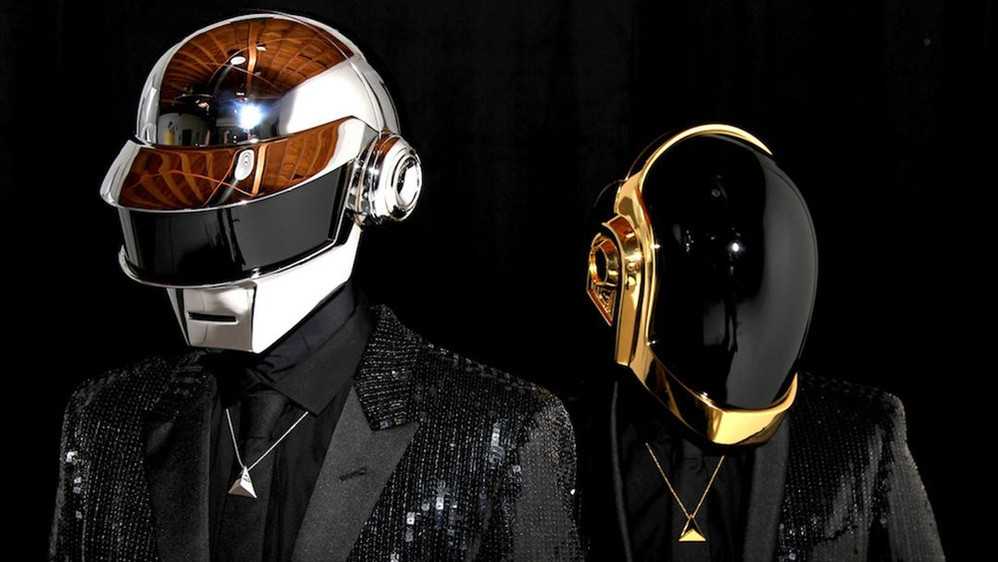 | ||
| Allmusic Biography : Even as they evolved from French house pioneers in the 90s to dance tastemakers in the 2000s to mainstream heroes in the 2010s, Daft Punk remained one of dance musics most influential and iconic acts. The combined talents of Guy-Manuel de Homem-Christo and Thomas Bangalter, the Parisian duo quickly won acclaim for their unique blend of first-wave acid house and techno with pop, indie rock, and hip-hop. One of the pairs first projects together was Darling, an instrumental indie cover band; their current recording name derives from a review in U.K. music weekly Melody Maker of a compilation tape Darling were featured on, released by Krautrock revivalists Stereolab (their lo-fi D.I.Y. cover of a Beach Boys song was derided as "daft punk"). Subsequently ditching the almost inevitable creative cul-de-sac of rock for the more appealing rush of the dancefloor, the pair released their debut single, "The New Wave," in 1993 on the celebrated Soma label. Instantly hailed by the dance music press as the work of a new breed of house innovators, the single was followed by "Da Funk," the bands first true hit (the record sold 30,000 copies worldwide and saw thorough rinsings by everyone from Kris Needs to the Chemical Brothers). Although the group had only released a trio of singles ("The New Wave" and "Da Funk," as well as the 1996 limited pressing of "Musique"), in early 1996 Daft Punk were the subject of a minor bidding war. The group eventually signed with Virgin, with its first long-player, Homework, appearing early the following year (a brief preview of the album, "Musique," was also featured on the Virgin compilation Wipeout XL next to tracks from Photek, Future Sound of London, the Chemical Brothers, and Source Direct). As with the earlier singles, the groups sound is a brazen, dancefloor-oriented blend of progressive house, funk, electro, and techno, with sprinklings of hip-hop-styled breakbeats and excessive, crowd-firing samples similar to other anthemic dance-fusion acts such as the Chemical Brothers and Monkey Mafia. In addition to his role in Daft Punk, Bangalter operates the Roulé label and has recorded under his own name (the underground smash "Trax on da Rocks") as well as Stardust (the huge club/commercial hit "Music Sounds Better with You"). After four long years of fans eagerly awaiting a follow-up to their brilliant debut, Daft Punk finally issued Discovery in March 2001. The live record Alive 1997 followed at the end of the year, and a by-now predictable four-year wait preceded the release of Human After All in early 2005. One year later, Daft Punk released a compilation, Musique, Vol. 1: 1993-2005, and in 2007 their second live record, Alive 2007, arrived. The album and its single "Harder, Better, Faster, Stronger" won Grammy Awards early in 2009; shortly after, it was announced that the duo would compose the soundtrack to Tron: Legacy, the sequel to the 1982 classic sci-fi film Tron. Daft Punks music for the movie was released in November 2010, shortly before the film -- which featured the group in a cameo -- arrived in theaters. Early in 2013, Daft Punk announced that they planned to have a new album released by May of that year. That March, the duo announced the albums title, Random Access Memories, and also launched an extensive press campaign featuring snippets of the albums lead single, "Get Lucky," and interviews with some of their collaborators (Nile Rodgers, Paul Williams, Giorgio Moroder, Panda Bear). The single was officially released in April, and Random Access Memories arrived in May. The album became one of Daft Punks biggest successes, ultimately winning Grammy Awards for Best Dance/Electronica Album, Album of the Year, and Best Engineered Album, Non-Classical. "Get Lucky" earned Grammys for Best Pop Duo/Group Performance and Record of the Year. In 2014, the duo appeared on Pharrells album G I R L and collaborated with Jay-Z on the song "Computerized." A 2015 documentary titled Daft Punk Unchained charted their history from the 90s into the 2010s, featuring interviews with Rodgers, Pharrell, and Kanye West, among others. The duo remained active, collaborating next with the Weeknds Abel Tesfaye on a pair of songs from his 2016 album Starboy, including the number one hit title track. | ||
 | Album: 1 of 13 Title: Homework Released: 1997-01-20 Tracks: 16 Duration: 1:13:52 Scroll: Up Down Top Bottom 25% 50% 75% Spotify TrackSamples Wikipedia Allmusic AlbumCover | 1 Daftendirekt (02:44) 2 WDPK 83.7 FM (00:28) 3 Revolution 909 (05:26) 4 Da Funk (05:28) 5 Phœnix (04:57) 6 Fresh (04:04) 7 Around the World (07:09) 8 Rollin’ & Scratchin’ (07:27) 9 Teachers (02:53) 10 High Fidelity (06:02) 11 Rock’n Roll (07:33) 12 Oh Yeah (02:01) 13 Burnin’ (06:53) 14 Indo Silver Club (04:34) 15 Alive (05:15) 16 Funk Ad (00:51) |
| Homework : Allmusic album Review : Daft Punks full-length debut is a funk-house hailstorm, giving real form to a style of straight-ahead dance music not attempted since the early fusion days of on-the-one funk and dance-party disco. Thick, rumbling bass, vocoders, choppy breaks and beats, and a certain brash naiveté permeate the record from start to finish, giving it the edge of an almost certain classic. While a few fall flat, the best tracks make this one essential. | ||
 | Album: 2 of 13 Title: Discovery Released: 2001-02-26 Tracks: 14 Duration: 1:00:57 Scroll: Up Down Top Bottom 25% 50% 75% Spotify TrackSamples Wikipedia Allmusic AlbumCover | 1 One More Time (05:20) 2 Aerodynamic (03:27) 3 Digital Love (04:58) 4 Harder, Better, Faster, Stronger (03:44) 5 Crescendolls (03:31) 6 Nightvision (01:44) 7 Superheroes (03:57) 8 High Life (03:21) 9 Something About Us (03:51) 10 Voyager (03:47) 11 Veridis Quo (05:44) 12 Short Circuit (03:26) 13 Face to Face (04:00) 14 Too Long (10:00) |
| Discovery : Allmusic album Review : Four long years after their debut, Homework, Daft Punk returned with a second full-length, also packed with excellent productions and many of the obligatory nods to the duos favorite stylistic speed bumps of the 1970s and 80s. Discovery is by no means the same record, though. Deserting the shrieking acid house hysteria of their early work, the album moves in the same smooth filtered disco circles as the European dance smashes ("Music Sounds Better with You" and "Gym Tonic") that were co-produced by DPs Thomas Bangalter during the groups long interim. If Homework was Daft Punks Chicago house record, this is definitely the New York garage edition, with co-productions and vocals from Romanthony and Todd Edwards, two of the brightest figures based in New Jerseys fertile garage scene. Also in common with classic East Coast dance and 80s R&B, Discovery surprisingly focuses on songwriting and concise productions, though the pairs visions of bucolic pop on "Digital Love" and "Something About Us" are delivered by an androgynous, vocoderized frontman singing trite (though rather endearing) love lyrics. "One More Time," the irresistible album opener and first single, takes Bangalters "Music Sounds Better with You" as a blueprint, blending sampled horns with some retro bass thump and the gorgeous, extroverted vocals of Romanthony going round and round with apparently endless tweakings. Though "Aerodynamic" and "Superheroes" have a bit of the driving acid minimalism associated with Homework, here Daft Punk is more taken with the glammier, poppier sound of Eurodisco and late R&B. Abusing their pitch-bend and vocoder effects as though they were going out of style (about 15 years too late, come to think of it), the duo loops nearly everything they can get their sequencers on -- divas, vocoders, synth-guitars, electric piano -- and conjures a sound worthy of bygone electro-pop technicians from Giorgio Moroder to Todd Rundgren to Steve Miller. Daft Punk are such stellar, meticulous producers that they make any sound work, even superficially dated ones like spastic early-80s electro/R&B ("Short Circuit") or faux-orchestral synthesizer baroque ("Veridis Quo"). The only crime here is burying the highlight of the entire LP near the end. "Face to Face," a track with garage wunderkind Todd Edwards, twists his trademarked split-second samples and fully fragmented vision of garage into a dance-pop hit that couldve easily stormed the charts in 1987. Daft Punk even manage a sense of humor about their own work, closing with a ten-minute track aptly titled "Too Long." | ||
 | Album: 3 of 13 Title: Alive 1997 Released: 2001-10-01 Tracks: 1 Duration: 45:31 Scroll: Up Down Top Bottom 25% 50% 75% Spotify Allmusic Wikipedia AlbumCover | 1 Alive 1997 (45:31) |
| Alive 1997 : Allmusic album Review : Alive 1997 reveals the French duo Daft Punk as one of the brightest entertainers in the occasionally stale world of album-based electronic dance. True, techno and house DJs can light up a crowd like few others, but the increasing artist slant of electronica often results in push-button programming and straight-from-DAT live performances, with most of the heavy lifting relegated to the lighting supervisor and effects computers. This brief glimpse at Daft Punks live show circa 1997 (their major breakout year) is a tour de force of high-energy theatrics and flair. Aside from the pair of "WDPK" interludes, Alive 1997 includes only three tracks, but theyre so radically different from their album versions that theyre only barely familiar. The duos biggest hit so far, "Da Funk," is stretched out to 16 minutes with a start-and-stop improvisation section that brings the crowd to a peak, while "Rollin & Scratchin" never looks back after breaking right on through the red-line. An energizing document, Alive 1997 is one of the few live records to approximate the excitement of the original live show. | ||
 | Album: 4 of 13 Title: Daft Club Released: 2003-11-27 Tracks: 15 Duration: 1:19:54 Scroll: Up Down Top Bottom 25% 50% 75% Spotify Wikipedia Allmusic AlbumCover | 1 Ouverture (02:40) 2 Aerodynamic (Daft Punk remix) (06:10) 3 Harder, Better, Faster, Stronger (The Neptunes remix) (05:11) 4 Face to Face (Cosmo Vitelli remix) (04:54) 5 Phoenix (Basement Jaxx remix) (07:53) 6 Digital Love (Boris Dlugosch remix) (07:30) 7 Harder, Better, Faster, Stronger (Jess and Crabbe Regulator mix) (06:01) 8 Face to Face (Demon remix) (06:59) 9 Crescendolls (Laidback Luke remix) (05:25) 10 Aerodynamic (Slum Village remix) (03:37) 11 Too Long (Gonzales version) (03:13) 12 Aerodynamite (07:48) 13 One More Time (Romanthonys unplugged) (03:40) 14 Something About Us (Love Theme From Interstella 5555) (02:13) 15 Voyager (Dominique Tortis Wild Style edit) (06:32) |
| Daft Club : Allmusic album Review : Daft Punks version of a remix album is far better than most of its ilk, but far worse than either of their previous production albums or their live record. But first off, agreeing to remix Daft Punk counts as an act of high hubris for most producers; the duo is responsible for some of the most innovative productions ("Musique," "Revolution 909," "Aerodynamic") and remixes ("Mothership Reconnection," "Disco Cubism," "Chord Memory") of recent years. But fresh blood is always intriguing, and the acts hired out to post-produce for 2001s Discovery LP were widely varied and highly talented. Unfortunately, few of the big names tapped turn in tracks equal to their name. Although Basement Jaxxs version of "Phoenix" (the only track originally taken from Daft Punks debut album) is a mostly successful translation of DP-style robot disco into Basement Jaxxs vision of sensual house, the Neptunes remix of "Harder, Better, Faster, Stronger" is an unintentionally nerdy lounge tune, Detroit trio Slum Villages sampling (literally) of "Aerodynamic" becomes a hip-hop album track, and Romanthonys unplugged version of his own feature "One More Time" neatly destroys the magic of the original. Filling in the gaps nicely, however, are lesser-known French upstarts like Jess & Crabbe and Cosmo Vitelli as well as mainstream house mastermind Boris Dlugosch, whose "Digital Love" wisely changes very little of the original. | ||
 | Album: 5 of 13 Title: Human After All Released: 2005-03-09 Tracks: 10 Duration: 45:38 Scroll: Up Down Top Bottom 25% 50% 75% Spotify Wikipedia Allmusic AlbumCover | 1 Human After All (05:19) 2 The Prime Time of Your Life (04:23) 3 Robot Rock (04:47) 4 Steam Machine (05:20) 5 Make Love (04:50) 6 The Brainwasher (04:08) 7 On/Off (00:19) 8 Television Rules the Nation (04:47) 9 Technologic (04:44) 10 Emotion (06:58) |
| Human After All : Allmusic album Review : Daft Punk has always been one of dance musics most flexible -- and accessible -- acts, spanning the relentless pulse of Homework and the lush, sprawling Discovery with a distinctive wit and playfulness that made fans of electronic music diehards and indie rockers alike. Though the long-awaited Human After All retains that playfulness, its the duos simplest album, which oddly enough, makes it their most difficult to embrace at first. Human After All was made in six weeks, and sounds like it -- and not always in a good way: the quick-and-dirty recording process and limited palette of grainy synths, vocoders, and guitars do lend a stripped-down, spontaneous feel, but just as often, this minimal approach feels like its supporting minimal ideas. Most of Human After Alls tracks concentrate on one or two heavily repeated motifs, giving some of the tracks the feeling of demos copied and pasted to a full song length (even more uncharitably, you could say that they sound like parts of a Daft Punk beats-and-loops construction kit). "Steam Machine," for example, starts off strong with a low-slung, low-rent drum machine beat and aptly hissy whispering, but fails to do much over the course of five minutes. Repetition and simplicity, or at least a certain kind of innocence, have been at the heart of Daft Punks music since the beginning, but this formula doesnt always work on Human After All; this is particularly true on the albums softer songs, "Make Love" and "Emotion," both of which are pretty and evocative, but never quite pack the emotional punch that they threaten to. And though Human After Alls linear quality is superficially like the duos more danceable work, many of the tracks are too slow to ignite the dancefloor (however, "Television Rules the Nation"s robotic, "Smoke on the Water" meets "Iron Man" guitar riff nails the cleverly stupid vibe that doesnt always connect on the rest of the album). All of this makes the album something of an odd beast, and the baffled reactions of some fans -- some of whom suggested that Human After All was a fake album by the band made to foil digital piracy when it leaked several months before its official release date -- is understandable. Daft Punk arent responsible for their listeners expectations, but they release music so rarely that this low-res album with just ten songs (or nine, if you dont count the 19-second channel-surfing blip that is "On/Off") does, initially, feel like a disappointment. However, Human After Alls best tracks do make the duos somewhat confounding aesthetic choices work: "The Brainwasher"s trippy opening and mischievous riffs have a real sense of tension and momentum; "Robot Rock" takes Discoverys guitar worship even further, forging it into cybernetic metal; and the irresistible "Technologic," with its catchy technobabble and cheap-and-cheerful disco beat, feels like the next evolution of tracks like "Teachers" and "Harder, Faster, Better, Stronger." Since the album is on a smaller scale than Daft Punks previous albums, its not surprising that its pleasures are smaller too. The way that the synth, guitar, and vocoder lines blur into mecha-orga unity on the oddly bittersweet title track, and the way that the schaffel beat on "Prime Time of Your Life" gradually overtakes the song, eventually speeding up and devouring it, may not change the way listeners think about music the way that Discovery or Homework did, but that doesnt make them any less enjoyable. Human After All ends up being just not-bad (a first for Daft Punk); that may be hard to accept for fans that demand nothing less than brilliance from them, but just because it isnt an instant classic doesnt mean that its totally unworthy, either. | ||
 | Album: 6 of 13 Title: Human After All: Remixes Released: 2006-03-29 Tracks: 14 Duration: 1:19:02 Scroll: Up Down Top Bottom 25% 50% 75% Spotify Allmusic AlbumCover | 1 Robot Rock (Soulwax remix) (06:31) 2 Human After All (SebastiAn remix) (04:47) 3 Technologic (Peaches No Logic remix) (04:37) 4 Brainwasher (Erol Alkans Horrorhouse dub) (06:05) 5 Prime Time of Your Life (Para One remix) (03:50) 6 Human After All ("Guy-Man After All" Justice remix) (04:00) 7 Technologic (Digitalisms Highway to Paris remix) (06:01) 8 Human After All (Alter Ego remix) (09:25) 9 Technologic (Le Knight Club remix) (05:27) 10 Robot Rock (Maximum Overdrive) (05:54) 11 Human After All (The Juan MacLean remix) (06:42) 12 Technologic (Basement Jaxx Kontrol Mixx) (05:29) 13 Technologic (Liquid Twins remix) (04:10) 14 Human After All (The Emperor Machine version) (06:03) |
 | Album: 7 of 13 Title: Musique, Volume 1: 1993–2005 Released: 2006-03-29 Tracks: 15 Duration: 1:15:36 Scroll: Up Down Top Bottom 25% 50% 75% AlbumCover | 1 Musique (06:52) 2 Da Funk (05:28) 3 Around the World (radio edit) (04:00) 4 Revolution 909 (05:26) 5 Alive (05:15) 6 Rollin’ & Scratchin’ (07:27) 7 One More Time (03:55) 8 Harder, Better, Faster, Stronger (03:44) 9 Something About Us (03:51) 10 Robot Rock (04:47) 11 Technologic (radio edit) (02:46) 12 Human After All (05:19) 13 Mothership Reconnection (Daft Punk remix) (04:00) 14 Chord Memory (Daft Punk mix) (06:55) 15 Forget About the World (Daft Punk remix) (05:45) |
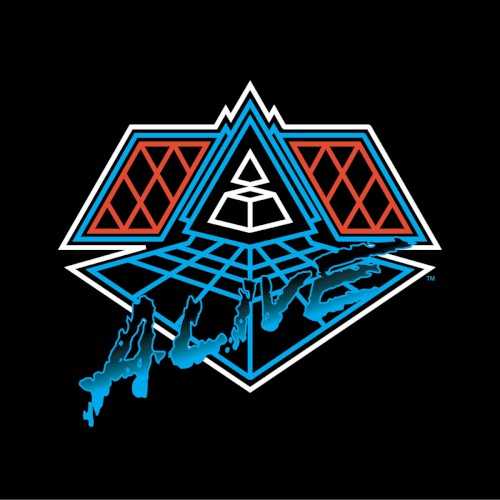 | Album: 8 of 13 Title: Alive 2007 Released: 2007-11-14 Tracks: 12 Duration: 1:14:01 Scroll: Up Down Top Bottom 25% 50% 75% Spotify Wikipedia Allmusic AlbumCover | 1 Robot Rock / Oh Yeah (06:27) 2 Touch It / Technologic (05:29) 3 Television Rules the Nation / Crescendolls (04:50) 4 Too Long / Steam Machine (07:01) 5 Around the World / Harder Better Faster Stronger (05:42) 6 Burnin’ / Too Long (07:11) 7 Face to Face / Short Circuit (04:55) 8 One More Time / Aerodynamic (06:10) 9 Aerodynamic Beats / Forget About the World (03:31) 10 Prime Time of Your Life / Brainwasher / Rollin’ and Scratchin’ / Alive (10:22) 11 Da Funk / Daftendirekt (06:36) 12 Superheroes / Human After All / Rock’n Roll (05:41) |
| Alive 2007 : Allmusic album Review : Timed to perfection, Daft Punks second live album landed exactly ten years after the first, and provides a fitting complement to Alive 1997, easily the best live non-DJ electronica record ever released. While the original featured only a handful of tracks (but found them transformed and tweaked ad infinitum), Alive 2007 is packed with productions, most of them short and many of them getting a big crowd response (all recorded at one show in Paris in June of 2007). As on their first two classic full-lengths, Thomas Bangalter and Guy-Manuel de Homem-Christo display excellent crowd control, pacing the record well, spacing the hits, and building the mood like the good crowd-pleasers they are. (The visuals included in the regular and deluxe editions reveal quite the stage show as well.) It has the feel of a greatest-hits-live concert, but energized by Daft Punks talents at weaving songs in and out of each other. Even songs from the comparatively desultory Human After All sound rejuvenated in context, with "Robot Rock" getting the show off to a rousing start. It may not be better or stronger than the original Alive 1997, but its definitely harder and faster. | ||
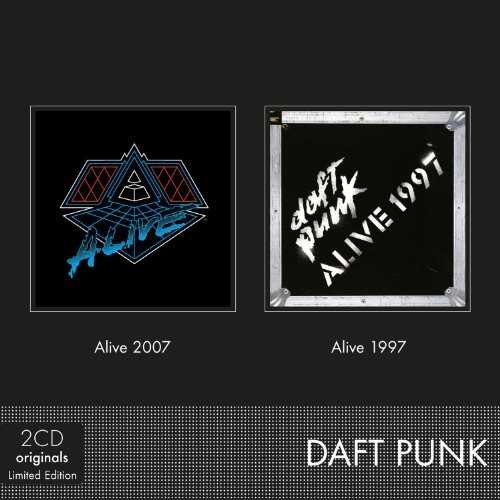 | Album: 9 of 13 Title: Alive 2007 / Alive 1997 Released: 2009 Tracks: 13 Duration: 1:59:32 Scroll: Up Down Top Bottom 25% 50% 75% AlbumCover | 1 Robot Rock / Oh Yeah (06:27) 2 Touch It / Technologic (05:29) 3 Television Rules the Nation / Crescendolls (04:50) 4 Too Long / Steam Machine (07:01) 5 Around the World / Harder Better Faster Stronger (05:42) 6 Burnin’ / Too Long (07:11) 7 Face to Face / Short Circuit (04:55) 8 One More Time / Aerodynamic (06:10) 9 Aerodynamic Beats / Forget About the World (03:31) 10 Prime Time of Your Life / Brainwasher / Rollin’ and Scratchin’ / Alive (10:22) 11 Da Funk / Daftendirekt (06:36) 12 Superheroes / Human After All / Rock’n Roll (05:41) 1 Alive 1997 (45:31) |
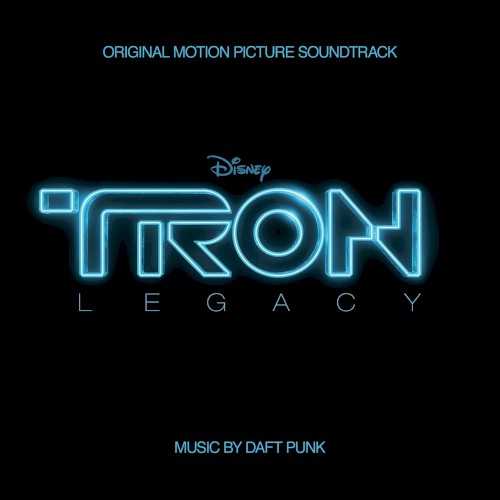 | Album: 10 of 13 Title: TRON: Legacy Released: 2010-12-06 Tracks: 22 Duration: 58:45 Scroll: Up Down Top Bottom 25% 50% 75% Spotify Allmusic AlbumCover | 1 Overture (02:28) 2 The Grid (01:36) 3 The Son of Flynn (01:35) 4 Recognizer (02:37) 5 Armory (02:02) 6 Arena (01:33) 7 Rinzler (02:17) 8 The Game Has Changed (03:25) 9 Outlands (02:42) 10 Adagio for TRON (04:11) 11 Nocturne (01:41) 12 End of Line (02:36) 13 Derezzed (01:44) 14 Fall (01:22) 15 Solar Sailer (02:42) 16 Rectifier (02:14) 17 Disc Wars (04:11) 18 C.L.U. (04:39) 19 Arrival (02:00) 20 Flynn Lives (03:22) 21 TRON Legacy (End Titles) (03:17) 22 Finale (04:22) |
| TRON: Legacy : Allmusic album Review : "The Game Has Changed" is the name of one of the tracks on Daft Punks score to Tron: Legacy, and it also fits Thomas Bangalter and Guy-Manuel de Homem-Christos music for the film. When it was announced that the duo would score the sequel to one of sci-fis most visionary movies, it seemed like the perfect fit: Their sleek, neon-tipped, playful aesthetic springs from their love of late-70s and early-80s pop culture artifacts like Tron. However, Tron: Legacy takes a much darker, more serious approach than the original film and Daft Punk follows suit, delivering soaring and ominous pieces that sound more like modern classical music than any laser tag-meets-roller disco fantasies fans may have had. Tron: Legacys legitimacy as a score may surprise listeners unaware of Bangalters fine work on 2003s Irreversible; while that score actually hews closer to Daft Punks sound, it showed his potential for crafting music beyond the duos usual scope. Working with the London Orchestra, Bangalter and de Homem-Christo fuse electronic and orchestral motifs seamlessly and strikingly. "The Game Has Changed" may be the most dramatic example: It starts with a wistful wisp of melody that sounds like a ghost in the machine, then swells of strings and brass and buzzsaw electronics submerge but never quite overtake it. Elsewhere, "Recognizer"s pulsing horns and synths and "The Son of Flynn"s arpeggios and strings are so tightly knit that they finish each others phrases. Daft Punk get in a few clever nods to Wendy Carlos Tron score, from "The Grid"s blobby analog synth tones to "Adagio for Tron"s mournful sense of lost wonder. However, for most of Tron: Legacy, theyre concerned with pushing boundaries. Its not until the scores second half that the duos more typical sound emerges on "Derezzed"s filter-disco and on "End of the Line," where witty 8-bit sounds evoke 80s video games. These tracks come as welcome relief from the tension Daft Punk ratchets up on almost every other piece, particularly "Rectifier" and "C.L.U." Encompassing the past, present, and future of sci-fi scores, Tron: Legacy feels like it grew and mutated from its origins the same way the films world did. Without a doubt, its a game-changer for Daft Punk. | ||
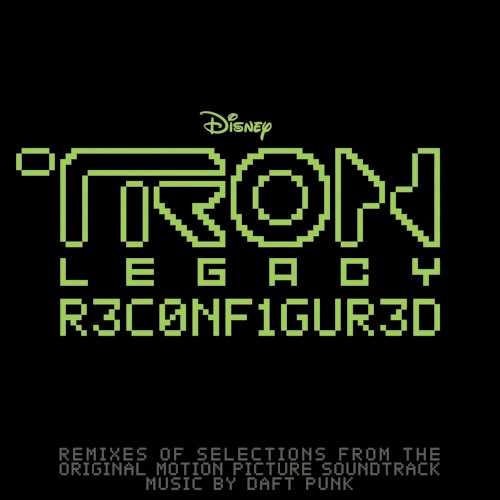 | Album: 11 of 13 Title: TRON: Legacy R3C0NF1GUR3D Released: 2011-04-04 Tracks: 15 Duration: 1:17:49 Scroll: Up Down Top Bottom 25% 50% 75% Allmusic AlbumCover | 1 Derezzed (The Glitch Mob remix) (04:22) 2 Fall (M83 vs. Big Black Delta remix) (03:55) 3 The Grid (The Crystal Method remix) (04:28) 4 Adagio for TRON (Teddybears remix) (05:34) 5 The Son of Flynn (Ki:Theory remix) (04:51) 6 C.L.U. (Paul Oakenfold remix) (04:35) 7 The Son of Flynn (Moby remix) (06:32) 8 End of Line (Boys Noize remix) (05:40) 9 Rinzler (Kaskade remix) (06:52) 10 Encom, Part II (Com Truise remix) (04:52) 11 End of Line (Photek remix) (05:19) 12 Arena (The Japanese Popstars remix) (06:08) 13 Derezzed (Avicii remix) (05:04) 14 Solar Sailer (Pretty Lights remix) (04:33) 15 TRON: Legacy (End Titles) (Sander Kleinenberg remix) (05:04) |
| TRON: Legacy R3C0NF1GUR3D : Allmusic album Review : While Daft Punk’s moody, electro-symphonic score to Tron: Legacy captured its ambition perfectly -- and, arguably, may have been the best thing about the movie -- it didn’t quite satisfy fans looking for dancefloor movers. Tron: Legacy Reconfigured rectifies that by letting the French duo’s peers loose on the film’s music. With a varied group of artists ranging from established names (Moby, the Crystal Method, Paul Oakenfold) to up-and-comers (Com Truise, Pretty Lights), the collection offers eclectic tangents on the retro-futuristic musical world Daft Punk created. While the acts involved don’t offer many surprises, they do what they do well, with the Teddybears giving “Adagio for Tron” a playful pulse and the Crystal Method injecting “The Grid” with adrenalized beats. Oakenfold’s reworking of “C.L.U.” is just as easily identifiable as his work as it is Daft Punks in its massive atmospheres and rhythms; likewise, Boys Noize and Photek turn in versions of “End of Line” that are distinctive and cohesive at the same time. Even though the energy in remixes like Japanese Popstars percussive take on “Arena” and AVICIIs fizzy remix of “Derezzed” is welcome, some of Tron: Legacy Reconfigureds best moments aren’t danceable. Moby brings a patient grace to “The Son of Flynn,” and M83 and Big Black Deltas collaboration on “Fall” uncovers the track’s dreamy romance. Reconfigured may not be as striking as the original Tron: Legacy score, but it is an enjoyable, more accessible extension of it. | ||
 | Album: 12 of 13 Title: TRON: Legacy Collector’s Digital EP Released: 2011-04-19 Tracks: 7 Duration: 18:09 Scroll: Up Down Top Bottom 25% 50% 75% Spotify AlbumCover | 1 Sea of Simulation (02:40) 2 Encom, Part II (02:15) 3 Encom, Part I (03:51) 4 Round One (01:38) 5 Castor (02:18) 6 Reflections (02:36) 7 Sunrise Prelude (02:51) |
 | Album: 13 of 13 Title: Random Access Memories Released: 2013-05-17 Tracks: 13 Duration: 1:14:24 Scroll: Up Down Top Bottom 25% 50% 75% Spotify TrackSamples Wikipedia Allmusic AlbumCover | 1 Give Life Back to Music (04:34) 2 The Game of Love (05:21) 3 Giorgio by Moroder (09:04) 4 Within (03:48) 5 Instant Crush (05:37) 6 Lose Yourself to Dance (05:53) 7 Touch (08:18) 8 Get Lucky (06:07) 9 Beyond (04:50) 10 Motherboard (05:41) 11 Fragments of Time (04:39) 12 Doin It Right (04:11) 13 Contact (06:21) |
| Random Access Memories : Allmusic album Review : When Daft Punk announced they were releasing a new album eight years after 2005s Human After All, fans were starved for new material. The Tron: Legacy score indulged the seminal dance duos sci-fi fantasies but didnt offer much in the way of catchy songs, so when Random Access Memories extensive publicity campaign featured tantalizing clips of a new single, "Get Lucky," their fan base exploded. But when the album finally arrived, that hugely hyped single was buried far down its track list, emphasizing that most of these songs are very much not like "Get Lucky" -- or a lot of the pairs previous music, at least on the surface. The album isnt much like 2010s EDM, either. Instead, Daft Punk separate themselves from most contemporary electronic music and how its made, enlisting some of their biggest influences to help them get the sounds they needed without samples. On Homeworks "Teachers," they reverently name-checked a massive list of musicians and producers; here, they place themselves on equal footing with disco masterminds Giorgio Moroder and Nile Rodgers, referring to them as "collaborators." That could be self-aggrandizing, yet its also strangely humble when they take a back seat to their co-stars, especially on one of RAMs definitive moments, "Giorgio by Moroder," where the producer shares his thoughts on making music with wild guitar and synth solos trailing behind him. Elsewhere, Daft Punk nod to their symbiotic relationship with indie on the lovely "Doin It Right," which makes the most of Panda Bears boyish vocals, and on the Julian Casablancas cameo "Instant Crush," which is only slightly more electronic than the Strokes Comedown Machine. And of course, Pharrell Williams is the avatar of their dancefloor mastery on the sweaty disco of "Lose Yourself to Dance" as well as "Get Lucky," which is so suave that it couldnt help but be an instant classic, albeit a somewhat nostalgic one. Indeed, "memories" is the albums keyword: Daft Punk celebrate the late 70s and early 80s with lavish homages like "Give Life Back to Music" -- one of several terrific showcases for Rodgers -- and the spot-on soft rock of the Todd Edwards collaboration "Fragments of Time." More importantly, Random Access Memories taps into the wonder and excitement in that eras music. A particularly brilliant example is "Touch," where singer/songwriter Paul Williams conflates his work in Phantom of the Paradise and The Muppet Movie in the songs mystique, charm, and fragile yet unabashed emotions. Often, theres an almost gooey quality to the album; Daft Punk have never shied away from "uncool" influences or sentimentality, and both are on full display here. At first, its hard to know what to make of all the fromage, but Random Access Memories reveals itself as the kind of grand, album rock statement that listeners of the 70s and 80s would have spent weeks or months dissecting and absorbing -- the ambition of Steely Dan, Alan Parsons, and Pink Floyd are as vital to the album as any of the duos collaborators. For the casual Daft Punk fan, this album might be harder to love than "Get Lucky" hinted; it might be too nostalgic, too overblown, a shirking of the groups duty to rescue dance music from the Young Turks who cropped up in their absence. But Random Access Memories is also Daft Punks most personal work, and richly rewarding for listeners willing to spend time with it. | ||