Femi Kuti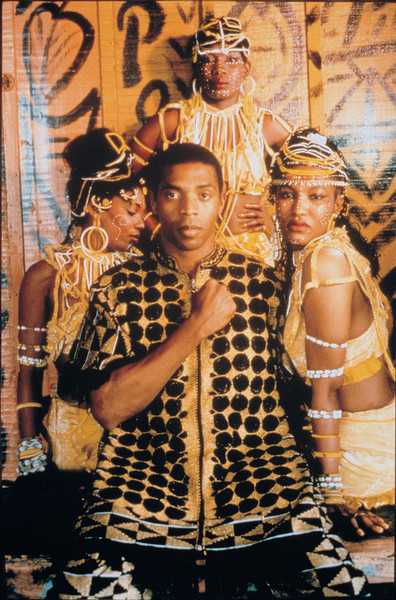 | ||
| Allmusic Biography : The eldest son of Afro-beat legend Fela Anikulapo-Kuti, Femi Kuti (born Olufela Olufemi Anikulapo Kuti) spent years playing in his fathers band before eventually rising to superstardom following his fathers death in the late 90s. Since few artists can match the elder Kutis musical legacy, Femis association with his father has been both a blessing and a curse. On the one hand, its never been difficult for Femi to garner press or attention, and MCA went out of its way to push his career with considerable amounts of publicity. Yet on the other hand, no matter his individual accomplishments, Femi will forever be known as Felas son. Practicing a similar style of Afro-beat as his father, Femi helped introduce the percussive blend of jazz and funk music to the international masses beginning in the mid-90s, along with his fathers same sense of political activism. After his fathers death in 1997, Femi suddenly found himself the subject of immense attention. He responded by signing with MCA and embarking on his solo career beginning with Shoki Shoki. He won critical celebration around the world and began mounting efforts to break into the U.S. mainstream in successive years. Born in London and raised in Lagos, Nigeria, Femi began his musical career playing in his fathers band, Egypt 80. In 1986, Femi started his own group, Positive Force, and began establishing himself as an artist independent of his fathers legacy. In the mid-90s, Motown offered him a record deal with its boutique label Tabu; Femis eponymous debut album resulted. Released in 1995, the record won praise throughout Europe and Africa for offering a more streamlined and accessible version of his fathers music. Femi embarked on an extended promotional tour, crossing first Africa, then Europe in 1996 and 1997. His solo career was off to a successful start, despite the dissolution of the Tabu label (and Femis record deal with it). However, this problem became the least of Femis concerns when his father died of AIDS-related complications in 1997. Shortly afterwards, his sister, Sola, also suffered an untimely death, making 1997 a truly dark year for Femi. He would later write "97," a song that candidly reflects on this particularly tragic time. Yet with tragedy comes opportunity in the world of music, and Femi ultimately signed a major-label record deal with Polygram in December 1997, only months after his fathers death. MCA made the most out of the situation, repackaging and re-releasing much of Felas catalog and setting the stage for Femis MCA debut album in the process. Following months of press and hype, MCA released Shoki Shoki in early 1999 to widespread acclaim from such esteemed publications as The New Yorker, Rolling Stone, and Vibe, not to mention other smaller publications. A year later, Femi returned with his second album, Fight to Win, and toured the States with Janes Addiction in an effort to cross over to a more mainstream audience. Part of this crossover effort meant aligning himself closer to hip-hop and its sizable audience. Fight to Win featured a number of respected rap artists like Mos Def and Common. As expected, critics celebrated the album, though Western masses seemed rather indifferent to both the record and Femis concert trek with Janes Addiction. Over the next decade, several recordings of live shows and compilations were released, but for the most part -- with the exception of making a vocal cameo as a radio station DJ in Grand Theft Auto IV -- he avoided the recording studio, opting to tour instead. In 2008, he re-emerged with his first album in seven years, Day by Day, a definitive album that helped to establish Femi as a true original with his own unique style; it was nominated for a Grammy award. His 2011 effort Africa for Africa, a mix of new and re-recorded older material, was also nominated. The following year Kuti was inducted into the Headies Hall of Fame (the most prestigious music awards in Nigeria), toured with the Red Hot Chili Peppers in Europe, and became an Ambassador for Amnesty International. 2013s collection of all-new work entitled No Place for My Dream, issued by Knitting Factory, was not only critically acclaimed across the globe, it was nominated for a Grammy. On May 15, 2017 Kuti broke the Guinness world record for a single held note on a saxophone -- 51 minutes and 35 seconds -- via the technique of circular breathing (cycling the breath in and out simultaneously). In November, Kuti announced the forthcoming release of his tenth album, One People One World, and issued its title track as a video single. It showcased footage of him playing live at the Shrine, the memorial created for his father. He followed it in late January of 2018 with a second single, "Na Their Way Be That." The full-length One People One World, recorded mainly in Lagos with his longstanding band Positive Force, was issued by Knitting Factory in February 2018. | ||
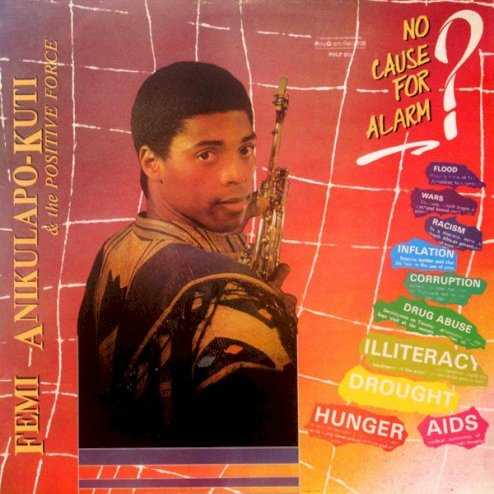 | Album: 1 of 14 Title: No Cause for Alarm? Released: 1989 Tracks: 8 Duration: 00:00 Scroll: Up Down Top Bottom 25% 50% 75% AlbumCover | 1 Madness Unlimited (?) 2 No Cause for Alarm? (?) 3 The Struggle Must Stop (?) 4 Search Yourself (?) 5 So-So Talk and No Action (?) 6 Generation Gap (?) 7 Africa Unity a Must (instrumental) (?) 8 Stupidity an Act of Ignorance (?) |
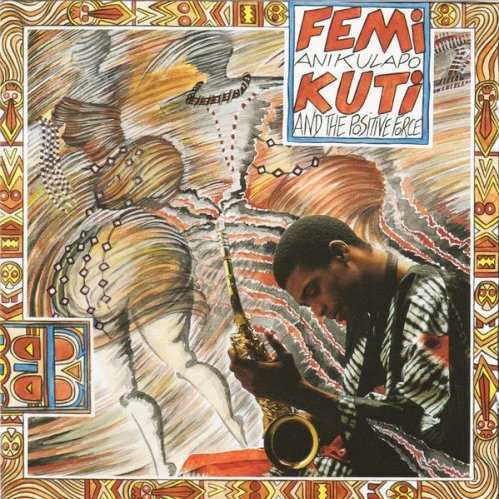 | Album: 2 of 14 Title: Femi Anikulapo Kuti and the Positive Force Released: 1991 Tracks: 6 Duration: 42:55 Scroll: Up Down Top Bottom 25% 50% 75% AlbumCover | 1 Masterplan (07:41) 2 Theory of Togetherness (07:59) 3 Armed Robbers in Disguise (10:01) 4 Mind Your Own Business (08:28) 5 I Know Why (04:49) 6 August Fool (03:54) |
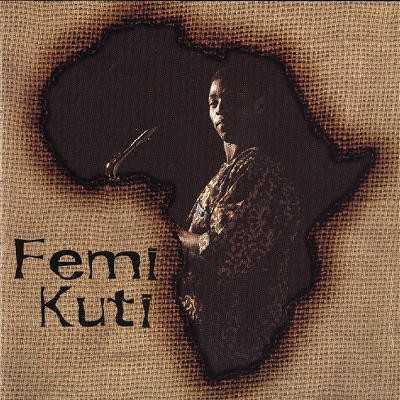 | Album: 3 of 14 Title: Femi Kuti Released: 1995-06-13 Tracks: 10 Duration: 1:13:52 Scroll: Up Down Top Bottom 25% 50% 75% Spotify Allmusic Wikipedia AlbumCover | 1 Wonder Wonder (06:06) 2 Survival (08:55) 3 Frustrations (09:07) 4 Nawa (intro) (00:31) 5 Nawa (08:40) 6 Plenty Nonesense (09:32) 7 Stubbort Problems (09:33) 8 No Shame (06:29) 9 Live for Today (08:57) 10 Changes (05:59) |
| Femi Kuti : Allmusic album Review : This debut album was an extremely popular record in Africa and Europe; it introduced Kutis cleaner, more succinct take on his father Fela Kutis legendary Afro beat sound. Packed with contagious rhythms born of African, jazz, and funk melodies, Femi Kuti represents an important offering to world music. Standout tracks include "Wonder," which is full of funky grooves and pointed lyrics about African unity, and "Survival," with its swinging, hip-rolling percussion. | ||
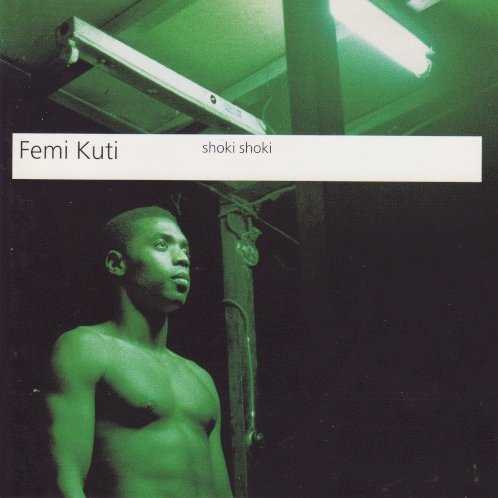 | Album: 4 of 14 Title: Shoki Shoki Released: 1998-11-17 Tracks: 9 Duration: 56:45 Scroll: Up Down Top Bottom 25% 50% 75% Spotify Wikipedia Allmusic AlbumCover | 1 Truth Don Die (06:17) 2 Beng Beng Beng (04:45) 3 What Will Tomorrow Bring (05:45) 4 Victim of Life (06:17) 5 Blackman Know Yourself (05:19) 6 Look Around (06:00) 7 Sorry Sorry (06:41) 8 Eregele (07:15) 9 Scatta Head (08:21) |
| Shoki Shoki : Allmusic album Review : Now that hes assumed the mantle of Afro-Beat superstardom from his father, Femi Kuti seems much more assured on his third album, Shoki Shoki. Femi is just as focused on political and social situations as Fela Kuti, as displayed on several tracks here ("Blackman Know Yourself," "What Will Tomorrow Bring," "Victim of Life," "Look Around"). Also like his father, he never lets the lyrically conscious material get in the way of pushing irresistible grooves. From the openers "Truth Don Die" and "Beng Beng Beng" -- both of which were passed off to dance remixers including Masters at Work and Black Science Orchestra -- to later tracks like "Sorry Sorry," Femi is a strict bandleader who knows how to get the most out of his charges. In fact, the only real stylistic difference between father and son is the fact that songs by Femi are shorter and poppier than those by Fela. | ||
 | Album: 5 of 14 Title: Shoki Remixed Released: 1999 Tracks: 9 Duration: 1:12:01 Scroll: Up Down Top Bottom 25% 50% 75% Spotify Allmusic AlbumCover | 1 Beng Beng Beng (Ashley Beedles Afrikans On Marz Remix) (07:32) 2 Truth Don Die (Kerri Chandlers Lagos Dub) (07:48) 3 Blackman Know Yourself (Chari Charis Congo Dub) (06:25) 4 Victim Of Life (Dixons AVDC Remix) (07:24) 5 Sorry Sorry (Francois Ks Old Skool Afro Dub) (07:32) 6 Beng Beng Beng (Mateo And Matos Vocal Mix) (08:24) 7 What Will Tomorrow Bring (Joe Claussells Remix) (10:14) 8 Truth Don Die (Nuyorican Soul Version) (08:00) 9 Scatta Head (Zenzile Dub Mix) (08:40) |
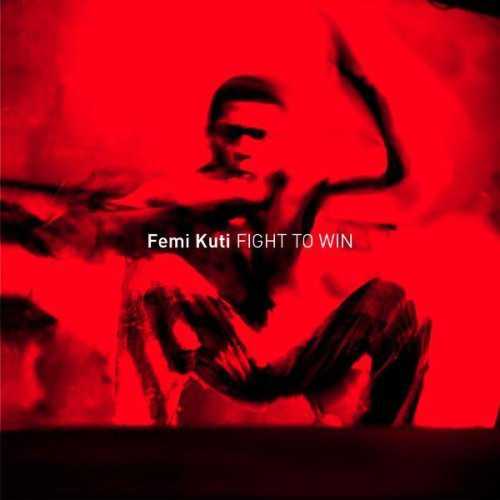 | Album: 6 of 14 Title: Fight to Win Released: 2001-10-16 Tracks: 12 Duration: 1:02:20 Scroll: Up Down Top Bottom 25% 50% 75% Spotify Allmusic Wikipedia AlbumCover | 1 Do Your Best (06:10) 2 Walk on the Right Side (06:03) 3 Traitors of Africa (05:28) 4 Tension Grip Nigeria (01:35) 5 97 (06:09) 6 Fight to Win (03:57) 7 Stop AIDS (03:22) 8 Eko Lagos (07:19) 9 Alkebu-lan (Cradle of Civilization) (05:34) 10 One Day Someday (06:12) 11 The Choice Is Yours (03:11) 12 Missing Link (07:15) |
| Fight to Win : Allmusic album Review : With 2000s Shoki Shoki, Femi Kuti fully stepped out of the shadow of his late father, Fela Kuti. With this record he begins casting his own shadow. Still Afro-beat, it brings in artists like Mos Def and Common to align itself with hip-hop. The musical pace is less frenetic, but the mood remains as intense as its always been, as one listens to the scorching "Traitors of Africa" or "Eko Lagos" shows. Kuti has matured, and with that he can reveal more of himself, like the debt to his mother shown on "Walk on the Right Side" or the very personal "97," which commemorates the three deaths the family suffered that year. Kutis band, the Positive Force, is tighter than ever, and able to play with more varied colors in its arrangements, allowing instrumentals in addition to some blowing, often from Kuti himself. Like his father or Bob Marley, Kuti has become the voice of the common man, not only in Africa but everywhere, concerned with justice, both personal and political. Varied, accomplished, with Fight to Win Kuti has made his first great album. | ||
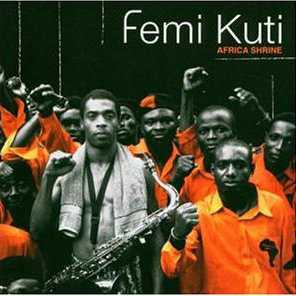 | Album: 7 of 14 Title: Africa Shrine Released: 2004 Tracks: 14 Duration: 1:08:23 Scroll: Up Down Top Bottom 25% 50% 75% Spotify Allmusic AlbumCover | 1 Intro (00:44) 2 Dem Bob (07:11) 3 Oyimbo (04:15) 4 I Wanna Be Free (04:04) 5 If Them Want to Hear (07:35) 6 Eho (04:45) 7 1, 2, 3, 4 (04:31) 8 Yeparipa (04:10) 9 Cant Buy Me (05:37) 10 Bring Me the Man Now (06:17) 11 97 (06:42) 12 Intro Shotan (01:13) 13 Shotan (06:07) 14 Water No Get Enemy (05:05) |
 | Album: 8 of 14 Title: The Best of Femi Kuti Released: 2004-10-04 Tracks: 12 Duration: 1:09:54 Scroll: Up Down Top Bottom 25% 50% 75% Allmusic AlbumCover | 1 Truth Don Die (06:16) 2 Beng Beng Beng (04:43) 3 What Will Tomorrow Bring? (05:42) 4 Sorry Sorry (06:38) 5 Scatta Head (08:21) 6 Do Your Best (feat. Mos Def) (06:11) 7 Walk on the Right Side (06:00) 8 Traitors of Africa (05:29) 9 97 (06:08) 10 Fight to Win (feat. Jaguar Wright) (03:55) 11 Missing Link (feat. Cammon) (07:15) 12 Stop AIDS (03:16) |
| The Best of Femi Kuti : Allmusic album Review : The Best of Femi Kuti serves as a fine introduction to the Nigerian Afro-beat composer and bandleader, and the oldest son of the genres founder, Fela Kuti. Its compiled from his two Barclay recordings, Shoki Shoki (1998) and Fight to Win (2001), and contains about half of each album. His Tabu/Motown album Wonder Wonder is inexplicably shut out despite some excellent tracks -- and the fact that Universal owns both labels! The latter half of the disc contains collaborations with Mos Def ("Do Your Best"), Common ("Missing Link"), and Jaguar Wright ("Fight to Win"). "Beng Beng Beng" is here, as are "Scatta Head" and the burning "97." Unfortunately, none of the excellent 12" versions are included here, which makes it nonessential for fans. Given the deep influence of hip-hop and modern urban soul on Femis music, this collection also serves as a sampler of the new, updated, and truly revitalized Afro-beat sound. | ||
 | Album: 9 of 14 Title: The Definitive Collection Released: 2007 Tracks: 22 Duration: 2:23:10 Scroll: Up Down Top Bottom 25% 50% 75% Spotify Allmusic AlbumCover | 1 Do Your Best (06:12) 2 Fight to Win (03:56) 3 97 (06:09) 4 Traitors of Africa (05:30) 5 Beng Beng Beng (04:44) 6 Water No Get Enemy (06:08) 7 Wonder Wonder (06:07) 8 Look Around (06:01) 9 Survival (08:56) 10 Truth Don Die (06:19) 11 Stop AIDS (03:19) 12 Ala Jalkoum (04:56) 1 Truth Don Die (Kerry Chandler House remix) (08:37) 2 Victim of Life (AVDC remix) (07:27) 3 Sorry Sorry (07:36) 4 Beng Beng Beng (Da Lata remix) (06:06) 5 Do Your Best (remix by Faza Action) (07:58) 6 Blackman Know Yourself (Paris City mix) (06:28) 7 Eregele (Seven dub mix) (05:04) 8 What Will Tomorrow Bring (LP mix Joe Claussel) (10:15) 9 Scatta Head (Zenzile ub mix) (08:05) 10 Missing Link (07:17) |
| The Definitive Collection : Allmusic album Review : Femi Kuti has the unenviable position of being an excellent musician and the undisputed king of Afro-beat, while also being the son of the greatest. Of course, that has tempered his sound over the years to some degree as he distanced himself by adding newer influences such as hip-hop to the classic soul-funk-jazz sound. As time progressed, he has moved into a more "traditional" Afro-beat sound with excellent results. Here, some of the best tracks from his three albums are presented. Two tracks come from the little-known eponymous debut, and a handful from each of his following releases. This is Femi at his best, crossing the divides between classic and modern, contemplative and energetic, hypnotic and pounding. The music is top-notch and the song selection equally excellent, picking out a couple of relative rarities for good measure in "Ala Jalkoum" with Rachid Taha and a star-studded cover of Felas "Water No Get Enemy" from the Red Hot + series. Its the sheer power of the groove that will get you every time, though -- saxes wailing, drums thumping, and call-and-response vocals forcing everyone to stay in the groove. As an added bonus, a disc of remixes is included; there are fewer vocals but the grooves are extended, if thats possible. | ||
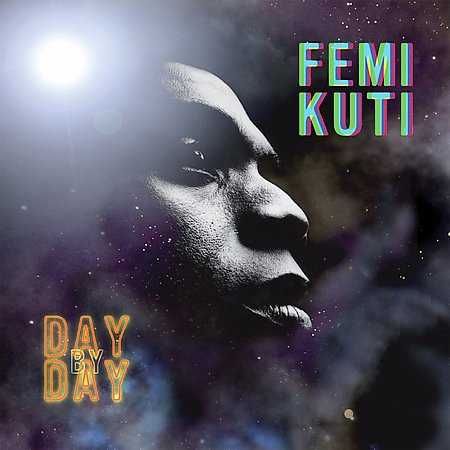 | Album: 10 of 14 Title: Day By Day Released: 2008-10-20 Tracks: 13 Duration: 1:02:39 Scroll: Up Down Top Bottom 25% 50% 75% Spotify Allmusic Wikipedia AlbumCover | 1 Oyimbo (03:52) 2 Eh Oh (04:16) 3 Day by Day (03:01) 4 Demo Crazy (07:33) 5 Do You Know (04:51) 6 You Better Ask Yourself (05:59) 7 One Two (02:14) 8 Tell Me (04:37) 9 They Will Run (05:28) 10 Tension Grip Africa (05:06) 11 Dem Funny (04:19) 12 Lets Make History (02:29) 13 Inside Religion (bonus track) (08:47) |
| Day By Day : Allmusic album Review : Its difficult to believe that seven years have elapsed between Femi Anikulapo Kutis Fight to Win and Day by Day. Positive Force, his 13-piece backing band, is tighter than ever. Kutis confidence as a bandleader has grown exponentially. He no longer feels the need to either enshrine his fathers music in nostalgic reconstructions of it, nor does he need to indulge American hip-hop and funk or European electronica the way he once did. That said, Kuti still plays Afro-beat, but he puts his unique stamp on the music of his father. Here, slower burning funk sits side by side with African polyrhythmic folk forms; dubby reggae sidles up to African soul and Afro-beat. Check the title track, where in waltz tempo a rub bassline meets a full chorale of voices on a repetitive refrain that becomes a chant. There is real rage here, but it is expressed as both sorrow and determined struggle. The weave of hand drums, organs, and voices in "Demo Crazy" adds elements of funky free jazz in the horn section, sounding like a taut African version of the Hugh Masekela big band next to trippy psychedelic soul. Kutis voice is more disciplined this time out; hes more confident as a singer. He communicates more of the weighty emotion in his lyrics. Check his vocal as it plies against a guest guitar spot by Keziah Jones on "Dem Funny." Layers of melodic organ, hand drums, and a double drum kit work are woven in. But Kuti takes it all into his voice, resonating against the guitar with his chorale. The wah-wah guitars and soulful B-3 and Afro-funky breaks on "Tension Grip Africa" sound like the early Santana directed by Quincy Jones backing Isaac Hayes. This is slamming, sexy, political music without a filter. The albums centerpiece is "You Better Ask Yourself." It begins with a percolating bassline, layers of subtle percussion, a spacy Fender Rhodes piano (courtesy Patrick Goraguer), and a muted trumpet. The pace of the tune is hypnotic, steady, and midtempo. But soon the wah-wah guitars, the layers of B-3 and Wurlitzer organ (à la Santanas Caravanserai) come floating in, and are underscored by the enormous horn section playing sparsely in a polished Afro-beat style. Kutis vocal reports on the richness and thievery of his continents natural resources resulting in the poverty of its people. He highlights contradiction, colonialist and corporate practices with poignant, unflinching honesty, all the while keeping it soulful and emotionally connected without once letting his control over the music or lyrics slip. The killer futuristic funk of "One Two" is followed with a "Planet Rock"-style vocoder bit embedded with vibes inside the rest of the instrumentation. Day by Day is Femis watermark record. It took four studio albums -- despite the fact that both Shoki Shoki and Fight to Win were winners in their own rights -- to completely come into his own and out from under the looming, majestic shadow of Fela, but hes done so. Hes come into his own carrying on the tradition of Afro-beat, but putting his own beautiful signature on it as its original heir. This is Femis moment; checking this set out will reward anybody remotely interested in modern African music. Stone killer. | ||
 | Album: 11 of 14 Title: Africa for Africa Released: 2011-04-12 Tracks: 14 Duration: 1:01:47 Scroll: Up Down Top Bottom 25% 50% 75% Spotify Allmusic AlbumCover | 1 Dem Bobo (04:36) 2 Nobody Beg You (03:57) 3 Politics In Africa (04:55) 4 Bad Government (03:37) 5 Cant Buy Me (03:36) 6 Africa For Africa (03:46) 7 Make We Remember (05:05) 8 Obasanjo Don Play You Wayo (04:48) 9 Boys Dey Hungry For Town (04:23) 10 Now You See (04:34) 11 No Blame Them (06:00) 12 Yeparipa (03:32) 13 E No Good (05:24) 14 It Dont Mean (03:34) |
| Africa for Africa : Allmusic album Review : In the three years between the release of Femi Kutis last album, Day by Day, and Africa for Africa, the legend of his late father, the Nigerian icon Fela Kuti, grew by leaps and bounds thanks to a successful Broadway musical that told his story in song. Femi, in his two decades as a performer, has continually honored his fathers legacy while moving the Kuti model of Afro-beat firmly ahead into the future. That hes managed to do so without substantially altering the blueprint drawn by Fela is somewhat remarkable: Femis music is undeniably more modern-sounding than Felas -- his melodic and rhythmic influences are more global, taking in Latin, Caribbean, and several African-American genres, for example -- yet at the same time has never been radically different from it. This remains true on Africa for Africa. In rhythm and in sound, and in his defiant attitude and fiery spirit, Femi Kuti, along with his band, Positive Force, unabashedly pay tribute while continuing, fearlessly, to address issues relevant to todays Africa and the world beyond. Recorded, as were his earliest works, at Afrodisia/Decca Studio in Lagos, Africa for Africa, while offering up nearly a dozen new tunes, also revisits a few songs Femi has recorded before (specifically, for 2004s Africa Shrine album). Despite the recycling, its one of his most inventive and potent albums to date, full of aggression, euphoria, and hope -- alongside the rage, indignation and bitterness -- and powered by idealism, pride, honor, and some of his strongest jams yet. In "Make We Remember," when Femi cites a number of heroes of African-rooted people, he name-checks Fela before even getting around to Marcus Garvey, Malcolm X, Nelson Mandela, and Martin Luther King. Over an insistent, churning, horn-fueled beat, Femi, in rapid-fire voice, sums up in five minutes the struggles of a people: "Lumumba fight to keep our integrity, like Marcus Garvey fight for Pan-Africanism/Like Kwame Nkrumah fight, like Mandela fight against racism." Crooked politics and injustice, racism and corruption -- these are at the core of every Femi Kuti song. They have to be: his job is to tell it as he sees it, and what he sees is not always pretty. He says as much in "Now You See," a pulsating juggernaut rich with Femis soulful organ, a solid line of horn blasts, floor-shaking bass, and a battery of percussion. Femi exhorts, "Inside this democracy, see the way dem dey steal now/Now you see the things they see," and in "Bad Government," as funky as anything ever gets, he wonders why a continent that can produce so many great athletes, as well as doctors and engineers, cant seem to produce a competent government. If that sounds familiar to those whove previously experienced the world of Fela Kuti -- and Femis own substantial output -- Femi is cool with that. Hes not trying to be who hes not, but neither is he backing down, softening, or holding back. Just carrying on while hurtling straight-ahead. | ||
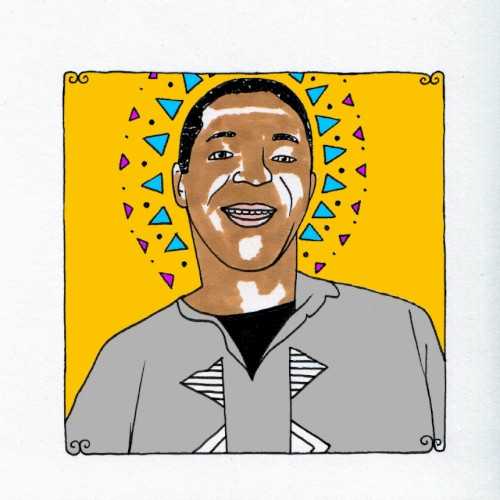 | Album: 12 of 14 Title: Plea for a Land Always Divided: Big Orange Studios, Austin, TX, USA Released: 2011-08-25 Tracks: 4 Duration: 13:15 Scroll: Up Down Top Bottom 25% 50% 75% AlbumCover | 1 Welcome to Daytrotter (?) 2 Dem Bobo (04:50) 3 Africa for Africa (04:07) 4 Nobody Beg You (04:17) |
 | Album: 13 of 14 Title: No Place for My Dream Released: 2013-06-25 Tracks: 11 Duration: 50:29 Scroll: Up Down Top Bottom 25% 50% 75% Spotify Allmusic AlbumCover | 1 Nothing to Show for It (03:36) 2 The World Is Chancing (06:06) 3 No Place for My Dream (03:45) 4 Action Time (05:45) 5 No Work No Job No Money (05:21) 6 Carry On Pushing On (04:59) 7 Politics Na Big Business (03:44) 8 Na So We See Am (04:21) 9 One Man Show (06:19) 10 Wey Our Money (04:49) 11 This Is Only the Biginning (01:44) |
| No Place for My Dream : Allmusic album Review : Throughout his career, Femi Kuti, eldest son of Fela, has sought to establish his own musical identity while being the torchbearer (along with his younger brother Seun) of his late fathers legacy. That truth can be easily envisaged on the cover of No Place for My Dream, where a woman is walking with a basket on her head through an enormous field of garbage. Recorded in Paris, the album sticks close to the heart of Afro-beat, but Kuti, infuses the music with Latin, African-American, and Caribbean sounds as well. The message is the message. Kuti has no choice but to deliver it song after song--"Nothing to Show for It," "No Work No Job No Money," "Politics Na Big Business," etc. all speak truth to the power of oppression The righteous indignation is everywhere, presented in beautifully written tunes orchestrated by himself and Positive Forces bandleader/guitarist Opeyemi Awomolo. But there is real vulnerability here as well. Check the slippery Caribbean Afro-funk of "The World Is Changing." In addition to the interlocking call and response of his organ and the saxophone and brass sections, Kuti offers a vocal atop his backing chorus that states his case -- referring to Somalia, the tsunami in Japan, the earthquake in Haiti, the poverty and suffering from Bangladesh to Rwanda. His voice almost breaks with empathic pain, even as the music charges on. Kutis organ takes center stage and fuels a deep Afro-Cuban groove on "Carry on Pushing On," while "Na So We See Am" melds Afro-beat to salsa in furious tempo. His tenor kicks things off in the jazzy funk of "One Man Show"s call to world revolution. Throughout, Kuti sticks close to the heart of Afro-beats musical drive and heartbeat, yet he moves its boundary. Besides the slamming tunes, another notable thing about No Place for My Dream is the way Femi mirrors his fathers musical innovation. Where the elder Kuti brought other musics into the one he was creating as a new language for liberation, Femi uses Afro-beat as the jumping-off point that explores and connects other sounds to build bridges to other cultures. He acknowledges and celebrates musical difference, allows for those tensions to reveal themselves inside his music, and creates a dialogue that uses rhythm and harmony as unifying signifiers in his political language. Brilliant. | ||
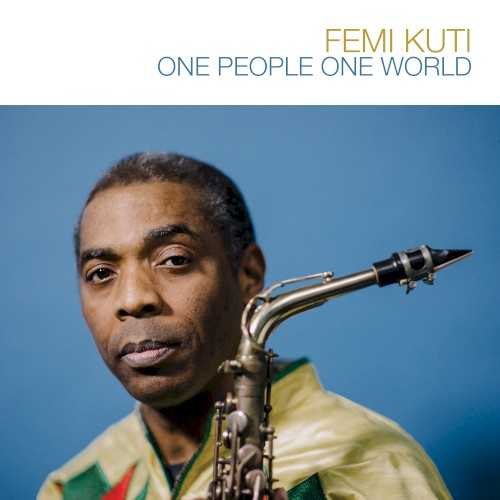 | Album: 14 of 14 Title: One People One World Released: 2018-02-23 Tracks: 14 Duration: 1:00:18 Scroll: Up Down Top Bottom 25% 50% 75% Spotify Allmusic AlbumCover | 1 Africa Will Be Great Again (04:48) 2 Best to Live on the Good Side (05:16) 3 One People One World (03:35) 4 Na Their Way Be That (03:41) 5 How Many (02:30) 6 Evil People (03:23) 7 Equal Opportunity (04:51) 8 E Get as E Be (03:53) 9 Corruption Na Stealing (06:27) 10 Dem Don Come Again (04:13) 11 Dem Militarize Democracy (04:34) 12 The Way Our Lives Go (03:43) 13 E Dey Their Body (06:08) 14 Too Much on My Mind (03:16) |
| One People One World : Allmusic album Review : In the five years between Femi Kutis Grammy-nominated No Place for My Dream and One People One World, hes been a busy man. He regularly performs at The Shrine, the performance space he built as a memorial to his late father Fela Kuti, hes a touring musician, and he also serves as a traveling ambassador for Amnesty International. (He also found time in 2017 to break the Guinness world record for the longest-held single note on a saxophone -- 51 minutes and 35 seconds.) One People One World is Kutis tenth album with his longstanding band Positive Force and its musical director and guitarist Opeyemi Awomolo. Unlike the righteous anger that inspired almost all of his previous recordings, One People One World is by contrast more affirmative; its celebratory without sacrificing its activism. While Afrobeat is at the core of these 12 songs, Kuti picks up on the mosaic he began weaving on No Place for My Dream by incorporating the harmonies and rhythms of reggae, highlife, soul, R&B;, hip-hop, and other global sounds into its mix, adding depth and complexity without sacrificing immediacy and accessibility. The title-track single commences with driving Afrobeat horns, but the rest of the band erupts into calypso and highlife celebration as Kuti and his backing singers deny racism, greed, and hatred the power to conquer the earth. With an infectious, swinging organ, "Africa Will Be Great Again" is a protest jam that details the corruption and greed that hold her back as a continent, but its pulsing wave of salsa, soca, and highlife makes it an irresistible anthem as Kuti posits the reclamation of the continent as the cradle of civilization and the heartbeat of the world. The DAngelo-esque soul in "Its Best to Live on the Good Side" is carried by slinky, bubbling basslines, vamping R&B; guitars, and a swirling organ. When the horns enter, thunder cracks as circular drumming and percussion thread in Afro-Cuban (Yoruban) rhythms. Second single "Na Their Way Be That" opens with cooking reggae before Femis soulful saxophone solo and an Afrobeat chant cut in from the margin. "Evil People" is stomping, funky R&B;, fueled by J.B.s-style horns, layers of breakbeat drums, chunky wah-wah guitar, and congas. Immediately following is "Equal Opportunity," where Kuti and his backing chorus evoke the celebratory vibe of Curtis Mayfields "Move on Up," and add jazzy Rhodes piano and Afrobeat horns and rhythms. Even straight-up Afro-funk jams like "Dem Militarize Democracy" open to embrace driving son rhythms, popping R&B; basslines, and souled-out vocal and guitar choruses. The dubwise soul of closer "The Way Our Lives Go" is the sets most poetic and inspiring track. Kuti and Positive Force dont let up at all during One People One World. Impeccably sequenced, it runs from strength to strength, dazzling with expansive sonic textures, killer arrangements, and a musical genre palette that exists seemingly without boundaries. As a recording artist, Kuti has been reliably consistent, but this date is his masterpiece. | ||