Harmonium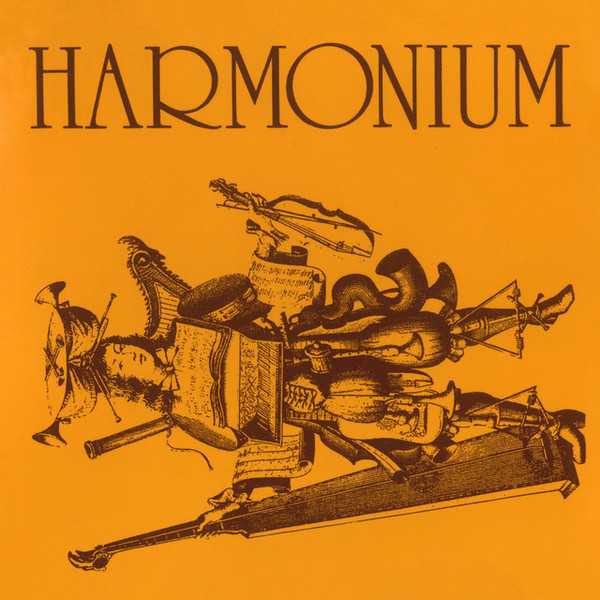 | ||
| Allmusic Biography : Harmoniums career was short (five years) and ended for all the right reasons: The members felt they had said all they had to say in the best possible way. Consequently, the three studio albums (plus one live) they left to posterity can all be considered important artistic statements. The bands impact on Quebec rock and culture in general has been tremendous. The core of Harmonium was a folk trio formed by guitarists Serge Fiori and Michel Normandeau and bassist Louis Valois. Fiori was already earning a living as a ballroom guitarist with his father Georges Fioris orchestra (a prized icon of Montreals Italian community) when he met journalist and drama actor Normandeau in 1972. With the addition of Valois, they began to perform as a folk guitar trio under the name Harmonium in the summer of 1973. Concerts in singer/songwriter cafés attracted some attention. After a live radio performance, Quality Records expressed interest and a record deal was struck. Recorded as a trio, Harmonium was released in April 1974. By the end of the summer, it was a big seller, with the songs "Pour un Instant" and "Un Musicien Parmi Tant dAutres" becoming FM hits. After a tour of the province, the group went back to the studio. Fiori had more elaborated ideas for Si On Avait Besoin dune Cinquième Saison, so reedsman Pierre Daigneault and keyboardist Serge Locat were drafted. The album was released in 1975. It showed leanings toward mellow progressive rock stylings and metaphysical lyrics. After another tour and a sabbatical year, the group reconvened without Daigneault. Fiori had devised an ambitious suite of seven songs related to the seven states of consciousness. Normandeau had contributed to the lyrics, but the lead singers outburst of creativity (and clarity of musical vision) was phasing him out, so he left. Drummer Denis Farmer, flutist Libert Subirana, guitarist Robert Stanley, and vocalist/second keyboardist Monique Fauteux were recruited. Neil Chotem was brought in to compose and arrange orchestral bridges between the songs. The resulting two-LP set, LHeptade, came out on new label CBS in late 1976. It achieved a new standard of excellence in Quebec rock and became a minor classic in the history of progressive rock, thanks to its universal theme. The group toured Canada, going all the way to Vancouver in June 1977 (the live En Tournée was recorded there) and performed at Berkeley College of Music in California (immortalized in the National Film Board of Canada production Harmonium en Californie). There were also European dates opening for Supertramp. After a few attempts to lay down the bases for a new album, it became obvious to Fiori and consorts that they had given their best. In late 1977, a press release announced the dissolution of Harmonium. Fiori recorded a duo LP with guitarist Richard Séguin backed by former members of the group (Deux Cents Nuits à lHeure, 1978). They all appeared again on Chotems 1979 LP Live au El Casino. Normandeau and Locat released solo LPs around that time (Jouer, 1979 and Transfert, 1978). | ||
 | Album: 1 of 4 Title: Harmonium Released: 1974-04 Tracks: 8 Duration: 43:20 Scroll: Up Down Top Bottom 25% 50% 75% Spotify Allmusic AlbumCover | 1 Harmonium (06:36) 2 Si doucement (04:25) 3 Aujourd’hui, je dis bonjour à la vie (05:45) 4 Vieilles Courroies (05:47) 5 Attends-moi (04:40) 6 Pour un instant (03:16) 7 De la chambre au salon (05:43) 8 Un musicien parmi tant dautres (07:06) |
| Harmonium : Allmusic album Review : Harmoniums first album was recorded as a trio. Singer-guitarist Serge Fiori and guitarist Michel Normandeau wrote all the music and lyrics. Bassist Louis Valois completed the band. A session drummer, Réjean Emond, appears on half of the songs. Acoustic bass, 12-string guitar, and acoustic guitar constitute the main instrumentation, all topped by Fioris delicate voice (singing in French). Lyrical themes all relate to 1970s humanism. The music belongs to folk-rock with a progressive rock touch (this last trait would become stronger with each successive release), and could be compared to McKendree Spring or Fairport Convention. Harmonium includes "Pour un Instant" ("For a Moment"), which became a hit in the summer of 1974 in Québec and remains to this day the best-known song of the band, enjoying constant radio airplay. "Harmonium," "Aujourdhui, Je Dis Bonjour à la Vie" ("Today, I Say Hello to Life"), and "Un Musicien Parmi Tant dAutres" ("One Musician Among Many Others") have been standard singalongs around campfires for decades and remain some of the first songs any young Québecois starting on guitar will learn to play. The CD reissue includes an extra track, "100,000 Raisons" (first released as the B-side to "Pour un Instant"). Musically speaking, Harmonium is the less developed, less ambitious opus of the band, but the more representative of Québecois culture at the time (the aesthetic is similar to Beau Dommage and Paul Piché, other key artists of 1970s Quebec). That is probably why it remained the most popular in Québec, but the least popular elsewhere. | ||
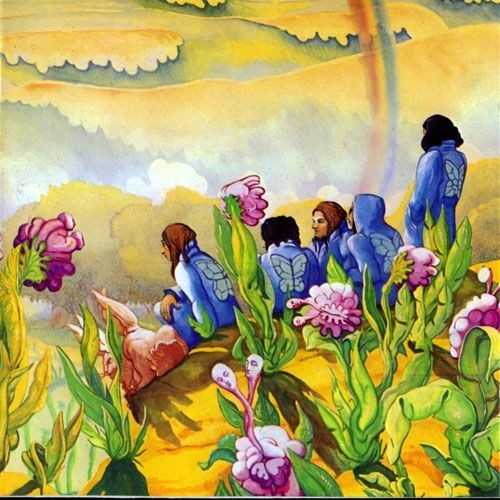 | Album: 2 of 4 Title: Si on avait besoin dune cinquième saison Released: 1975-05 Tracks: 5 Duration: 41:32 Scroll: Up Down Top Bottom 25% 50% 75% Spotify Allmusic AlbumCover | 1 Vert (05:34) 2 Dixie (03:26) 3 Depuis l’automne (10:28) 4 En pleine face (04:50) 5 Histoires sans paroles (17:12) |
| Si on avait besoin d'une cinquième saison : Allmusic album Review : Released a year after Harmoniums debut album, Si On Avait Besoin dune Cinquième Saison (If We Needed a Fifth Season) marked an impressive departure from the guitar trio folk-pop the band first played in cabarets. The first difference is the addition of two new members, reedist/flutist Pierre Daigneault and keyboardist Serge Locat (still no drummer). Second, the album is structured on a concept revolving around seasons, the first four pieces representing each one of them. Third, the fifth piece (or season) is a 17-minute epic suite. This is not folk-rock anymore, but a very personal form of progressive rock rooted in folk (the closest comparison would be early Strawbs). Special care has been put into the arrangements; the song "Dixie," a spirited summer tune, features dozens of instruments coming in and out, topped by Locats grand piano solo (and the only apparition of percussion on the whole album, a hi-hat hit and a bass drum kick). Songs have gained in length and complexity, the use of Ondes-Martenot waves (courtesy of prog rock band Etceteras Marie Bernard), mellotron, piano, and flute add another dimension to bands sound and point toward what LHeptade would be. At the same time, acoustic guitars still provide the backbone of the songs -- but they are not easy-to-learn campfire tunes anymore. Vocalist Judy Richard guests on the beautiful "Histoires Sans Paroles" ("Stories Without Words"), one of Québecs finest progressive rock moments, once again without a single percussion sound. Between the folk simplicity of Harmonium and the symphonic grandeur of LHeptade, Si On Avait Besoin dune Cinquième Saison gave the band its unique voice. This remains one of the best transitional albums ever recorded and an essential item in Québecs music history. | ||
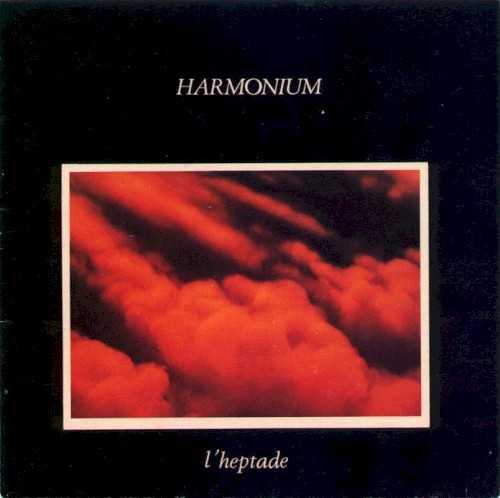 | Album: 3 of 4 Title: L’Heptade Released: 1976 Tracks: 10 Duration: 1:25:21 Scroll: Up Down Top Bottom 25% 50% 75% Spotify Allmusic AlbumCover | 1 Prologue (04:20) 2 Comme un fou (07:52) 3 Sommeil sans rêves (01:23) 4 Chanson noire (08:10) 5 Le Premier Ciel (11:21) 6 L’Exil (12:56) 1 Le Corridor (08:13) 2 Lumières de vie (14:12) 3 Comme un sage (14:04) 4 Épilogue (02:50) |
| L’Heptade : Allmusic album Review : After Harmoniums second album, Si On Avait Besoin dune Cinquième Saison, Serge Fioris group kept on growing. From a three-piece folk-pop outfit, it had now reached the level of a rock band, including a drummer (Denis Farmer), a cast of guest musicians (reedist Libert Subirana taking the place of Pierre Daigneault, guitarist Robert Stanley, a choir including singer/songwriter Richard Séguin and Beau Dommages Pierre Bertrand) and a full symphonic orchestra lead by Neil Chotem. LHeptade (from "hepta" -- seven) constitutes the pinnacle of the bands creativity. This song cycle, presented as an initiatory rite, is formed of seven main pieces: "Comme un Fou" (Like a Fool), "Chanson Noire" (Dark Song), "Le Premier Ciel" (The First Sky), "Le Corridor," "Lumières de Vie" (Lights of Life), and "Comme un Sage" (Like a Wise Man). All other tracks are orchestral bits written by Chotem, mostly variations on the songs themes in order to hold them together. The last piece answers the first, bringing the album to full circle. The transformation of the band is here completed and was so important that founding member Michel Normandeau bailed out (he wrote some of the lyrics and is featured on guitar on one track) in the course of the recording process. While acoustic guitar provided the backbone of the first two albums, its place here remains very limited. Piano, electric piano, synthesizers, drums, woodwinds, and electric guitar constitute the main instrumentation of this highly ambitious project. The music belongs to full-fledged progressive rock, although it never favors virtuosity over relevancy. Melodies have a serene feeling, Fioris voice often breaks from the emotion carried by the lyrics. Arrangements are lush and impressive without getting too pompous. The album remains a masterpiece of international art rock, but it had less impact in Quebec than the two previous albums, mainly because it was simply out of the reach of some fans. | ||
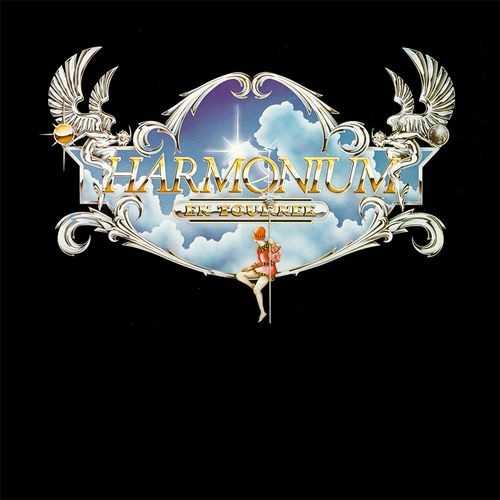 | Album: 4 of 4 Title: En tournée Released: 1980 Tracks: 9 Duration: 1:27:24 Scroll: Up Down Top Bottom 25% 50% 75% Spotify Allmusic AlbumCover | 1 Introduction (01:30) 2 Comme un fou (07:04) 3 Chanson noire (08:50) 4 Le Premier Ciel (20:18) 1 LExil (11:58) 2 Le Corridor (04:08) 3 Lumière de vie (1ère partie) (04:31) 4 Lumière de vie, 2ème partie (13:47) 5 Comme un sage (15:18) |
| En tournée : Allmusic album Review : Released as a two-LP set in 1980, En Tournée documents Harmoniums tour of the West Coast in 1977. The band performs the entirety of LHeptade, except for the orchestral prologue, bridges, and epilogue written by Neil Chotem and found on the studio version. This was the bands last tour, and by then the acoustic guitar folk trio featured on Harmonium had grown into a seven-piece progressive rock group. Stripped of their orchestral embellishments, the seven pieces of the concept album appear more powerful and dynamic. Liberties are taken throughout, providing the fan with many new twists and turns, the most obvious being "Le Premier Ciel," gone from 11 to 20 minutes and including a stellar synthesizer solo by Serge Locat. Fully rearranged to fit the new lineup, this work can be elevated to the status of international progressive rock masterpiece. Upon hearing this album, one fully understands why the band members called it quits afterwards, convinced they would be unable to write anything stronger. This album was recorded live by Radio-Canada (the French-speaking Canadian national radio) and released on LP without the consent of all the band members. After some litigation it was taken off the market. This beautiful recording has not been reissued on CD and constitutes the Holy Grail of the Harmonium fan, an item truly worth its collectors edition price. | ||