Kraftwerk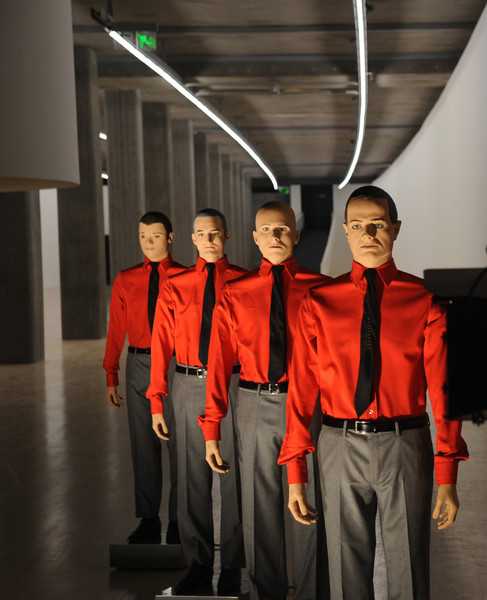 | ||
| Allmusic Biography : During the mid-70s, Germanys Kraftwerk established the sonic blueprint followed by an extraordinary number of artists in the decades to come. From the British new romantic movement to hip-hop to techno, the groups self-described "robot pop" -- hypnotically minimal, obliquely rhythmic music performed solely via electronic means -- resonates in virtually every new development to impact the contemporary pop scene of the late-20th century, and as pioneers of the electronic music form, their enduring influence cannot be overstated. Kraftwerk emerged from the same German experimental music community of the late 60s that spawned Can and Tangerine Dream; primary members Florian Schneider and Ralf Hütter first met as classical music students at the Dusseldorf Conservatory, originally teaming in the group Organisation and issuing a 1970 album, Tone Float, in the U.K. Schneider and Hütter soon disbanded Organisation, re-christening themselves Kraftwerk (German for "power station"), beginning work on their own studio (later dubbed Kling Klang), and immersing their music in the fledgling world of minimalist electronics; their 1971 debut, titled simply Kraftwerk 1, offered a hint of their unique aesthetic in its earliest form, already implementing innovations including Schneiders attempts at designing homemade rhythm machines. A series of lineup shifts followed, and at one point Hütter even left the group; however, by the release of 1972s Kraftwerk 2, he and Schneider were again working in tandem. Recorded without a live drummer, the albums rhythms relied solely on a drum machine, creating a distinctly robotic feel without precedent -- the concept of purely technological music was, at the time, utterly alien to most musicians, as well as listeners. A series of well-received live performances followed before Kraftwerk began work on their breakthrough third LP, 1973s Ralf and Florian; honing their many ambitions down to a few simple yet extraordinarily innovative concepts, their music began growing more and more revelatory -- even their clean-cut, scientific image was in direct opposition to the dominant pop fashions of the time. Kraftwerks first album to be issued in the U.S., 1974s Autobahn, was an international smash; an edited single version of the epic title track was a major hit at home and abroad, and in America the previously unknown group reached the upper rungs of the pop albums chart. Performed in large part on a Moog synthesizer, Autobahn crystallized the distinctive Kraftwerk sound while making the groups first clear overtures toward conventional pop structure and melody, establishing a permanent foothold for electronic music within the mainstream. Kraftwerk resurfaced in 1975 with Radio-Activity, a concept album exploring the theme of radio communication; indicative of the groups new global popularity, it was released in both German and English-language editions, the latter appearing early the following year. Train travel emerged as the subject of 1977s Trans-Europe Express, which marked an increased movement toward seeming musical mechanization; the line became even further blurred with the follow-up, 1978s aptly titled The Man Machine, a work almost completely bereft of human touches. By this time, the members of Kraftwerk even publicly portrayed themselves as automatons, an image solidified by tracks like "We Are the Robots." Having reached the peak of their influence, however, the group disappeared from view, the first of many extended absences to follow; they did not return to action prior to 1981s Computer World, a meditation on the new global dominance of technology -- a society their music long ago predicted and pre-dated. After topping the British charts with the single "Computer Love," Kraftwerk again vanished, enjoying a five-year layoff culminating in the release of 1986s Electric Cafe. By now, however, pop music was dominated by synthesizers and drum machines, and the groups stature flagged; but for a 1991 best-of collection titled The Mix, they remained silent during most of the decade. They finally released a new single, "Expo 2000," in late 1999, and surprised fans by announcing tour dates. On the recording front, Kraftwerk celebrated the centennial anniversary of the Tour de France with a new version of their 1983 single "Tour de France," and followed with a full album (Tour de France Soundtracks) in August 2003. The live record Minimum-Maximum followed in 2005. The Catalogue box set appeared in 2009, which pulled together eight classic albums from the bands career. Each title was digitally remastered, a number of the releases were treated to redesigned cover art, and it also included rare photographs not part of each records original release. In 2012, the band performed their studio albums from Autobahn to Tour de France at New Yorks Museum of Modern Art. The following year they repeated that performance in Düsseldorf and at the Tate Modern in London. Over the next few years they continued to tour, which culminated in them putting out the live release 3D the Catalogue. The collection captured the bands live performances from 2012-2016, and was presented with a Blu-ray option that included high definition 3-D video. | ||
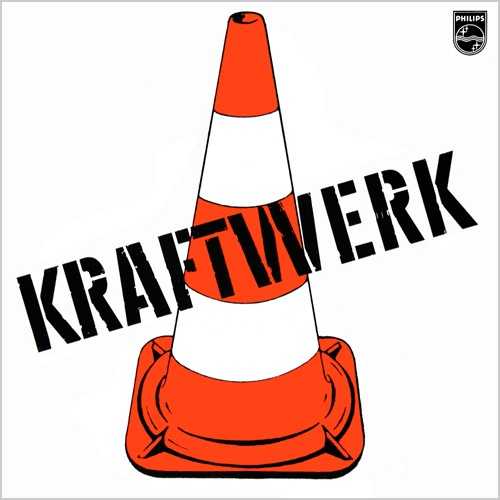 | Album: 1 of 17 Title: Kraftwerk Released: 1970-07 Tracks: 4 Duration: 39:55 Scroll: Up Down Top Bottom 25% 50% 75% Spotify Wikipedia AlbumCover | 1 Ruckzuck (07:50) 2 Stratovarius (12:32) 3 Megaherz (09:33) 4 Vom Himmel hoch (09:59) |
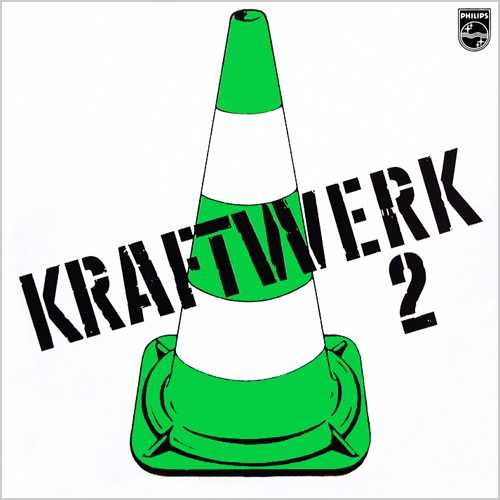 | Album: 2 of 17 Title: Kraftwerk 2 Released: 1972 Tracks: 6 Duration: 42:36 Scroll: Up Down Top Bottom 25% 50% 75% Allmusic Wikipedia AlbumCover | 1 Klingklang (17:32) 2 Atem (02:53) 3 Strom (03:49) 4 Spule 4 (05:24) 5 Wellenlänge (09:37) 6 Harmonika (03:18) |
| Kraftwerk 2 : Allmusic album Review : Like its predecessor (similarly designed right down to the traffic cone cover, though green instead of red), Kraftwerk 2 has never been properly re-released, giving it the same lost-classic aura as the first album, or at least lost, period. Thankfully, bootleg reissues in 1993 restored it to wider public listening; even more so than Kraftwerk 1, its lack of official reappearance is a mystery, in that the band is clearly well on its way to the later Kraftwerk sound of fame. Stripped down to the Hütter/Schneider duo for this release, and again working with Conrad Plank as coproducer and engineer (this album alone demonstrates his ability to create performances combining technological precision and warmth), Kraftwerk here start exploring the possibilities of keyboards and electronic percussion in detail. Given that the bands drummers were gone, such a shift was already in the wind, but its the enthusiastic grappling with drum machines and their possibilities that makes Kraftwerk 2 noteworthy. The nearly side-long effort "KlingKlang," which would later give the name to the bands studio and which predicts later lengthy efforts like "Autobahn," shows how the duo is still working toward its future styles. Steady beats are sometimes sped up and slowed down; more freeform performances on flute, violin, and keyboard remain present (rather than honing in on a core melody); and again, no vocals yet grace the recordings. On the second side, the more rock-oriented origins of the group still cling on, mostly without any percussion whatsoever: the distorted solo guitar start of "Strom," the guitar/bass duets of "Spule 4" (queasy) and "Wellenlänge" (quite beautiful and very indicative of many 90s space rock efforts). Ultimately as with Kraftwerk 1, Kraftwerk 2 isnt the "classic" sound of the band, but its astonishingly worthy on its own, well worth seeking out. | ||
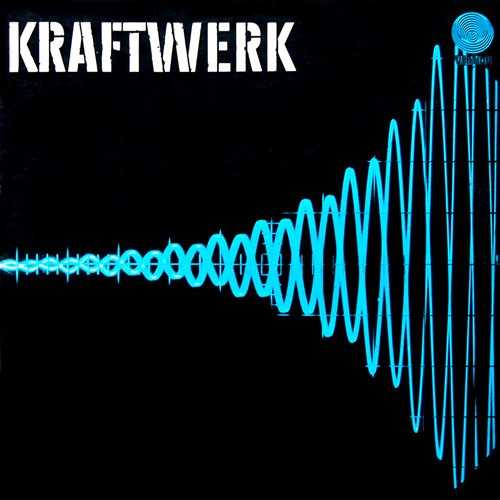 | Album: 3 of 17 Title: Kraftwerk 1 / Kraftwerk 2 Released: 1972 Tracks: 10 Duration: 1:22:39 Scroll: Up Down Top Bottom 25% 50% 75% AlbumCover | 1 Ruckzuck (07:50) 2 Stratovarius (12:32) 3 Megaherz (09:33) 4 Von Himmel hoch (10:07) 1 Klingklang (17:32) 2 Atem (02:53) 3 Strom (03:49) 4 Spule 4 (05:24) 5 Wellenlänge (09:37) 6 Harmonika (03:18) |
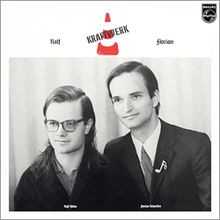 | Album: 4 of 17 Title: Ralf & Florian Released: 1973 Tracks: 6 Duration: 37:49 Scroll: Up Down Top Bottom 25% 50% 75% Wikipedia AlbumCover | 1 Elektrisches Roulette (04:23) 2 Tongebirge (02:51) 3 Kristallo (06:18) 4 Heimatklänge (03:43) 5 Tanzmusik (06:37) 6 Ananas Symphonie (13:55) |
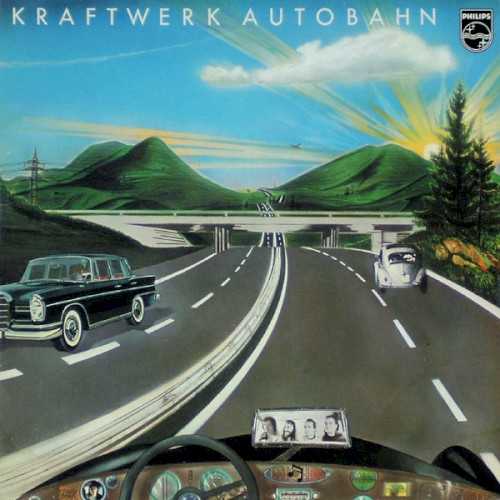 | Album: 5 of 17 Title: Autobahn Released: 1974-11 Tracks: 5 Duration: 42:44 Scroll: Up Down Top Bottom 25% 50% 75% Spotify TrackSamples Allmusic Wikipedia AlbumCover | 1 Autobahn (22:43) 2 Kometenmelodie 1 (06:25) 3 Kometenmelodie 2 (05:48) 4 Mitternacht (03:45) 5 Morgenspaziergang (04:02) |
| Autobahn : Allmusic album Review : Although Kraftwerks first three albums were groundbreaking in their own right, Autobahn is where the groups hypnotic electronic pulse genuinely came into its own. The main difference between Autobahn and its predecessors is how it develops an insistent, propulsive pulse that makes the repeated rhythms and riffs of the shimmering electronic keyboards and trance-like guitars all the more hypnotizing. The 22-minute title track, in a severely edited form, became an international hit single and remains the peak of the bands achievements -- it encapsulates the band and why they are important within one track -- but the rest of the album provides soundscapes equally as intriguing. Within Autobahn, the roots of electro-funk, ambient, and synth pop are all evident -- its a pioneering album, even if its electronic trances might not capture the attention of all listeners. | ||
 | Album: 6 of 17 Title: Radio-Aktivität Released: 1975 Tracks: 12 Duration: 37:45 Scroll: Up Down Top Bottom 25% 50% 75% Spotify Wikipedia AlbumCover | 1 Geiger Counter (01:07) 2 Radioactivity (06:41) 3 Radioland (05:51) 4 Airwaves (04:40) 5 Intermission (00:39) 6 News (01:17) 7 The Voice of Energy (00:54) 8 Antenna (03:42) 9 Radio Stars (03:33) 10 Uranium (01:27) 11 Transistor (02:14) 12 Ohm Sweet Ohm (05:38) |
 | Album: 7 of 17 Title: Exceller 8 Released: 1975 Tracks: 8 Duration: 37:45 Scroll: Up Down Top Bottom 25% 50% 75% Allmusic Wikipedia AlbumCover | 1 Ruckzack (07:32) 2 Autobahn (03:09) 3 Tongebirge (02:51) 4 Kristallo (06:20) 5 Comet Melody 2 (02:50) 6 Klingklang (09:26) 7 Vom Himmell Hoch (04:01) 8 Stratovarius (01:36) |
| Exceller 8 : Allmusic album Review : Exceller 8 is a British-only compilation of tracks from Kraftwerks earliest records; because the group didnt truly hit their stride until the mid-1970s, new fans will be better served by collections of later material in order to fully understand what all the fuss is about. | ||
 | Album: 8 of 17 Title: Trans Europa Express Released: 1977 Tracks: 7 Duration: 42:44 Scroll: Up Down Top Bottom 25% 50% 75% Spotify Wikipedia Allmusic AlbumCover | 1 Europe Endless (09:40) 2 The Hall of Mirrors (07:54) 3 Showroom Dummies (06:13) 4 Trans-Europe Express (06:52) 5 Metal on Metal (06:43) 6 Franz Schubert (04:26) 7 Endless Endless (00:55) |
| Trans Europa Express : Allmusic album Review : Although Autobahn was a left-field masterpiece, Trans-Europe Express is often cited as perhaps the archetypal (and most accessible) Kraftwerk album. Melodic themes are repeated often and occasionally interwoven over deliberate, chugging beats, sometimes with manipulated vocals; the effect is mechanical yet hypnotic. Thematically, the record feels like parts of two different concept albums: one a meditation on the disparities between reality and image ("Hall of Mirrors" and "Showroom Dummies" share recurring images of glass, reflection, illusion, and confused identities, as well as whimsical melodies), and the other the glorification of Europe. There is an impressive composition paying homage to "Franz Schubert," but the real meat of this approach is contained in the opening love letter, "Europe Endless," and the epic title track, which shares themes and lyrics with the following track, "Metal on Metal." The song "Trans-Europe Express" is similar in concept to "Autobahn," as it mimics the swaying motion and insistent drive of a cross-continent train trip. What ultimately holds the album together, though, is the music, which is more consistently memorable even than that on Autobahn. Overall, Trans-Europe Express offers the best blend of minimalism, mechanized rhythms, and crafted, catchy melodies in the groups catalog; henceforth, their music would take on more danceable qualities only hinted at here (although the title cut provided the basis for Afrika Bambaataas enormously important dancefloor smash "Planet Rock"). | ||
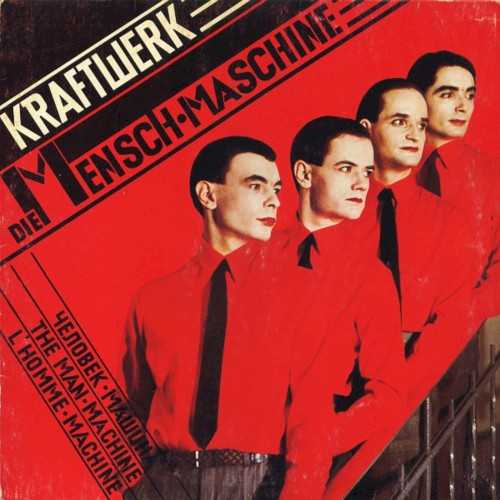 | Album: 9 of 17 Title: Die Mensch·Maschine Released: 1978-05 Tracks: 6 Duration: 36:28 Scroll: Up Down Top Bottom 25% 50% 75% Spotify Wikipedia Allmusic AlbumCover | 1 Die Roboter (06:14) 2 Spacelab (06:02) 3 Metropolis (06:01) 4 Das Model (03:43) 5 Neonlicht (09:00) 6 Die Mensch·Maschine (05:26) |
| Die Mensch·Maschine : Allmusic album Review : The Man-Machine is closer to the sound and style that would define early new wave electro-pop -- less minimalistic in its arrangements and more complex and danceable in its underlying rhythms. Like its predecessor, Trans-Europe Express, there is the feel of a divided concept album, with some songs devoted to science fiction-esque links between humans and technology, often with electronically processed vocals ("The Robots," "Spacelab," and the title track); others take the glamour of urbanization as their subject ("Neon Lights" and "Metropolis"). Plus, theres "The Model," a character sketch that falls under the latter category but takes a more cynical view of the title characters glamorous lifestyle. More pop-oriented than any of their previous work, the sound of The Man-Machine -- in particular among Kraftwerks oeuvre -- had a tremendous impact on the cold, robotic synth pop of artists like Gary Numan, as well as Britains later new romantic movement. | ||
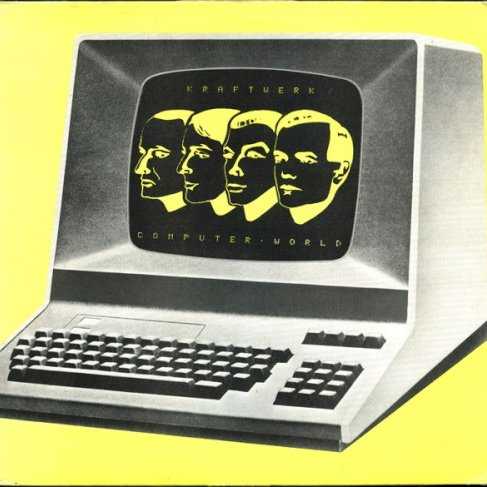 | Album: 10 of 17 Title: Computerwelt Released: 1981 Tracks: 7 Duration: 34:34 Scroll: Up Down Top Bottom 25% 50% 75% Spotify Wikipedia AlbumCover | 1 Computer World (05:07) 2 Pocket Calculator (04:57) 3 Numbers (03:20) 4 Computer World..2 (03:19) 5 Computer Love (07:18) 6 Home Computer (06:19) 7 It’s More Fun to Compute (04:13) |
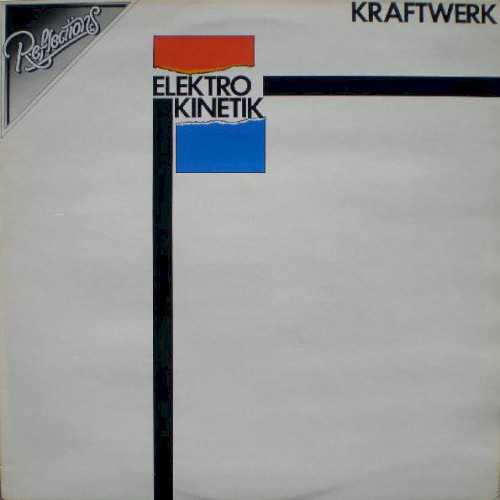 | Album: 11 of 17 Title: Elektro Kinetik Released: 1981 Tracks: 8 Duration: 49:26 Scroll: Up Down Top Bottom 25% 50% 75% AlbumCover | 1 Autobahn (06:35) 2 Ananas Symphonie (14:01) 3 Strom (03:49) 4 Mitternacht (03:45) 5 Kometenmelodie 2 (05:31) 6 Heimatklänge (03:43) 7 Tanzmusik (06:37) 8 Spule 4 (05:24) |
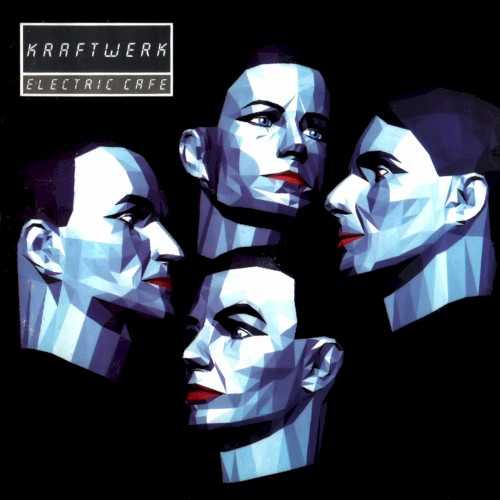 | Album: 12 of 17 Title: Electric Cafe Released: 1986-11 Tracks: 6 Duration: 35:37 Scroll: Up Down Top Bottom 25% 50% 75% Allmusic Wikipedia AlbumCover | 1 Boing Boom Tschak (02:57) 2 Techno Pop (07:41) 3 Musique Non Stop (05:46) 4 Der Telefon Anruf (08:03) 5 Sex Objekt (06:52) 6 Electric Cafe (04:16) |
| Electric Cafe : Allmusic album Review : Five long years after Computer World, Kraftwerk finally resurfaced with another LP, Electric Cafe; the rest of the pop music industry having finally caught up with the groups vision, they no longer seem so innovative and inspired -- indeed, the records brief running time (under 36 minutes) seems indicative of a lack of ideas and new directions, with the spartan opening tracks, "Technopop" and "Musique Non-Stop," virtually interchangeable and the remaining cuts surprisingly mainstream in both form and content. | ||
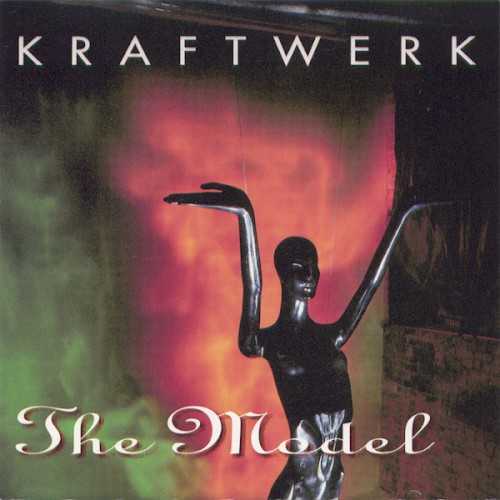 | Album: 13 of 17 Title: The Model: Retrospective 1975–1978 Released: 1992 Tracks: 11 Duration: 57:36 Scroll: Up Down Top Bottom 25% 50% 75% AlbumCover | 1 Radioactivity (03:18) 2 Neon Lights (03:30) 3 Showroom Dummies (06:03) 4 The Hall of Mirrors (07:51) 5 Antenna (03:06) 6 The Model (03:39) 7 Trans-Europe Express (03:55) 8 Metal on Metal (06:43) 9 The Robots (03:46) 10 Les Mannequins (06:04) 11 Europe Endless (09:36) |
 | Album: 14 of 17 Title: The Best of Kraftwerk Released: 1995 Tracks: 9 Duration: 49:41 Scroll: Up Down Top Bottom 25% 50% 75% Allmusic AlbumCover | 1 Geiger Counter (01:07) 2 Radioactivity (06:43) 3 Antenna (03:44) 4 Europe Endless (09:38) 5 Showroom Dummies (06:13) 6 Trans-Europe Express (06:54) 7 The Robots (06:12) 8 The Model (03:39) 9 The Man Machine (05:28) |
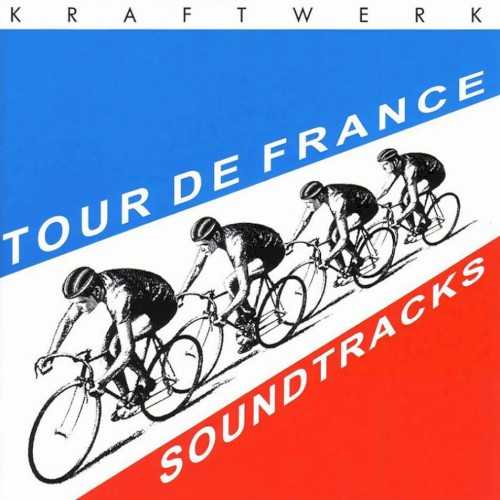 | Album: 15 of 17 Title: Tour de France Soundtracks Released: 2003-08-04 Tracks: 12 Duration: 55:56 Scroll: Up Down Top Bottom 25% 50% 75% Wikipedia Allmusic AlbumCover | 1 Prologue (00:31) 2 Tour de France Étape 1 (04:27) 3 Tour de France Étape 2 (06:41) 4 Tour de France Étape 3 (03:56) 5 Chrono (03:19) 6 Vitamin (08:09) 1 Aéro Dynamik (05:04) 2 Titanium (03:21) 3 Elektro Kardiogramm (05:16) 4 La Forme (08:41) 5 Régéneration (01:16) 6 Tour de France (05:10) |
| Tour de France Soundtracks : Allmusic album Review : Among electronic artists (as well as virtually the entire record industry), only Kraftwerk could construct a viable album by making only minimal adjustments to a sound they made definitive more than 30 years earlier. Tour de France Soundtracks, the groups first record in more than 15 years, is quintessentially Kraftwerk but still fits in well with contemporary dance trends like the experimental microhouse scene (highly influenced by the groups ultra-minimalism). The story of Tour de France Soundtracks actually begins 20 years earlier, in 1983, when Kraftwerk released the "Tour de France" single. Recorded in tribute to one of the sporting worlds most grueling events, the track was a hi-res piece of dance-pop that made lyrical reference to various biking landmarks (like the infamous mountaintop finish at Tourmalet) and an assortment of sonic references as well (including a bike chain in free spin and the belabored breathing of a bicyclist -- in rhythm, of course). Techno-Pop, the album Kraftwerk scheduled to accompany "Tour de France," was postponed and later canceled (ironically, after a serious biking accident by Ralf Hütter, one of the groups resident biking maniacs). The track resurfaced two decades later, just in time for the centenary anniversary of the race, though Kraftwerk still missed the deadline -- only the rejuvenated single was available during the race. It has little in common with the original, but the new "Tour de France" is impressive nonetheless, boasting the kinetic power of a 100-strong peloton, a guttural Teutonic vocoder of the type beloved by fans, and a recurring tag so sublime Jan Ullrich could hum it through each of the Tours 20 stages without fear of annoyance. Except for a closing reprise of the original "Tour de France," the rest of the album isnt as focused on biking; Hütter and Schneider construct sublime beatpieces with conceptual lines close to biking topics ("Aéro Dynamik," "Titanium," "Chrono," "Vitamin"), but never confront the listener with yet another track dropping bike terms like peloton or a lenfer du nord. "Chrono" is the track closest to the Kraftwerk ideal, with its future-shock synth and percussion precision, while "Vitamin" is the farthest away (a downbeat track that still could only have escaped from the Kling Klang studio). Tour de France Soundtracks is a successful record on anyones terms; its one that fans wont need to cringe from, and one that newcomers will be able to enjoy for what it is. | ||
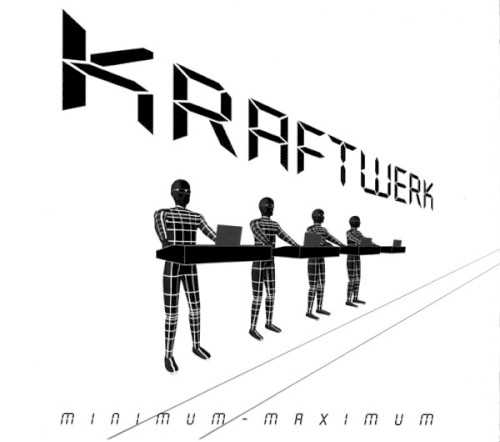 | Album: 16 of 17 Title: Minimum-Maximum Released: 2005-06-06 Tracks: 22 Duration: 2:00:52 Scroll: Up Down Top Bottom 25% 50% 75% Spotify Allmusic Wikipedia Wikipedia AlbumCover | 1 The Man-Machine (07:55) 2 Planet of Visions (04:46) 3 Tour de France Étape 1 (04:22) 4 Chrono (01:29) 5 Tour de France Étape 2 (04:48) 6 Vitamin (06:41) 7 Tour de France (06:18) 8 Autobahn (08:51) 9 The Model (03:42) 10 Neon Lights (06:01) 1 Radioactivity (07:42) 2 Trans-Europe Express (05:02) 3 Metal on Metal (04:29) 4 Numbers (04:28) 5 Computer World (02:55) 6 Home Computer (05:55) 7 Pocket Calculator (02:58) 8 Dentaku (03:15) 9 The Robots (07:24) 10 Elektro Kardiogramm (04:41) 11 Aéro Dynamik (07:14) 12 Music Non Stop (09:54) |
| Minimum-Maximum : Allmusic album Review : For rock bands, hauling gear across countries and continents has not changed a great deal in the past several decades. The same cant be said for Kraftwerk. Grappling with sensitive cables and other technical gadgets in extreme climates has become a thing of the past. For them, everything has become easier to manage and transport, so its natural that theyd become more enthusiastic about touring. Recorded during the groups 2004 journey through Europe, Japan, and the U.S., Minimum-Maximum is a two-disc representation of their revitalized live show. Visuals are such a crucial aspect of their performances that the set will naturally fall short of making you feel as if you are there -- whether its Moscow, Warsaw, Budapest, or San Francisco -- while in your car or living room. More crucially, who really knows exactly how much live manipulation is going on with the elements of each track? Whatever the case, it all sounds good -- sharp, vibrant, alive. The original arrangements are often altered slightly, the tracks are tactfully sequenced, and the crowd noise is kept to a minimum (either near the close of a track or in recognition of one as it begins), so the release is sort of a glorified greatest-hits collection. Along with some wise selections from 2003s Tour de France Soundtracks, theres plenty of the expected classic material, all of which has given life to so much industrial, dance, and rap music. (You could, in fact, walk into the average techno club or turn on a mainstream radio station the week this was released and hear traces of Kraftwerk in one form or another.) "Radioactivity" and "The Robots," two of the more altered tracks, contain the greatest thrills; the formers permafrost placidity spirals into a frictionless dancefloor charge, while the latter is more muscular than ever, acknowledging advancements made by acolytes Model 500 and Underground Resistance. | ||
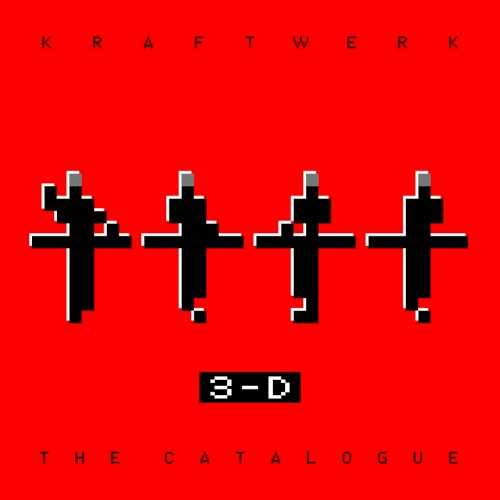 | Album: 17 of 17 Title: 3-D The Catalogue Released: 2017-05-26 Tracks: 69 Duration: 4:45:44 Scroll: Up Down Top Bottom 25% 50% 75% Spotify Allmusic AlbumCover | 1 Autobahn (14:27) 2 Kometenmelodie 1 (05:29) 3 Kometenmelodie 2 (03:30) 4 Mitternacht (02:12) 5 Morgenspaziergang (01:20) 1 Geiger Counter (00:32) 2 Radioactivity (06:16) 3 Radioland (stereo) (05:55) 4 Airwaves (06:01) 5 Intermission (00:25) 6 Nachrichten (01:15) 7 The Voice of Energy (00:52) 8 Antenna (stereo) (03:36) 9 Radio Stars (02:18) 10 Uran (01:26) 11 Transistor (01:14) 12 Ohm Sweet Ohm (02:58) 1 Trans Europe Express (03:21) 2 Metal on Metal (02:08) 3 Abzug (02:25) 4 Franz Schubert (01:12) 5 Europe Endless (05:52) 6 The Hall of Mirrors (3-D) (05:22) 7 Showroom Dummies (stereo) (03:37) 1 The Man Machine (stereo) (05:08) 2 Spacelab (stereo) (05:28) 3 The Model (03:39) 4 Neon Lights (05:45) 5 The Robots (07:44) 6 Metropolis (stereo) (05:45) 1 Numbers (02:59) 2 Computer World (03:21) 3 Its More Fun to Compute (01:03) 4 Home Computer (05:08) 5 Computer Love (06:33) 6 Pocket Calculator (03:26) 7 Dentaku (03:08) 1 Electric Cafe (stereo) (03:51) 2 The Telephone Call (stereo) (02:45) 3 House Phone (02:30) 4 Sex Object (stereo) (05:30) 5 Boing Boom Tschak (stereo) (02:32) 6 Techno Pop (stereo) (02:45) 7 Music Non Stop (07:44) 1 The Robots (07:44) 2 Computer Love (06:34) 3 Pocket Calculator (03:26) 4 Dentaku (03:09) 5 Autobahn (14:27) 6 Geiger Counter (00:31) 7 Radioactivity (06:16) 8 Trans Europe Express (03:21) 9 Metal On Metal (02:08) 10 Abzug (02:24) 11 Home Computer (06:11) 12 Boing Boom Tschak (02:33) 13 Techno Pop (02:46) 14 Music Non Stop (07:44) 15 Planet Of Visions (07:52) 1 Tour de France (04:18) 2 Prologue (00:27) 3 Etape 1 (03:46) 4 Chrono (01:11) 5 Etape 2 (05:00) 6 Vitamin (stereo) (05:55) 7 Aero Dynamik (stereo) (06:00) 8 Elektro Kardiogram (stereo) (04:37) 9 La Forme (06:19) 10 Regeneration (stereo) (00:28) |
| 3-D The Catalogue : Allmusic album Review : After remastering all of their full-lengths from Autobahn onward for the long-in-production 2009 box set The Catalogue, pioneering electronic group Kraftwerk began performing the albums in full during series of retrospective concerts, beginning at the Museum of Modern Art in New York in 2012. As with their concerts since 2009, the group designed special three-dimensional visuals for the performances, and equipped the audience members with 3-D glasses straight out of a 1950s movie theater. Box set 3-D The Catalogue is an audio document of the arrangements devised for these concerts. No crowd noise is audible, but there is somewhat of a rough quality to the vocals, so they sound like live takes rather than polished studio perfection. By no means are these arrangements carbon copies of the album versions -- theyre arranged to flow as performances rather than home-listening experiences, which means that track orders are sometimes shifted, and several songs are shortened, sometimes drastically so. (The entire Trans-Europe Express album is perversely cut down to 24 minutes!) Additionally, as with all of Kraftwerks performances since the 90s, the songs are often performed in the updated versions created for 1991s The Mix rather than the originals, making "The Robots" and "Computer Love" (among others) sound stuck in the early 90s when the originals sound timeless. The fact that Kraftwerk count The Mix as a proper album and include it as the seventh disc in this set just makes it overly redundant. However, they do include "Planet of Visions" (a rework of the 1999 "Expo 2000" single incorporating elements of Underground Resistances remix of the track) at the end of the disc, as it had become a staple of their live shows. In terms of sound quality, all of it sounds fantastic; the recordings are awash with details and production effects that simply would not have been possible when most of the pieces were originally composed. There are technological drawbacks to the set, however. The Mix is credited as being a Surround Sound 3-D mix...but specially mixed for standard headphones only, making it hard to tell the significance of the special mix. Plus, theres the whole aspect of these arrangements being designed to accompany 3-D visuals. Obviously, the ideal way to experience this set (other than attending the actual concerts) is the Blu-ray edition; without the visuals, the music itself is certainly excellent, but doesnt exactly replace the original albums. | ||