Metallica | ||
| Allmusic Biography : American quartet Metallica were one of the most influential heavy metal bands of the 80s and 90s, inspiring generations of rockers with their early thrash and later hard rock sounds before settling into their roles as a popular legacy act in the 2000s. Responsible for bringing the metal genre back to earth, the bandmates looked and talked like they were from the street, shunning the usual rock star games of metal musicians during the mid-80s pop-metal renaissance. Metallica also expanded the limits of thrash, using speed and volume not for their own sake, but to enhance their intricately structured compositions. The release of 1983s Kill Em All marked the beginning of the legitimization of heavy metals underground, bringing new complexity and depth to thrash metal. With each album, the bands playing and writing improved; James Hetfield developed a signature rhythm playing that matched his growl, while lead guitarist Kirk Hammett became one of the most copied guitarists in metal. To complete the package, Lars Ulrichs thunderous (yet complex) drumming clicked in perfectly with Cliff Burtons innovative bass playing. After releasing their masterpiece Master of Puppets in 1986, tragedy struck the band when their tour bus crashed while traveling in Sweden. Burton died in the accident. When the band decided to continue, Jason Newsted was chosen to replace Burton; two years later, the band released the conceptually ambitious ...And Justice for All, which hit the Top Ten without any radio play and very little support from MTV. But Metallica completely crossed over into the mainstream with 1991s Metallica, a self-titled effort that found the band trading in its long compositions for more concise song structures. Peppered with hits like "Wherever I May Roam" and "Enter Sandman," it resulted in a number one album that sold over seven million copies in the U.S. alone. To support the record, Metallica launched a long tour that kept the musicians on the road for nearly two years. By the 90s, Metallica had changed the rules for all heavy metal bands; they were the leaders of the genre, respected not only by headbangers, but by mainstream record buyers and critics. No other heavy metal band has ever been able to pull off such a feat. However, the group lost a portion of its core audience with its long-awaited follow-up to Metallica, 1996s Load. The album moved the band toward alternative rock in terms of image -- the bandmembers cut their hair and had their picture taken by Anton Corbijn. Although the album was a hit upon its summer release, entering the charts at number one and selling three-million copies within two months, certain members of the Metallica fan base complained about the shift in image, as well as the groups decision to headline the sixth Lollapalooza. Re-Load, which combined new material with songs left off the original Load record, appeared in 1997; despite poor reviews, it sold at a typically brisk pace and spun off several successful singles, including "Fuel" and "The Memory Remains." Garage Inc., a double-disc collection of B-sides, rarities, and newly recorded covers, followed in 1998. Metallicas take on Bob Segers "Turn the Page" helped maintain their presence in the charts, and the band continued its flood of product with 1999s S&M, which documented a live concert with the San Francisco Symphony. It debuted at number two, reconfirming the groups immense popularity. Metallica spent most of 2000 embroiled in controversy by spearheading a legal assault against Napster, a file-sharing service that allowed users to download music files from each others computers. Aggressively targeting copyright infringement of their own material, Metallica notoriously had over 300,000 users kicked off the service, creating a widespread debate over the availability of digital music that raged for most of the year. In January 2001, bassist Jason Newsted announced his amicable departure from the band. Shortly after the band appeared at the ESPN Awards in April of the same year, Hetfield, Hammett, and Ulrich entered the recording studio to begin work on their next album, with producer Bob Rock lined up to handle bass duties for the sessions (meanwhile, rumors swirled of former Ozzy Osbourne/Alice in Chains bassist Mike Inez being considered for the vacated position). In July, Metallica surprisingly dropped their lawsuit against Napster, perhaps sensing that their controversial stance did more harm than good to their "band of the people" image. That same summer, the bands recording sessions (and all other band-related matters) were put on hold as Hetfield entered an undisclosed rehab facility for alcoholism and other addictions. He completed treatment and rejoined Metallica as they headed back into the studio in 2002 to record St. Anger, which was released in mid-2003. The recording of St. Anger was capped with the search for a permanent replacement for Newsted. After a long audition process, former Ozzy Osbourne/Suicidal Tendencies bass player Robert Trujillo was selected and joined Metallica for their 2003-2004 world tour. The growing pains that the band experienced during the recording of St. Anger were captured in the celebrated documentary Some Kind of Monster, which saw theatrical release in 2004. Four years later, the band returned with Death Magnetic, an energized album that returned the band to its early-80s roots. Former Slayer producer Rick Rubin helmed the album, having replaced the bands longtime producer Bob Rock, while Kirk Hammett (who was forbidden to play guitar solos on St. Anger) peppered the record with metallic riffs and frenetic solos. Death Magnetic spent three weeks at number one on the Billboard charts and the group supported it with an extensive international tour that included a festival gig with Slayer, Megadeth, and Anthrax. Metallica closed out their Warner contract with Death Magnetic -- outtakes from the sessions appeared as the Beyond Magnetic EP in late 2011 -- and while they were exploring their options, they struck up a collaboration with Lou Reed, releasing the ambitious, arty Lulu in the fall of 2011. In 2012, Metallica launched their own label, Blackened, which would be distributed by Universal; then, the following year, they announced the release of their second motion picture, Through the Never, which combined spectacular concert footage of them blasting through gems from their back catalog with a surreal road-trip odyssey starring Dane DeHaan. The film and its accompanying soundtrack album were released in September 2013. Over the next few years, Metallica played the occasional high-profile concert as they worked on a new studio album. In 2016, the band launched a series of expanded reissues, starting with deluxe editions of Kill Em All and Ride the Lightning. These reissues were the preamble to the November release of Hardwired...To Self-Destruct, a double-album that was the bands first new music in eight years. Produced by Greg Fidelman, James Hetfield, and Lars Ulrich, Hardwired...To Self-Destruct debuted at number one throughout the world upon its November 2016 release. The following year saw the group release a massive expanded edtion of their landmark 1986 LP, Master of Puppets. | ||
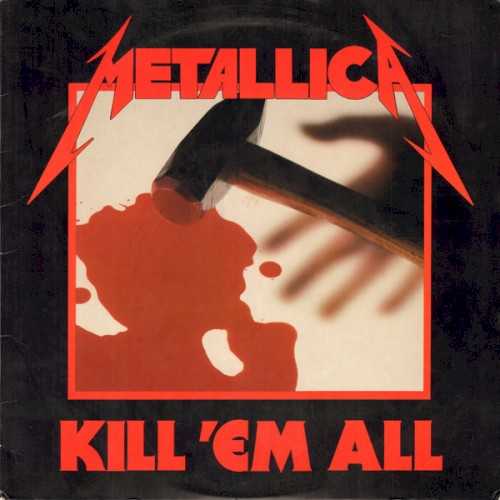 | Album: 1 of 13 Title: Kill ’em All Released: 1983-07-25 Tracks: 10 Duration: 51:19 Scroll: Up Down Top Bottom 25% 50% 75% Spotify Allmusic AlbumCover | 1 Hit the Lights (04:17) 2 The Four Horsemen (07:13) 3 Motorbreath (03:08) 4 Jump in the Fire (04:41) 5 (Anesthesia)—Pulling Teeth (04:14) 6 Whiplash (04:09) 7 Phantom Lord (05:01) 8 No Remorse (06:26) 9 Seek & Destroy (06:55) 10 Metal Militia (05:11) |
| Kill ’em All : Allmusic album Review : The true birth of thrash. On Kill Em All, Metallica fuses the intricate riffing of New Wave of British Heavy Metal bands like Judas Priest, Iron Maiden, and Diamond Head with the velocity of Motörhead and hardcore punk. James Hetfields highly technical rhythm guitar style drives most of the album, setting new standards of power, precision, and stamina. But really, the rest of the band is just as dexterous, playing with tightly controlled fury even at the most ridiculously fast tempos. There are already several extended, multi-sectioned compositions foreshadowing the bands later progressive epics, though these are driven by adrenaline, not texture. A few tributes to heavy metal itself are a bit dated lyrically; like Diamond Head, the bands biggest influence, Kill Em Alls most effective tone is one of supernatural malevolence -- as pure sound, the record is already straight from the pits of hell. Ex-member Dave Mustaine co-wrote four of the original ten tracks, but the material all sounds of a piece. And actually, anyone who worked backward through the bands catalog might not fully appreciate the impact of Kill Em All when it first appeared -- unlike later releases, there simply isnt much musical variation (apart from a lyrical bass solo from Cliff Burton). The bands musical ambition also grew rapidly, so today, Kill Em All sounds more like the foundation for greater things to come. But that doesnt take anything away from how fresh it sounded upon first release, and time hasnt dulled the giddy rush of excitement in these performances. Frightening, awe-inspiring, and absolutely relentless, Kill Em All is pure destructive power, executed with jaw-dropping levels of scientific precision. | ||
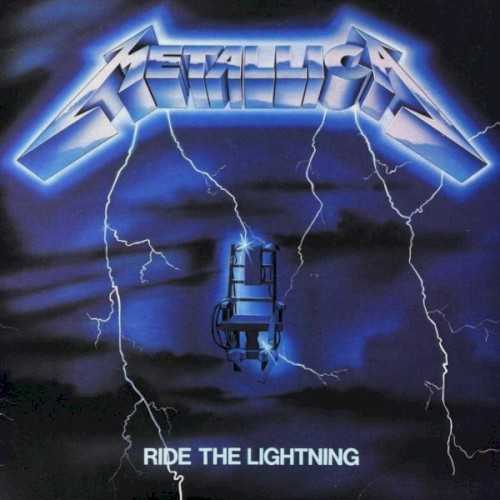 | Album: 2 of 13 Title: Ride the Lightning Released: 1984-07-30 Tracks: 8 Duration: 47:29 Scroll: Up Down Top Bottom 25% 50% 75% Spotify Allmusic AlbumCover | 1 Fight Fire With Fire (04:45) 2 Ride the Lightning (06:37) 3 For Whom the Bell Tolls (05:11) 4 Fade to Black (06:55) 5 Trapped Under Ice (04:04) 6 Escape (04:24) 7 Creeping Death (06:36) 8 The Call of Ktulu (08:54) |
| Ride the Lightning : Allmusic album Review : Kill Em All may have revitalized heavy metals underground, but Ride the Lightning was even more stunning, exhibiting staggering musical growth and boldly charting new directions that would affect heavy metal for years to come. Incredibly ambitious for a one-year-later sophomore effort, Ride the Lightning finds Metallica aggressively expanding their compositional technique and range of expression. Every track tries something new, and every musical experiment succeeds mightily. The lyrics push into new territory as well -- more personal, more socially conscious, less metal posturing. But the true heart of Ride the Lightning lies in its rich musical imagination. There are extended, progressive epics; tight, concise groove-rockers; thrashers that blow anything on Kill Em All out of the water, both in their urgency and the barest hints of melody that have been added to the choruses. Some innovations are flourishes that add important bits of color, like the lilting, pseudo-classical intro to the furious "Fight Fire with Fire," or the harmonized leads that pop up on several tracks. Others are major reinventions of Metallicas sound, like the nine-minute, album-closing instrumental "The Call of Ktulu," or the haunting suicide lament "Fade to Black." The latter is an all-time metal classic; it begins as an acoustic-driven, minor-key ballad, then gets slashed open by electric guitars playing a wordless chorus, and ends in a wrenching guitar solo over a thrashy yet lyrical rhythm figure. Basically, in a nutshell, Metallica sounded like they could do anything. Heavy metal hadnt seen this kind of ambition since Judas Priests late-70s classics, and Ride the Lightning effectively rewrote the rule book for a generation of thrashers. If Kill Em All was the manifesto, Ride the Lightning was the revolution itself. | ||
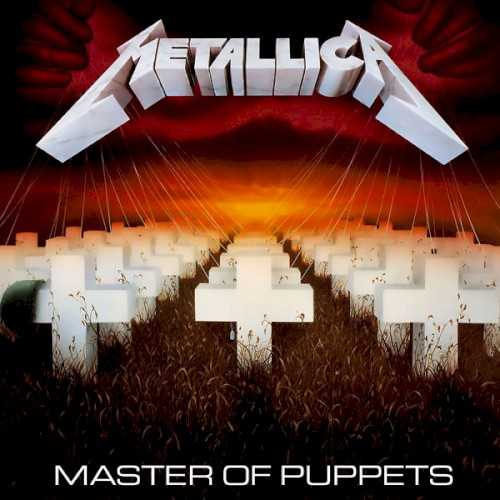 | Album: 3 of 13 Title: Master of Puppets Released: 1986-02-21 Tracks: 8 Duration: 54:45 Scroll: Up Down Top Bottom 25% 50% 75% Spotify TrackSamples Allmusic AlbumCover | 1 Battery (05:12) 2 Master of Puppets (08:35) 3 The Thing That Should Not Be (06:36) 4 Welcome Home (Sanitarium) (06:27) 5 Disposable Heroes (08:16) 6 Leper Messiah (05:40) 7 Orion (08:27) 8 Damage, Inc. (05:31) |
| Master of Puppets : Allmusic album Review : Even though Master of Puppets didnt take as gigantic a leap forward as Ride the Lightning, it was the bands greatest achievement, hailed as a masterpiece by critics far outside heavy metals core audience. It was also a substantial hit, reaching the Top 30 and selling three million copies despite absolutely nonexistent airplay. Instead of a radical reinvention, Master of Puppets is a refinement of past innovations. In fact, its possible to compare Ride the Lightning and Master of Puppets song for song and note striking similarities between corresponding track positions on each record (although Lightnings closing instrumental has been bumped up to next-to-last in Masters running order). That hint of conservatism is really the only conceivable flaw here. Though it isnt as startling as Ride the Lightning, Master of Puppets feels more unified, both thematically and musically. Everything about it feels blown up to epic proportions (indeed, the songs are much longer on average), and the band feels more in control of its direction. Youd never know it by the lyrics, though -- in one way or another, nearly every song on Master of Puppets deals with the fear of powerlessness. Sometimes theyre about hypocritical authority (military and religious leaders), sometimes primal, uncontrollable human urges (drugs, insanity, rage), and, in true H.P. Lovecraft fashion, sometimes monsters. Yet by bookending the album with two slices of thrash mayhem ("Battery" and "Damage, Inc."), the band reigns triumphant through sheer force -- of sound, of will, of malice. The arrangements are thick and muscular, and the material varies enough in texture and tempo to hold interest through all its twists and turns. Some critics have called Master of Puppets the best heavy metal album ever recorded; if it isnt, it certainly comes close. [In 2017 the band released a massive expanded edition of the album with a variety of physical package options, the most ambitious of which was an exhaustive box set that included a hardcover book, outtakes and previously unreleased interviews, three LPs, ten CDs, a cassette, two DVDs, a lithograph, a folder with handwritten lyrics, and a set of six buttons.] | ||
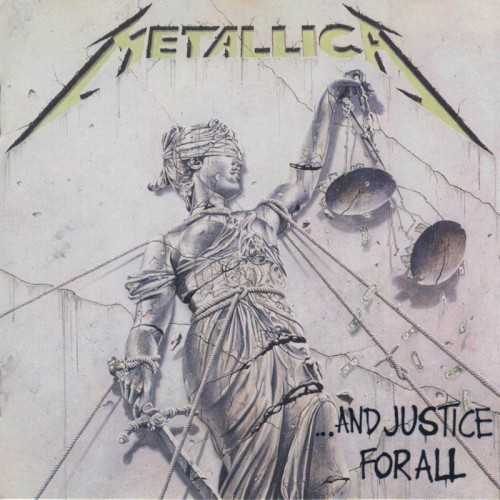 | Album: 4 of 13 Title: …and Justice for All Released: 1988-08-25 Tracks: 10 Duration: 1:09:52 Scroll: Up Down Top Bottom 25% 50% 75% Spotify Allmusic AlbumCover | 1 Blackened (06:42) 2 …and Justice for All (09:45) 3 Eye of the Beholder (06:25) 4 One (07:26) 5 The Shortest Straw (06:35) 6 Harvester of Sorrow (05:45) 7 The Frayed Ends of Sanity (07:44) 8 To Live Is to Die (09:48) 9 Dyers Eve (05:14) 10 The Prince (04:25) |
| …and Justice for All : Allmusic album Review : The most immediately noticeable aspect of ...And Justice for All isnt Metallicas still-growing compositional sophistication or the apocalyptic lyrical portrait of a society in decay. Its the weird, bone-dry production. The guitars buzz thinly, the drums click more than pound, and Jason Newsteds bass is nearly inaudible. Its a shame that the cold, flat sound obscures some of the sonic details, because ...And Justice for All is Metallicas most complex, ambitious work; every song is an expanded suite, with only two of the nine tracks clocking in at under six minutes. It takes a while to sink in, but given time, ...And Justice for All reveals some of Metallicas best material. It also reveals the bands determination to pull out all the compositional stops, throwing in extra sections, odd-numbered time signatures, and dense webs of guitar arpeggios and harmonized leads. At times, it seems like theyre doing it simply because they can; parts of the album lack direction and probably should have been trimmed for momentums sake. Pacing-wise, the album again loosely follows the blueprint of Ride the Lightning, though not as closely as Master of Puppets. This time around, the fourth song -- once again a ballad with a thrashy chorus and outro -- gave the band one of the unlikeliest Top 40 singles in history; "One" was an instant metal classic, based on Dalton Trumbos antiwar novel Johnny Got His Gun and climaxing with a pulverizing machine-gun imitation. As a whole, opinions on ...And Justice for All remain somewhat divided: some think its a slightly flawed masterpiece and the pinnacle of Metallicas progressive years; others see it as bloated and overambitious. Either interpretation can be readily supported, but the band had clearly taken this direction as far as it could. The difficulty of reproducing these songs in concert eventually convinced Metallica that it was time for an overhaul. | ||
 | Album: 5 of 13 Title: Metallica Released: 1991-08-12 Tracks: 12 Duration: 1:02:38 Scroll: Up Down Top Bottom 25% 50% 75% Spotify Allmusic AlbumCover | 1 Enter Sandman (05:32) 2 Sad but True (05:24) 3 Holier Than Thou (03:47) 4 The Unforgiven (06:27) 5 Wherever I May Roam (06:44) 6 Don’t Tread on Me (04:00) 7 Through the Never (04:04) 8 Nothing Else Matters (06:29) 9 Of Wolf and Man (04:16) 10 The God That Failed (05:08) 11 My Friend of Misery (06:49) 12 The Struggle Within (03:53) |
| Metallica : Allmusic album Review : After the muddled production and ultracomplicated song structures of ...And Justice for All, Metallica decided that they had taken the progressive elements of their music as far as they could and that a simplification and streamlining of their sound was in order. While the assessment made sense from a musical standpoint, it also presented an opportunity to commercialize their music, and Metallica accomplishes both goals. The best songs are more melodic and immediate, the crushing, stripped-down grooves of "Enter Sandman," "Sad but True," and "Wherever I May Roam" sticking to traditional structures and using the same main riffs throughout; the crisp, professional production by Bob Rock adds to their accessibility. "The Unforgiven" and "Nothing Else Matters" avoid the slash-and-burn guitar riffs that had always punctuated the bands ballads; the latter is a full-fledged love song complete with string section, which works much better than might be imagined. The song- and riff-writing slips here and there, a rare occurrence for Metallica, which some longtime fans interpreted as filler next to a batch of singles calculated for commercial success. The objections were often more to the idea that Metallica was doing anything explicitly commercial, but millions more disagreed. In fact, the bands popularity exploded so much that most of their back catalog found mainstream acceptance in its own right, while other progressively inclined speed metal bands copied the move toward simplification. In retrospect, Metallica is a good, but not quite great, album, one whose best moments deservedly captured the heavy metal crown, but whose approach also foreshadowed a creative decline. | ||
 | Album: 6 of 13 Title: Load Released: 1996-06-01 Tracks: 14 Duration: 1:18:57 Scroll: Up Down Top Bottom 25% 50% 75% Spotify Allmusic AlbumCover | 1 Ain’t My Bitch (05:04) 2 2 × 4 (05:28) 3 The House Jack Built (06:38) 4 Until It Sleeps (04:29) 5 King Nothing (05:28) 6 Hero of the Day (04:21) 7 Bleeding Me (08:18) 1 Cure (04:54) 2 Poor Twisted Me (04:00) 3 Wasting My Hate (03:57) 4 Mama Said (05:19) 5 Thorn Within (05:51) 6 Ronnie (05:17) 7 The Outlaw Torn (09:48) |
| Load : Allmusic album Review : Delivered five years after their eponymous "black" album in 1991, Load captures Metallica settling into an uneasy period of maturation. Under the guidance of producer Bob Rock, Metallica have streamlined their sound, cutting away most of the twisting, unpredictable time signatures and the mind-numbingly fast riffs. Whats left is polished -- and disappointingly straightforward -- heavy metal. Metallicas attempts at expanding their sonic palette have made them seem more conventional than they ever have before. They add in Southern boogie rock, country-rock, and power ballads to their bag of tricks, which make them sound like 70s arena rock holdovers. Metallicas idea of opening up their sound is to concentrate on relentless midtempo boogie -- over half the album is dedicated to songs that are meant to groove, but they simply dont swing. Metallica sound tight, but with the material theyve written, they should sound loose. That becomes apparent as the songs drag out over the albums nearly 80-minute running time -- there are only so many times that a band can work the same tempo exactly the same way before it becomes tedious. It isnt surprising to hear Metallica get stodgier and more conservative as they get older, but it is nonetheless depressing. | ||
 | Album: 7 of 13 Title: Reload Released: 1997-11-15 Tracks: 13 Duration: 1:16:04 Scroll: Up Down Top Bottom 25% 50% 75% Spotify Allmusic AlbumCover | 1 Fuel (04:29) 2 The Memory Remains (04:39) 3 Devil’s Dance (05:18) 4 The Unforgiven II (06:36) 5 Better Than You (05:22) 6 Slither (05:13) 7 Carpe Diem Baby (06:12) 8 Bad Seed (04:05) 9 Where the Wild Things Are (06:54) 10 Prince Charming (06:05) 11 Low Man’s Lyric (07:37) 12 Attitude (05:16) 13 Fixxxer (08:14) |
| Reload : Allmusic album Review : Metallica recorded so much material for Load -- their first album in five years -- that they had to leave many songs unfinished, otherwise they would have missed their deadline. During the supporting tour for Load, they continued to work on the unfinished material, as well as write new songs, and they soon had enough material for a new album, Reload. The title suggests that Reload simply is a retread of its predecessor, and in many ways thats correct -- theres still too much bone-headed, heavy Southern rock for it to be anything other than the sequel to Load -- but theres enough left curves to make it a better record. Marianne Faithfulls backing vocals on "The Memory Remains" complement the weird, uneasy melody, and "Where the Wild Things Are" has an eerie menace that Metallica never achieved on Load. There are also a couple of ballads and country-rockers that dont work quite so well (its never a good idea to have an explicit sequel, as on "The Unforgiven II"), and that, along with a few plodding Metallica-by-numbers, is what keeps Reload from being a full success. Still, the towering closer, "Fixxxer," along with handful of cuts that successfully push the outer edges of Metallicas sound, make the record worthwhile. | ||
 | Album: 8 of 13 Title: Garage Inc. Released: 1998-11-24 Tracks: 27 Duration: 2:16:38 Scroll: Up Down Top Bottom 25% 50% 75% Spotify Allmusic AlbumCover | 1 Free Speech for the Dumb (02:35) 2 It’s Electric (03:33) 3 Sabbra Cadabra (06:20) 4 Turn the Page (06:06) 5 Die, Die My Darling (02:29) 6 Loverman (07:52) 7 Mercyful Fate (11:11) 8 Astronomy (06:37) 9 Whiskey in the Jar (05:04) 10 Tuesday’s Gone (09:05) 11 The More I See (04:48) 1 Helpless (06:38) 2 The Small Hours (06:42) 3 The Wait (04:54) 4 Crash Course in Brain Surgery (03:10) 5 Last Caress / Green Hell (03:29) 6 Am I Evil? (07:50) 7 Blitzkrieg (03:36) 8 Breadfan (05:41) 9 The Prince (04:25) 10 Stone Cold Crazy (02:17) 11 So What (03:08) 12 Killing Time (03:03) 13 Overkill (04:07) 14 Damage Case (03:40) 15 Stone Dead Forever (04:52) 16 Too Late, Too Late (03:12) |
| Garage Inc. : Allmusic album Review : For many years, Metallicas 1987 EP Garage Days Re-Revisited was the most sought-after item in their catalog; it was constantly bootlegged in the 90s, and often supplemented by a host of covers Metallica had released on singles and compilations throughout the years. By 1998, the band had understandably grown frustrated with this situation and decided to confront the problem head-on by reissuing all these rarities. Savvy businessmen that they are, they also realized they needed to give hardcore fans who already owned all the covers a reason to purchase the new set -- hence, the expansion of the Garage Days EP to the double-disc blowout Garage, Inc. The second discs rarities are balanced by the first discs new covers, the bulk of which were recorded following the Reload tour. It shouldnt come as a surprise that these covers recall the blooze n boogie heavy rock of the Loads, but what is a surprise is that Metallica seems to have found their footing in this style through other peoples songs. Whether its Bob Seger, Blue Öyster Cult, Thin Lizzy, Nick Cave, or the all-star jam on Lynyrd Skynyrds "Tuesdays Gone," the band effortlessly makes the songs seem like their own, through a bizarre mix of respect and ballsy irreverence. Sure, it may not be nearly as raw as early Metallica, but it is a better listen than either of the Load records. And if raw is what you want, the equally diverse disc two provides all the thrills you could hope for. At one time, it might have seemed a little odd that Metallica would cover Budgie, Diamond Head, the Misfits, and Queen, but if Garage, Inc. proves anything, its that the groups musical instincts, risks, and sense of humor have made them the greatest metal band of the 80s and 90s. | ||
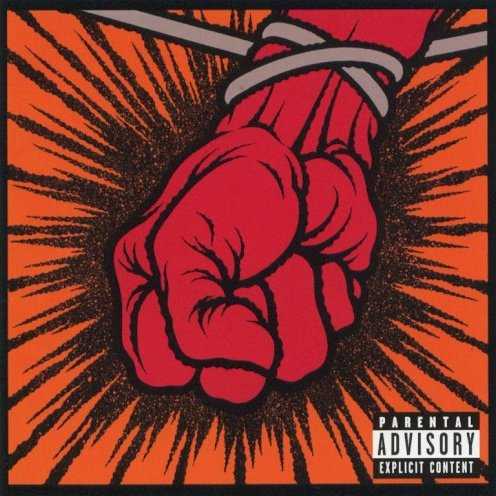 | Album: 9 of 13 Title: St. Anger Released: 2003-05-05 Tracks: 11 Duration: 1:15:03 Scroll: Up Down Top Bottom 25% 50% 75% Spotify Allmusic AlbumCover | 1 Frantic (05:50) 2 St. Anger (07:21) 3 Some Kind of Monster (08:25) 4 Dirty Window (05:24) 5 Invisible Kid (08:30) 6 My World (05:45) 7 Shoot Me Again (07:10) 8 Sweet Amber (05:27) 9 The Unnamed Feeling (07:09) 10 Purify (05:13) 11 All Within My Hands (08:49) |
| St. Anger : Allmusic album Review : Metallicas first new material in over five years arrived after a flurry of non-musical activity that included a much-publicized spat over Internet file sharing, the departure of bassist Jason Newsted, and a lengthy stay in rehab for James Hetfield that suspended the recording of a new album indefinitely. Hetfield returned to the fold in late 2001. Still without a bass player, Lars Ulrich, Kirk Hammett, and their newly sober frontman recruited longtime producer Bob Rock to man Newsteds spot, and creation of the album commenced in May 2002. St. Anger arrived a year later as a punishing, unflinching document of internal struggle -- taking listeners inside the bruised yet vital body of Metallica, but ultimately revealing the alternately torturous and defiant demons that wrestle inside Hetfields brain. St. Anger is an immediate record. Written largely in the first person, it never warns of impending doom, doesnt struggle with claustrophobia, and has care neither for religions safety nor its hypocrisy. (The religious symbolism of its title and artwork seems only to function as a metaphorical device.) Lacking the heavy metal baggage of these past themes, Metallica is left to ponder only itself and its singers psychosis, and delivers its diagnosis on slabs of speed metal informed with years of innovation and texture. The record exists as it ends. As the lockstep thrash of the eight-plus minute "All Within My Hands" tumbles toward its final gasp, Hetfield is explicit in his aims. "I will only let you breathe my air that you receive," he seethes. "Then well see if I let you love me." Ulrichs drums sputter in fits and starts, but the guitars are already dying, shutting down as Hetfield stabs at the microphone. "Kill kill kill kill kill," he screams, and you have to check the wall for a splatter radius. Its a brutal, ugly end to an album that switches on like a bare light bulb in an underground cave. It blasts each corner with harsh, unfiltered light for 75 minutes, until the bulb is shattered with a combat boot, leaving disquieting after-images exploding on the backs of your eyelids. "Frantic" is driven forth by a snare drum that just may be made of iron, Hammett and Hetfields guitars eschewing separate parts in favor of a roaring tag-team approach. A hint of the bands mid-90s nod to alternative drifts in during a bridge, but its quickly swallowed alive by the songs muscular groove, never to be heard from again. "St. Anger," the single, marks the first appearance of a vocal technique that lurks in the shadows throughout the album. As Hetfield groans, "I feel my world shake/Its hard to see clear," he seems manipulated by an unseen force, flickering like bad reception. Its unsettling, and startlingly effective. Hetfields psyche is on trial throughout, and though he often expresses confusion and anger over his struggle ("Some Kind of Monster" and especially "Dirty Window," in which he becomes both judge and jury), the mechanistic rhythms of the band seem to give him strength. "Shoot Me Again" -- another seven-minute epic -- becomes Hetfields sneering answer to himself. It lurches into gear, juxtaposing a deceptively soothing verse with a dirty guitar line that explodes in the songs titular money shot. The resonating cymbal cracks during its stops and starts are particularly satisfying, as you can imagine the members of Metallica facing each other in a circle, jamming the songs jagged melody down the throat of a solitary microphone. (The image comes to life in St. Angers bonus DVD edition, which captures Hetfield, Hammett, Ulrich, and new bassist Robert Trujillo in their headquarters compound, shredding through each song on the album in its entirety.) St. Anger isnt a comeback, and its not a throwback. The album is exactly what Metallica needed to make at this point in its career, after clawing its way to the top of the metal scrap heap, reeducating a generation of bands, and popularizing its genre beyond anyones expectations. St. Anger looks inward with a hard eye, and while it finds some grinning demons in that pit, it also unearths some of the sickest grooves of Metallicas 20-plus-year lifespan. | ||
 | Album: 10 of 13 Title: The Videos: 1989–2004 Released: 2006-12-05 Tracks: 24 Duration: 2:13:06 Scroll: Up Down Top Bottom 25% 50% 75% AlbumCover | 1 One (07:41) 2 Enter Sandman (05:28) 3 The Unforgiven (06:21) 4 Nothing Else Matters (06:24) 5 Wherever I May Roam (06:05) 6 Sad but True (05:26) 7 Until It Sleeps (04:32) 8 Hero of the Day (04:30) 9 Mama Said (04:51) 10 King Nothing (05:14) 11 The Memory Remains (04:37) 12 The Unforgiven II (06:33) 13 Fuel (04:35) 14 Whiskey in the Jar (04:43) 15 No Leaf Clover (05:33) 16 I Disappear (04:28) 17 St. Anger (05:48) 18 Frantic (04:55) 19 The Unnamed Feeling (05:29) 20 Some Kind of Monster (04:28) 21 Introduction (06:04) 22 One (Jammin Version) (05:28) 23 The Unforgiven (theatrical version) (11:29) 24 “Metallica: Some Kind of Monster” Trailer (02:24) |
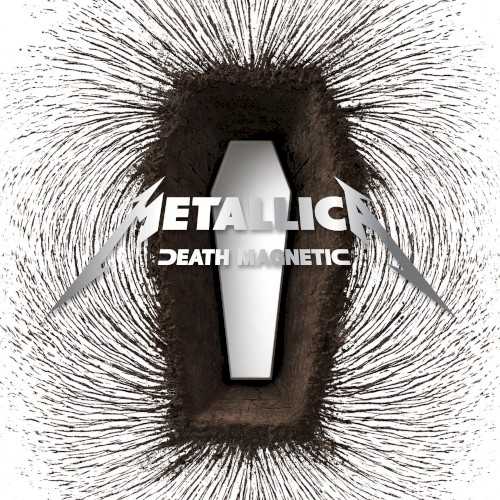 | Album: 11 of 13 Title: Death Magnetic Released: 2008-09-06 Tracks: 10 Duration: 1:14:46 Scroll: Up Down Top Bottom 25% 50% 75% Spotify Allmusic AlbumCover | 1 That Was Just Your Life (07:08) 2 The End of the Line (07:52) 3 Broken, Beat & Scarred (06:25) 4 The Day That Never Comes (07:56) 5 All Nightmare Long (07:57) 6 Cyanide (06:39) 7 The Unforgiven III (07:46) 8 The Judas Kiss (08:00) 9 Suicide & Redemption (09:57) 10 My Apocalypse (05:01) |
| Death Magnetic : Allmusic album Review : Call Death Magnetic Kirk Hammetts revenge. Famously browbeaten into accepting Lars Ulrich and producers Bob Rocks dictum that guitar solos were "dated" and thereby verboten for 2003s St. Anger -- a fraught recording chronicled on the 2004 documentary Some Kind of Monster -- Metallicas lead guitarist dominates this 2008 sequel, playing with an euphoric fury not heard in years, if not decades. This aesthetic shift isnt because Hammett suddenly rules the band: powerless to add solos to St. Anger, he couldnt reinstate them without the blessing of Ulrich and James Hetfield, the politburo of Metallica. The duo suffered some combination of shame and humility in the wake of the muddled St. Anger and Monster, convincing these two unmovable forces to change direction. They ditched longtime producer Rock -- whod helmed every album since 1991s breakthrough blockbuster Metallica -- in favor of Rick Rubin, patron saint of all veteran rockers looking to reconnect with their early spark. Rubin may be the go-to producer for wayward superstars but as the producer of Slayer, hes also rooted in thrash, so he understands the core of Metallicas greatness and gently steers them back to basics on Death Magnetic. Of course, Metallicas basics are pretty complex: intertwined guitar riffs, frenetic solos, and thunderous double-bass drums stitched together as intricate seven-minute suites. Metallica slowly weaned themselves away from labyrinthine metal during the 90s, tempering their intensity, straightening out riffs, spending nearly as much time exploring detours as driving the main road, all the while losing sight of their identity. This culminated in the confused St. Anger, a transparent and botched attempt at returning to their roots, crippled by the chaos surrounding the departure of bassist Jason Newsted. With all their problems sorted out in public -- including replacing Newsted with Robert Trujillo, who acquiesces to the Metallica custom of being buried far, far in the mix -- the group embraces every gnarled, ugly thing they eschewed in the years since "Metallica." Death Magnetic bounces the band back to the days before Bob Rock, roughly sounding as if it could come after ...And Justice for All. Such a deliberate revival of the glory days can be tricky, as it could make a group seem stuck in the past -- or, just as badly, they can get essential elements wrong -- but Death Magnetic is a resounding success because they hunker down and embrace their core strengths, recognizing that their greatest asset is that nobody else makes noise in the same way as they do. Thats the pleasure of Death Magnetic: hearing Metallica sound like Metallica again. Individual songs and, especially, Hetfields lyrics -- less the confessional ballast of St. Anger, more a traditional blend of angst and terror -- are secondary to how the band sounds, how they spit, snarl, and surge, how they seem alive. Metallica isnt replicating moves they made in the 80s, theyre reinvigorated by the spirit of their early years, adding shading theyve learned in the 90s, whether its the symphonic tension of "The Unforgiven III" or threading curdled blues licks through the thrash. Listening to the band play, its hard not to thrill at Metallicas mastery of aggression and escalation. There is no denying that the band is older and settled, no longer fueled by the hunger and testosterone that made their 80s albums so gripping, but on Death Magnetic older doesnt mean less potent. Metallica is still vitally violent and on this terrific album -- a de facto comeback, even if they never really went away -- theyre finally acting like they enjoy being a great rock band. | ||
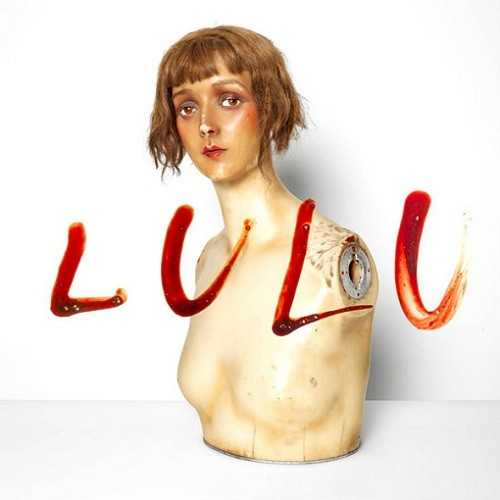 | Album: 12 of 13 Title: Lulu Released: 2011-10-31 Tracks: 10 Duration: 1:27:19 Scroll: Up Down Top Bottom 25% 50% 75% Spotify Allmusic AlbumCover | 1 Brandenburg Gate (04:22) 2 The View (05:21) 3 Pumping Blood (07:24) 4 Mistress Dread (06:53) 5 Iced Honey (04:38) 6 Cheat on Me (11:26) 1 Frustration (08:34) 2 Little Dog (08:02) 3 Dragon (11:10) 4 Junior Dad (19:29) |
| Lulu : Allmusic album Review : First and foremost, Lulu is a Lou Reed album. Metallica may receive collaborative billing, and Reed has made canny use of the bands skill set, but its clear after the first ten minutes that he is the auteur on this project, and most Metallica fans are going to be awfully puzzled by Lulu. Then again, Reeds fans may be scratching their heads, too -- Lulu is a purposefully difficult album, one that insists you meet it on its own terms, and the angry flood of sounds and ideas that pours from its ten long songs demands more than a little patience. Lulu had its genesis in a theater project by frequent Reed collaborator Robert Wilson, who was creating a new adaptation of the plays of Frank Wedekind; in these songs Reed sings from the perspective of a young woman who is corrupted by her experiences with men, as well as some of the characters she meets. The personal pronouns offer occasional clues as to whom Reed is channeling at a given moment, but for most of its 87 minutes, Lulu sounds like one long, bitter, spiteful rant as Reed pours out gallons of lyrical bile, mostly unfettered by rhyme schemes, and with rare exception Reed doesnt sing here, he mutters or shouts or barks like an angry beast. At the age of 69, time seems to be catching up with Reeds strength, but he uses it to his advantage on Lulu, and while he frequently sounds like a mean and slightly crazy old man here, it absolutely suits the tenor of the piece. Reed holds nothing back, and the torrent of curious, ugly, and puzzling images gets to be more than a bit much, rarely cohering into a larger whole. As for Metallica, its easy to see why Reed wanted to work with them -- for this music, he obviously wanted a massive wall of guitars, and James Hetfield and Kirk Hammett certainly deliver, and with the bands usual acrobatic soloing stripped from these performances, they summon a towering wall of chugging menace on "Dragon," "Frustration," and "Mistress Dread." Reed wanted Metallica for their strength and stamina, and they deliver, but when he needs subtlety or dynamics they often drop the ball, especially in Lars Ulrichs drumming, which is clumsier and busier than it should be, and Hetfields vocal interjections, which are full of arena-level bombast and sound silly compared to Reeds weary croak, making the frequent disconnect between the music and the lyrics all the more telling. Its not difficult to see what Reed was shooting for on Lulu, but one might argue Metallica were not the right collaborators for the project -- the huge, arty drone of Sunn 0))), the stop-on-a dime assault of the Jesus Lizard, or the limber noise of Shellac might have better served Reeds vision. Ultimately, Lulu is a brave experiment for both Reed and Metallica, but its one that falters as often as it succeeds. | ||
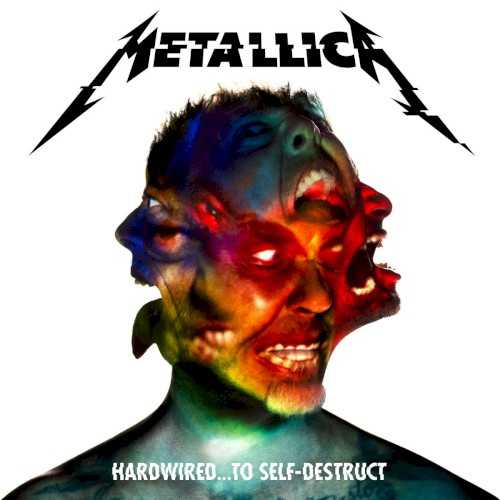 | Album: 13 of 13 Title: Hardwired… to Self‐Destruct Released: 2016-11-18 Tracks: 26 Duration: 2:37:10 Scroll: Up Down Top Bottom 25% 50% 75% Spotify Allmusic AlbumCover | 1 Hardwired (03:09) 2 Atlas, Rise! (06:28) 3 Now That We’re Dead (06:59) 4 Moth Into Flame (05:50) 5 Dream No More (06:29) 6 Halo on Fire (08:15) 1 Confusion (06:41) 2 ManUNkind (06:55) 3 Here Comes Revenge (07:17) 4 Am I Savage? (06:29) 5 Murder One (05:45) 6 Spit Out the Bone (07:09) 1 Lords of Summer (07:10) 2 Ronnie Rising Medley: A Light in the Black / Tarot Woman / Stargazer / Kill the King (09:04) 3 When a Blind Man Cries (04:37) 4 Remember Tomorrow (05:50) 5 Helpless (03:08) 6 Hit the Lights (04:07) 7 The Four Horsemen (05:19) 8 Ride the Lightning (06:56) 9 Fade to Black (07:24) 10 Jump in the Fire (05:13) 11 For Whom the Bell Tolls (04:32) 12 Creeping Death (06:43) 13 Metal Militia (06:07) 14 Hardwired (03:30) |
| Hardwired… to Self‐Destruct : Allmusic album Review : Metallica began their long journey back home some time after nearly imploding during the recording of 2003s St. Anger. Hardwired...To Self-Destruct arrives 13 years after that album but it, almost more than its 2008 predecessor Death Magnetic, feels like a repudiation of the bands 90s, the years when Metallica shined up, slowed down, and got a lot weirder. Sprawling over two discs when it couldve fit onto one (an aesthetic choice certainly meant to evoke memories of 1988s double LP ...And Justice for All), Hardwired...To Self-Destruct does indeed rage, roaring out the gate with a title track where James Hetfield bellows "Were so f***ed/S*** out of luck." That palpable desperation recalls the free-floating angst that fueled Metallicas 80s, but Hardwired...To Self-Destruct doesnt find the quartet scrambling to sound as ferocious as they did during their heyday. Often, they do unleash the fury -- "Moth into Flame" gallops forward in a manner reminiscent of "Battery" -- but theres no denying that Metallica are an older band now, either incapable or uninterested in maintaining that intensity over the course of a full double album. When they slow down, its not exclusively to churn and brood. "Murder One," a salute to departed Motörhead leader Lemmy, may belong in that category, but "Am I Savage?" teeters between ominous dirge and intricate transitions, while "Dream No More" has a backbeat that nearly swings. "ManUNKind" also has a bit of buried funk in its rhythms and that, along with the preponderance of complicated suites, is a clue that Hardwired...To Self-Destruct is primarily the work of Hetfield and Lars Ulrich. Kirk Hammett doesnt have a single songwriting credit -- allegedly, this is due to the guitarist losing an iPhone filled with riffs just prior to recording -- and hes also diminished in terms of solos, leaving Hardwired as a showcase for Metallicas musical constructions. If the riffs dont always sink in deeply -- and if the entire production feels slightly monochromatic -- what impresses here is the thought and musicality within the compositions and the performances, elements that have always been at the bands core and shine brightly on Hardwired...To Self-Destruct. | ||